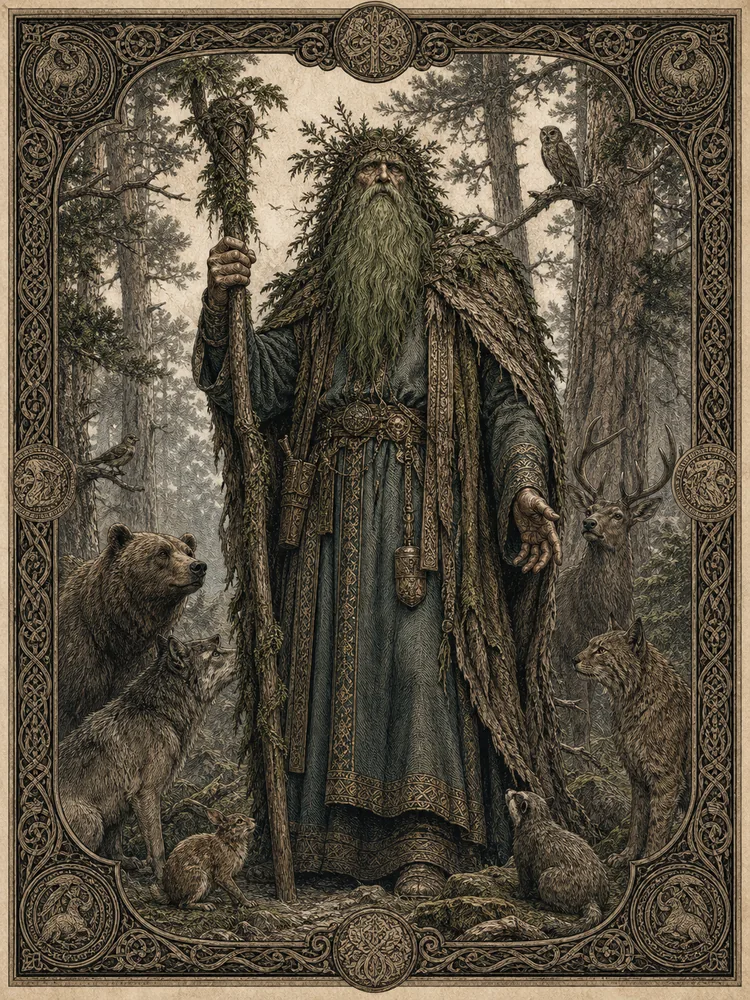
The Leshy (Russian leshiy, from les, "forest") was the Slavic spirit of the forest — a tall, often bearded figure who could change his size at will (taller than the tallest tree, then suddenly shorter than a mushroom), who wore his clothes inside out and his shoes on the wrong feet (these reversals being his characteristic features, which a Leshy could be detected by). He was the master of the woodland animals; wolves and bears served him; he could lead human travelers astray, deliberately or accidentally, by causing them to walk in circles or to lose their way among trees they should have known. To regain one's bearings after a Leshy's deception, one was to take off all one's clothes and put them back on inside out — a counter-magic mirroring the Leshy's own characteristic.
The Leshy was not invariably hostile; he could be propitiated with offerings (bread, salt, the first catch of game), and a hunter who showed proper respect to the forest's master might enjoy his favor. He was, however, a dangerous presence; the Russian peasant tradition held the deep forest as his domain rather than human, and entered it warily. The figure has had a long literary afterlife in Russian and Polish letters, from Pushkin's tales to Tolstoy's children's stories to the Soviet-era animation tradition.