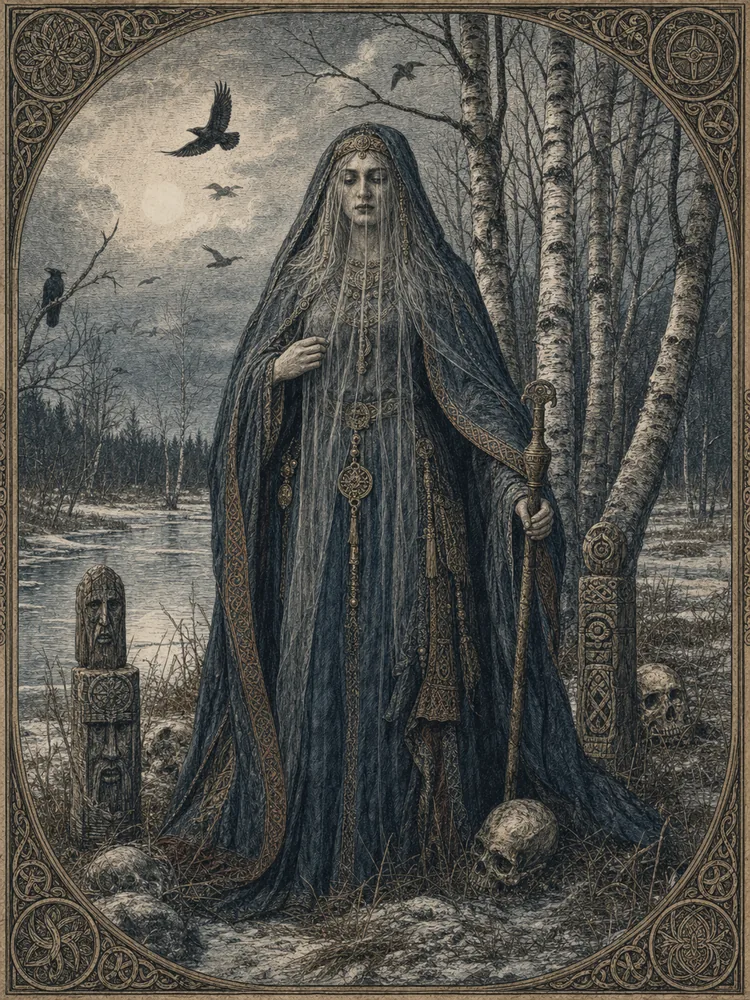
Morana (also Marzanna, Marena, in different Slavic languages) was the goddess of winter and of death, the dark counterpart to the spring goddesses. Her cult is principally known from the spring ritual of "the drowning of Morana" — the ritual destruction at the spring equinox of an effigy made of straw, dressed in old women's clothes, drowned in the local river or burned, in symbolic banishment of winter and welcoming of spring. The ritual was performed across the Slavic world (Polish, Czech, Slovak, Russian, Ukrainian, and others), in some places into the 20th century; the medieval Polish sources record church complaints about it. Whether Morana was a developed goddess of the pre-Christian pantheon or a personification of winter as a folk-figure is debated; the ritual is genuine, but the theological elaboration that some 19th-century scholars gave the figure may overstate the pre-Christian evidence.
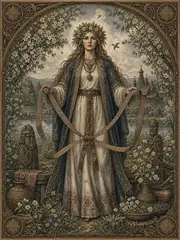 Before thisLada
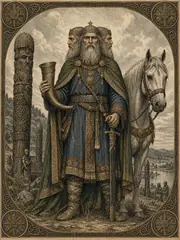 Next on the wallSvetovid
Curator’s note
What the sources say, and what later tradition added. The sources for this bay
The drowning-of-Morana ritual is well attested ethnographically (Frazer's Golden Bough makes considerable use of it). The medieval Polish testimony (Jan Długosz, Annales, c. 1455) names her as a goddess; the medieval testimony's accuracy is the question. The modern revival of the ritual in Poland and other Slavic countries (now with environmental and cultural-heritage emphasis rather than religious) is a curious survival.
When the sources speak
Dated witnesses for The Slavic Gods and Spirits. A date marks when the evidence was written down, not when the belief began. The whole timeline
- 2nd–1st millennia BCE
- Indo-European language dispersals and regional Bronze Age cultures provide a remote comparative background, not a recoverable common canon.
- c. 500 BCE–1 CE
- Iron Age material culture, names, sanctuaries, and classical ethnography offer early but external evidence for Celtic and Germanic religions.
- 1st–4th centuries CE
- Roman inscriptions and provincial cults preserve many Celtic, Germanic, and local divine names.
- 4th–8th centuries CE
- Migration-period and early medieval conversion transform ritual institutions while heroic traditions continue.
- 8th–11th centuries CE
- Viking Age poetry, runic evidence, archaeology, and Scandinavian conversion form the core context of Norse myth.
- 9th–12th centuries CE
- Slavic, Baltic, and Finnic traditions enter chronicles and missionary accounts, often through hostile observers.
- 11th–14th centuries CE
- Irish, Welsh, and Icelandic manuscripts preserve major narrative corpora in Christian literary environments.
- 12th–16th centuries CE
- Saxo, saga compilers, Baltic chroniclers, and later antiquarians systematize or reinterpret older material.