A Compendium of the Ancient Gods
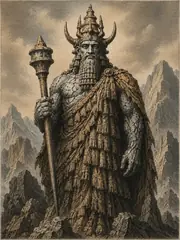
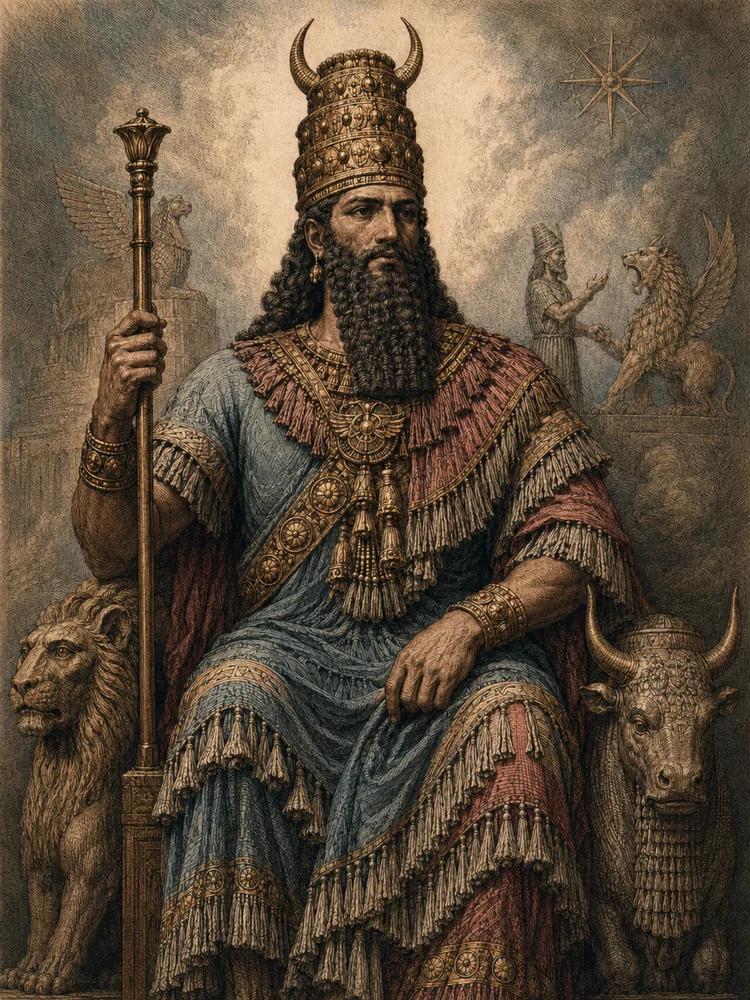
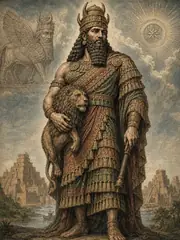
Lugalbanda, plate

Among the kings whose names the Sumerians remembered in their long lists of the rulers of Uruk, Lugalbanda holds a place of honor: the eighth king of the First Dynasty, father (in some versions) of Gilgamesh, and the subject of two surviving Sumerian poems — Lugalbanda in the Mountain Cave and Lugalbanda and the Anzu Bird — which together preserve the principal narrative of his early life.

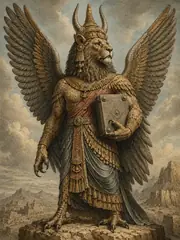
It is told that Lugalbanda set out, while still young, on a military expedition with the king of Uruk against the city of Aratta in the eastern mountains. On the way he fell ill and was abandoned in a mountain cave by his comrades, who left him with provisions and prayed that he might either recover or die quickly. He prayed to the gods of the place; he wandered, when he could walk again, in search of his army. And in his wanderings he came upon the nest of the Anzu-bird — that great lion-headed eagle whose cry shook the mountains — high in a tree above a desolate valley.

The Anzu-bird, returning to find this stranger, might have killed him. But Lugalbanda had fed and fattened the bird's chicks while their parents were away, and the great Anzu, finding her nestlings well, was moved to friendship; she granted Lugalbanda a wish, and he asked for swift travel. Anzu blessed his feet, and Lugalbanda ran like the wind across the mountains, overtook his army before it knew he had returned, and bore the news of Aratta back to Uruk.

For these exploits and his prudent return, Lugalbanda was reckoned a hero in life and a god after his death; the kings of Uruk traced their descent from him; and his cult continued in that city through long ages.
Curator’s note

What the sources say, and what later tradition added. The sources for this bay

The Lugalbanda poems are preserved in Old Babylonian copies of older Sumerian originals. Edited and translated principally by Wilcke and Vanstiphout, they form a small but coherent cycle which sets up the heroic genealogy that culminates in Gilgamesh. The Anzu-bird episode — the hero's befriending of a monster who in other contexts is a destroyer — is unusual in Mesopotamian literature, where Anzu is more often the antagonist (as in the Akkadian Anzu Epic, where Ninurta hunts him). The Sumerian King List places Lugalbanda's reign at twelve hundred years; whether any historical king lay behind the legend is impossible to recover, but the Sumerians treated him as a real ancestor whose name they could pronounce in oath and prayer.

Kin in the sources

Each tie is quoted from the entry that states it.

When the sources speak

Dated witnesses for Sumer. A date marks when the evidence was written down, not when the belief began. The whole timeline

c. 3400–3000 BCE
Uruk-period writing and monumental temple economies create the earliest recoverable administrative setting for named divine institutions.
c. 2900–2350 BCE
Early Dynastic city-states preserve local cults, hymns, royal inscriptions, and god lists; later copies often transmit older compositions.
c. 2334–2154 BCE
The Akkadian Empire expands bilingual and imperial patterns of divine identification without erasing local cult titles.
c. 2112–2004 BCE
Ur III administration and scribal schooling standardize many Sumerian literary and liturgical forms.
c. 2000–1600 BCE
Old Babylonian schools copy major myths, laments, hymns, debates, and heroic narratives in the form most often used by modern editors.
c. 1650–1200 BCE
Hittite and Hurrian archives at Hattusa transmit Anatolian myths, imported Syrian materials, and ritual compositions.
c. 1400–1190 BCE
The tablets of Ugarit preserve the Baal Cycle, Kirta, Aqhat, ritual lists, and a dense Late Bronze Age West Semitic pantheon.
c. 1000–612 BCE
Neo-Assyrian and Neo-Babylonian empires collect, revise, and politically reinterpret older learned traditions.

Floor plan

The rooms follow one another in the order their peoples first appear in the written record.

  1. The Cradle of Citiesc. 3400 BCE to 395 CE. 115 works
  2. The Gift of the Nilec. 4000 BCE to 395 CE. 73 works
  3. The Olympian Orderc. 1600 BCE to 750 CE. 152 works
  4. The Persian Worldc. 2000 BCE to 1010 CE. 30 works
  5. The Levantine Borderlandsc. 1200 BCE to 500 CE. 20 works
  6. The Edges of Empirec. 2000 BCE to 1500 CE. 33 works
  7. The Etruscan Worldc. 900 BCE to 750 CE. 22 works
  8. The Roman Inheritancec. 1200 BCE to 500 CE. 58 works
  9. The Northern Inheritancec. 2000 BCE to 1600 CE. 131 works