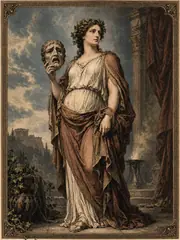
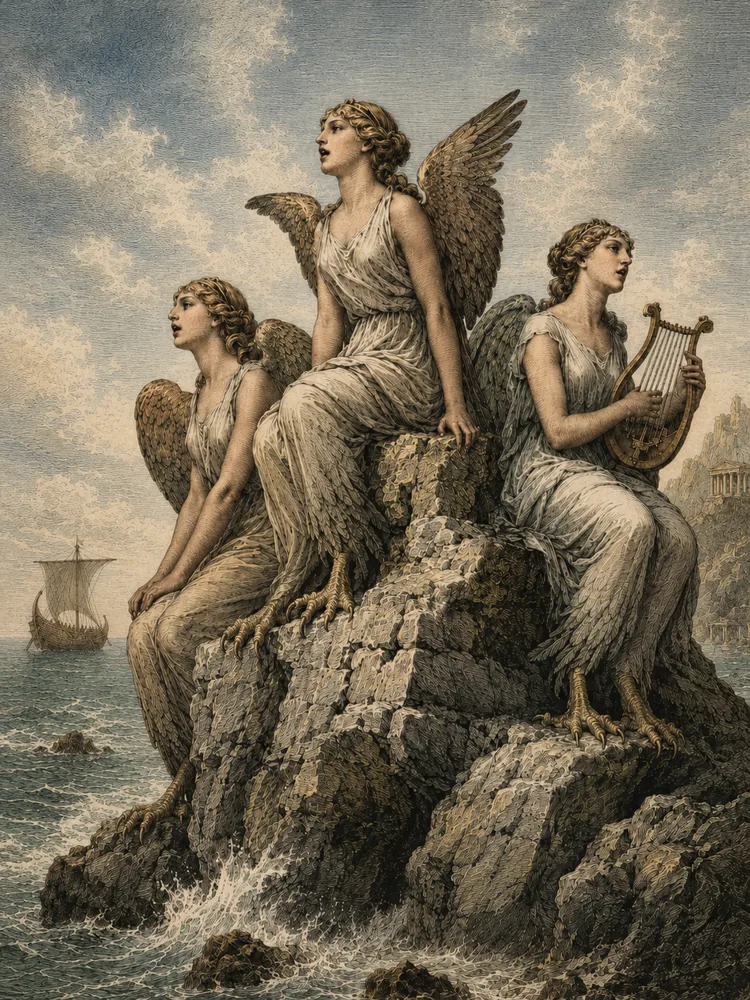

Off the coast of southern Italy, between the great rock of Scylla and the still waters of Charybdis, there lay an island upon which dwelt the Sirens — daughters, some said, of the river-god Achelous, and of the Muse Terpsichore (or, in other accounts, of Melpomene or Calliope). They were three in number, or four, the ancients did not agree: Parthenope and Ligeia and Leucosia were three of them, and a fourth was sometimes called Aglaopheme. They were depicted in early times with the bodies of birds and the heads of women, and only in later art did they take the form of mermaids, with which we are now more familiar.
Their gift, which was their curse, was the singing of a song so sweet that no man who heard it could resist the desire to come ashore upon their island; and there, surrounded by the heaped bones of those who had come before, the listener perished. The Sirens did not seize their prey — they simply sang, and the listener forgot all things, and would not eat, and would not sail on, but lay upon the shore and listened until he died.
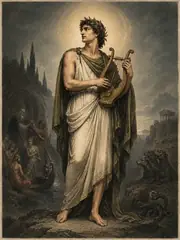
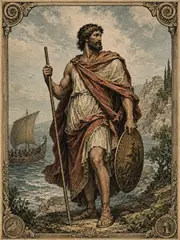
Twice in the heroic legend the song was overcome. Orpheus, sailing with the Argonauts past the island, took up his lyre and sang against them with a song so much greater than theirs that the Argonauts heard it instead, and the ship passed safely. And Odysseus, instructed by Circe, ordered his men to stop their ears with wax and to bind him to the mast, that he alone might hear the song without being lost; and so he heard, and lived, and was the only mortal to do so. It was foretold that the Sirens would die when one passed their island unmoved by their song; and after Odysseus passed they cast themselves into the sea, and one of them — Parthenope — was washed ashore at the place that bears her name, which the Romans afterward called Naples.