A Compendium of the Ancient Gods
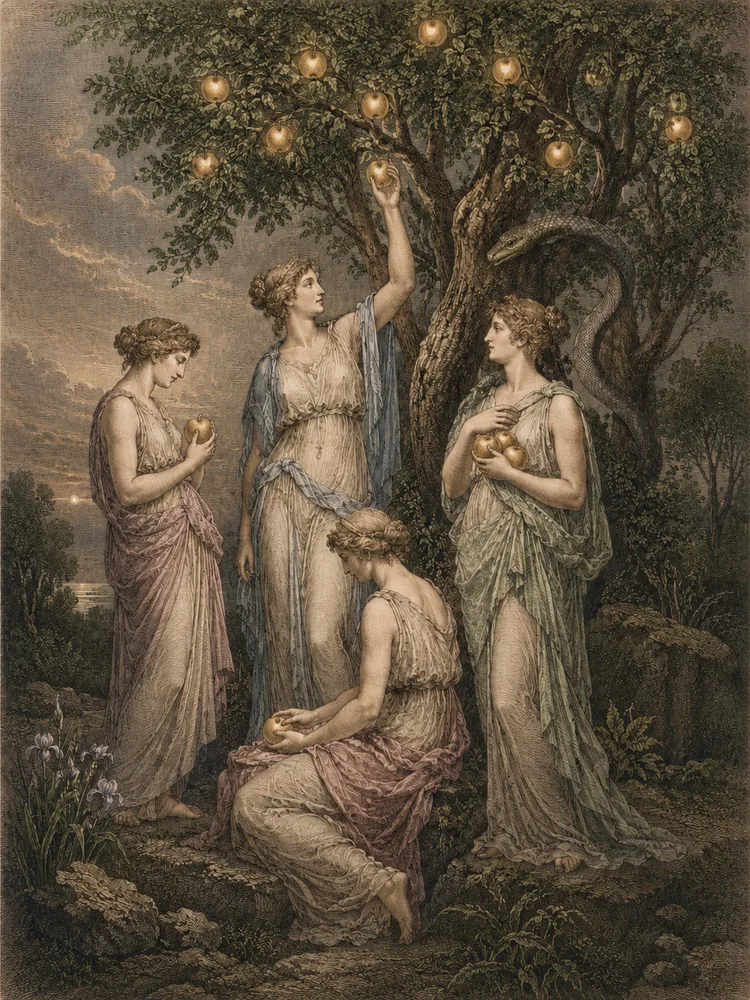
The Hesperides, plate

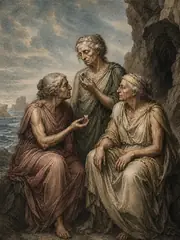
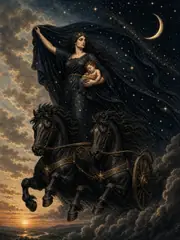
At the very edge of the world, in the far west where the sun goes down into the streams of Ocean, there was a garden — the garden of the Hesperides, the daughters of the Evening. There were three of them, or four, or seven; the ancients differed. Aegle and Erytheia and Hesperia and Arethusa are the names that survive most often. They were the daughters of Atlas (some said), or of Nyx the Night herself, and they kept watch over a tree that bore golden apples — a wedding gift, said the older mythographers, that Gaia had given to Hera at her marriage to Zeus.

The tree was tended by the nymphs and guarded also by a hundred-headed dragon called Ladon, who never slept; and the place was beyond the reach of mortals — beyond the Atlas mountains, at the western horizon, where the world ended. There the Hesperides sang in the cool of evening among the trees, and gathered the golden apples each year, and the dragon coiled at the foot of the tree.

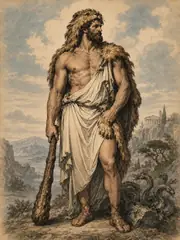
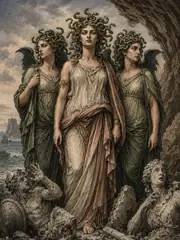
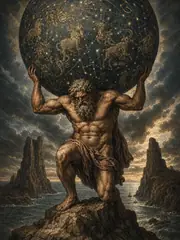
Twice was the garden visited by heroes. Heracles came thither in his eleventh labor, and slew the dragon (or, in another version, persuaded Atlas to fetch the apples while he himself held up the heavens); and Perseus passed by it on his way to the Gorgons. After Heracles took the apples, they were eventually returned by Athena to the garden, for they were sacred and could not abide outside it.

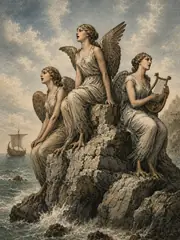
The Hesperides, like the Muses and the Charites, were a sister-company who acted in concert and were not individuated in cult; they were the personifications of the evening glow, of the western light upon the apples in their garden, of the moment of stillness before night closes. Where the Sirens were the danger that draws and destroys, the Hesperides were the prize at the world's end — beautiful, distant, and dangerous to seek but not, in themselves, malicious.
Curator’s note

What the sources say, and what later tradition added. The sources for this bay

The Hesperides are introduced by Hesiod (Theogony 215-216, 274-275, 333-336), and their genealogy and number vary widely in subsequent sources: Pseudo-Apollodorus (Bibliotheca 2.5.11) gives four (Aegle, Erytheia, Hesperia, Arethusa); Hyginus (Fabulae Praefatio) gives seven; Diodorus Siculus (4.27.2) gives seven and discusses the rationalizing tradition that they were maiden-keepers of literal sheep, the 'golden apples' being a confusion (mela in Greek can mean either fruit or sheep). The Eleventh Labor of Heracles is preserved in Pseudo-Apollodorus (2.5.11), in Diodorus (4.26-27), and in artistic representations from the seventh century BCE. The garden's location was variously placed in the far west of Africa (Mauretania), beyond the Atlas mountains, or at the world's edge; by the Hellenistic period it had become a literary topos rather than a geographical claim.

Kin in the sources

Each tie is quoted from the entry that states it.

When the sources speak

Dated witnesses for The Margins and the Monsters. A date marks when the evidence was written down, not when the belief began. The whole timeline

c. 1600–1100 BCE
Mycenaean palace tablets in Linear B record offerings and divine names, but little continuous myth.
c. 1100–800 BCE
Post-palatial oral traditions and changing cult landscapes precede the surviving alphabetic epics.
late 8th–7th centuries BCE
The Iliad, Odyssey, Hesiodic Theogony and Works and Days give influential but non-exclusive divine orders.
7th–6th centuries BCE
Homeric Hymns, lyric poetry, colonization, and local sanctuary traditions multiply regional narratives.
6th–5th centuries BCE
Orphic, Pythagorean, and mystery materials develop alternative cosmogonies and afterlife doctrines.
5th century BCE
Athenian tragedy and comedy recast heroic houses and divine justice for civic audiences.
4th century BCE
Philosophers, antiquarians, and local historians interpret or criticize inherited myth.
323–31 BCE
Hellenistic poets and scholars systematize variants across an enlarged Greek world.

Floor plan

The rooms follow one another in the order their peoples first appear in the written record.

  1. The Cradle of Citiesc. 3400 BCE to 395 CE. 115 works
  2. The Gift of the Nilec. 4000 BCE to 395 CE. 73 works
  3. The Olympian Orderc. 1600 BCE to 750 CE. 152 works
  4. The Persian Worldc. 2000 BCE to 1010 CE. 30 works
  5. The Levantine Borderlandsc. 1200 BCE to 500 CE. 20 works
  6. The Edges of Empirec. 2000 BCE to 1500 CE. 33 works
  7. The Etruscan Worldc. 900 BCE to 750 CE. 22 works
  8. The Roman Inheritancec. 1200 BCE to 500 CE. 58 works
  9. The Northern Inheritancec. 2000 BCE to 1600 CE. 131 works