A Compendium of the Ancient Gods
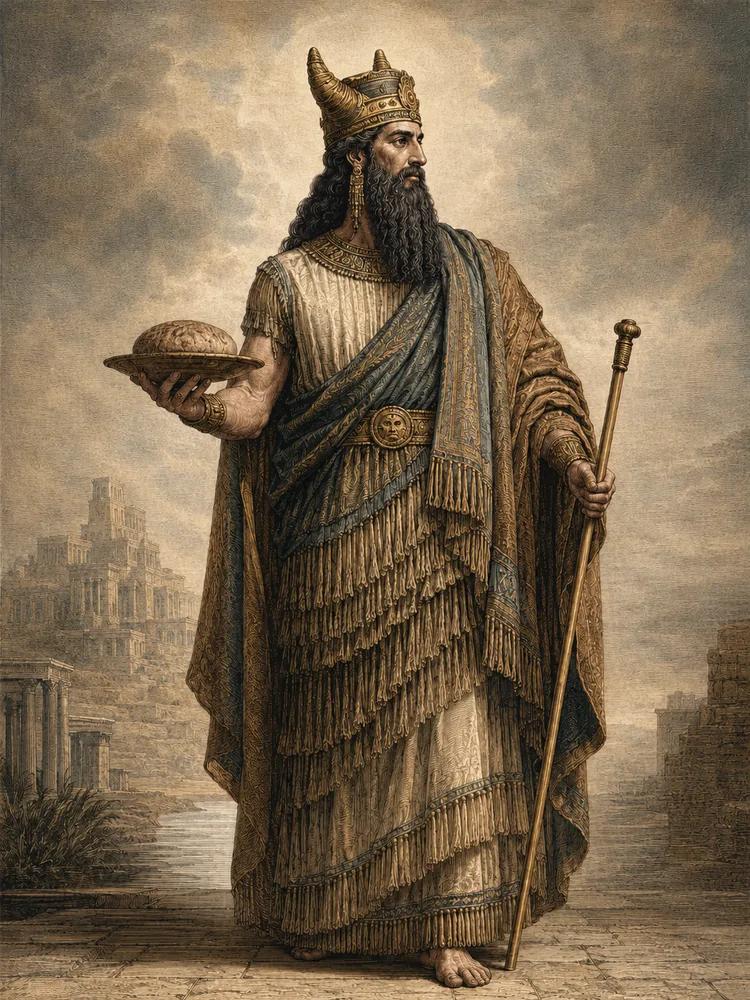
Adapa, plate

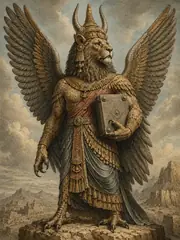
Among the seven antediluvian sages whom Ea sent to instruct mankind in the arts of civilization, the first and most renowned was Adapa, priest of the temple of Ea at Eridu. He was a fisherman by occupation as well as a sage, and went out daily upon the marshes in his small boat to provide for his god's table.

It happened one day that, as he fished, the South Wind rose suddenly and overturned his vessel. Adapa, in anger, cried out a curse upon the South Wind, and the wind's wing was broken; for seven days no breath of southern air came over the marshes, the heat lay heavy, and the gods looked down and asked what had become of their wind. They learned the cause; they summoned Adapa to the heaven of Anu to answer for his deed.

Before he ascended, Ea his master gave him counsel — counsel which would prove disastrous in its kindness. "You will be offered," said Ea, "the bread of death and the water of death, by the gods who would punish you. Do not eat; do not drink. Else you die." Adapa came before Anu, and gave such an account of himself that Anu was placated, and ordered that the bread and water of immortal life be set before him as gift to a wise man. Remembering Ea's warning, Adapa refused. Anu, astonished, asked why; Adapa told him; and Anu laughed bitterly. "It was eternal life I offered you," he said. "But you have refused it. So now you may go down to your fishing." Adapa returned to the marshes; and humanity, through this misunderstanding, lost the chance of unending life.

Curator’s note

What the sources say, and what later tradition added. The sources for this bay

The Adapa myth is preserved on tablets from the El-Amarna archive in Egypt (where Akkadian was the diplomatic language of the Late Bronze Age) and from the library of Ashurbanipal. The story has been read with profit alongside the lost-immortality narrative of Genesis 3, where the gift of unending life is also forfeited through a misunderstood divine instruction. Whether either narrative is dependent upon the other is debated; that they share a thematic substrate is undeniable. The figure of Ea-as-trickster, whose protective intentions toward his protégé end in disaster, is paralleled in the Atrahasis Flood narrative, where Ea also keeps the letter of an oath while breaking its spirit. The Adapa myth was widely copied in the scribal schools of the second and first millennia BCE, evidence of its theological centrality.

Kin in the sources

Each tie is quoted from the entry that states it.

When the sources speak

Dated witnesses for Akkad, Babylon and Assyria. A date marks when the evidence was written down, not when the belief began. The whole timeline

c. 3400–3000 BCE
Uruk-period writing and monumental temple economies create the earliest recoverable administrative setting for named divine institutions.
c. 2900–2350 BCE
Early Dynastic city-states preserve local cults, hymns, royal inscriptions, and god lists; later copies often transmit older compositions.
c. 2334–2154 BCE
The Akkadian Empire expands bilingual and imperial patterns of divine identification without erasing local cult titles.
c. 2112–2004 BCE
Ur III administration and scribal schooling standardize many Sumerian literary and liturgical forms.
c. 2000–1600 BCE
Old Babylonian schools copy major myths, laments, hymns, debates, and heroic narratives in the form most often used by modern editors.
c. 1650–1200 BCE
Hittite and Hurrian archives at Hattusa transmit Anatolian myths, imported Syrian materials, and ritual compositions.
c. 1400–1190 BCE
The tablets of Ugarit preserve the Baal Cycle, Kirta, Aqhat, ritual lists, and a dense Late Bronze Age West Semitic pantheon.
c. 1000–612 BCE
Neo-Assyrian and Neo-Babylonian empires collect, revise, and politically reinterpret older learned traditions.

Floor plan

The rooms follow one another in the order their peoples first appear in the written record.

  1. The Cradle of Citiesc. 3400 BCE to 395 CE. 115 works
  2. The Gift of the Nilec. 4000 BCE to 395 CE. 73 works
  3. The Olympian Orderc. 1600 BCE to 750 CE. 152 works
  4. The Persian Worldc. 2000 BCE to 1010 CE. 30 works
  5. The Levantine Borderlandsc. 1200 BCE to 500 CE. 20 works
  6. The Edges of Empirec. 2000 BCE to 1500 CE. 33 works
  7. The Etruscan Worldc. 900 BCE to 750 CE. 22 works
  8. The Roman Inheritancec. 1200 BCE to 500 CE. 58 works
  9. The Northern Inheritancec. 2000 BCE to 1600 CE. 131 works