A Compendium of the Ancient Gods
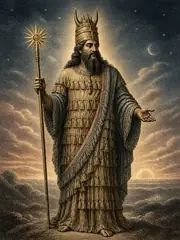
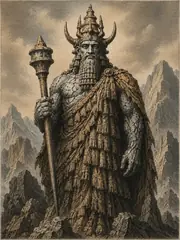
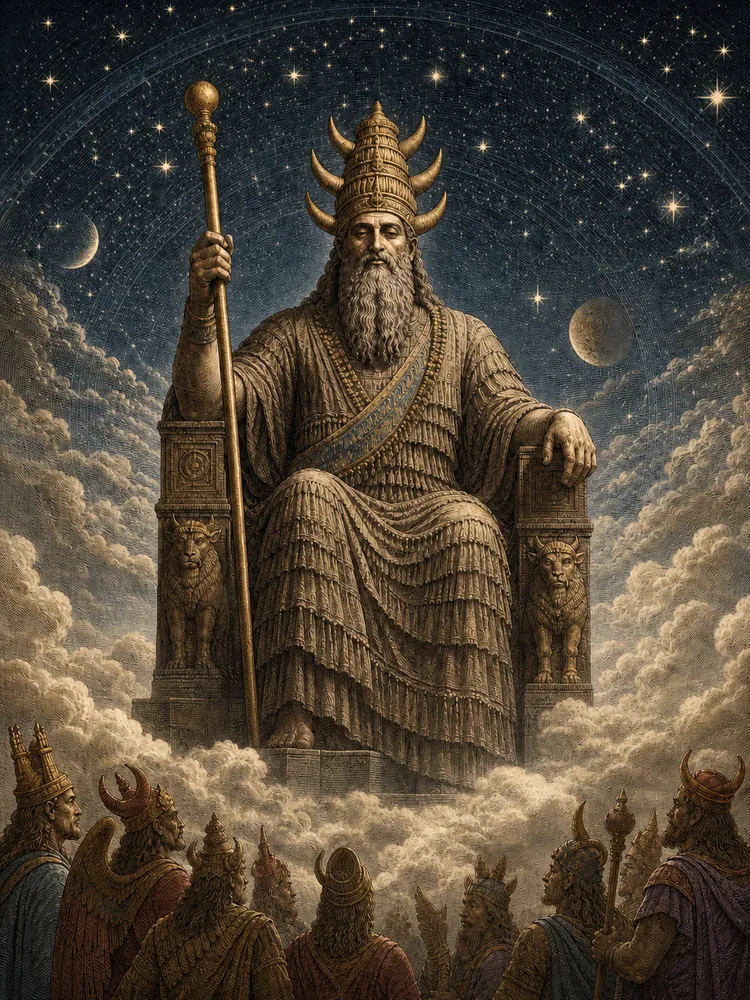
Anu, plate

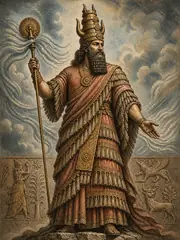
Anu — whom the Sumerians called An — was the sky itself, the highest of all gods, and the father of fathers among them. He dwelt in the uppermost heaven, the An-Gal, and from there he ruled over the assembly of the gods. The crown of kingship was his to bestow; the Tablet of Destinies had been his before it passed into other hands; and when the gods met in council, it was at his summons that they came together. His city upon the earth was Uruk, and his sacred precinct there was the Eanna, "the House of Heaven" — though in time this temple was given over to his daughter Inanna, who eclipsed him in the affection of the city.

Anu's role in narrative is mostly that of a magisterial presence in the background. When Ishtar, repulsed by Gilgamesh, came weeping to her father and demanded that he send the Bull of Heaven against the hero, it was Anu who at length granted the request, though warning her of the famine the bull's coming would bring. When the gods convened to debate whether to send the Flood, Anu presided. When new kings ascended their thrones, they were said to receive their lordship from his hand. He was not, however, a god much resorted to in private prayer; he was too remote, too high. The intimate gods of human life were his children — Enlil, Enki, Inanna — and to these the worshipper turned.
Curator’s note

What the sources say, and what later tradition added. The sources for this bay

An is one of the very oldest gods of Sumer; his name is the Sumerian word for "sky" (the same sign meaning both "sky" and "god" in the script), and he is attested in temple lists from the third millennium BCE. The temple Eanna at Uruk was originally his, but by the historical period it had become Inanna's principal sanctuary, and he is mentioned only in passing in most narratives. His Akkadian name is Anu, often written An; his consort in different traditions is Antu, Ki ("Earth"), or Uras. The pattern of a sky-god displaced from active worship by his more vigorous offspring is a familiar one in Indo-European traditions also (Greek Uranus, Roman Caelus, Vedic Dyaus); whether it represents historical succession or theological pattern is debated.

Kin in the sources

Each tie is quoted from the entry that states it.

When the sources speak

Dated witnesses for Sumer. A date marks when the evidence was written down, not when the belief began. The whole timeline

c. 3400–3000 BCE
Uruk-period writing and monumental temple economies create the earliest recoverable administrative setting for named divine institutions.
c. 2900–2350 BCE
Early Dynastic city-states preserve local cults, hymns, royal inscriptions, and god lists; later copies often transmit older compositions.
c. 2334–2154 BCE
The Akkadian Empire expands bilingual and imperial patterns of divine identification without erasing local cult titles.
c. 2112–2004 BCE
Ur III administration and scribal schooling standardize many Sumerian literary and liturgical forms.
c. 2000–1600 BCE
Old Babylonian schools copy major myths, laments, hymns, debates, and heroic narratives in the form most often used by modern editors.
c. 1650–1200 BCE
Hittite and Hurrian archives at Hattusa transmit Anatolian myths, imported Syrian materials, and ritual compositions.
c. 1400–1190 BCE
The tablets of Ugarit preserve the Baal Cycle, Kirta, Aqhat, ritual lists, and a dense Late Bronze Age West Semitic pantheon.
c. 1000–612 BCE
Neo-Assyrian and Neo-Babylonian empires collect, revise, and politically reinterpret older learned traditions.

Floor plan

The rooms follow one another in the order their peoples first appear in the written record.

  1. The Cradle of Citiesc. 3400 BCE to 395 CE. 115 works
  2. The Gift of the Nilec. 4000 BCE to 395 CE. 73 works
  3. The Olympian Orderc. 1600 BCE to 750 CE. 152 works
  4. The Persian Worldc. 2000 BCE to 1010 CE. 30 works
  5. The Levantine Borderlandsc. 1200 BCE to 500 CE. 20 works
  6. The Edges of Empirec. 2000 BCE to 1500 CE. 33 works
  7. The Etruscan Worldc. 900 BCE to 750 CE. 22 works
  8. The Roman Inheritancec. 1200 BCE to 500 CE. 58 works
  9. The Northern Inheritancec. 2000 BCE to 1600 CE. 131 works