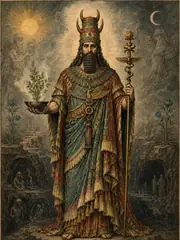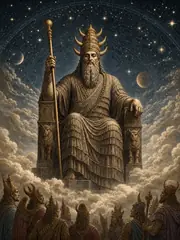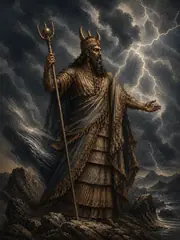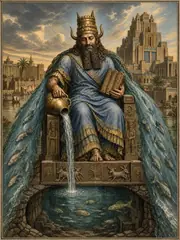
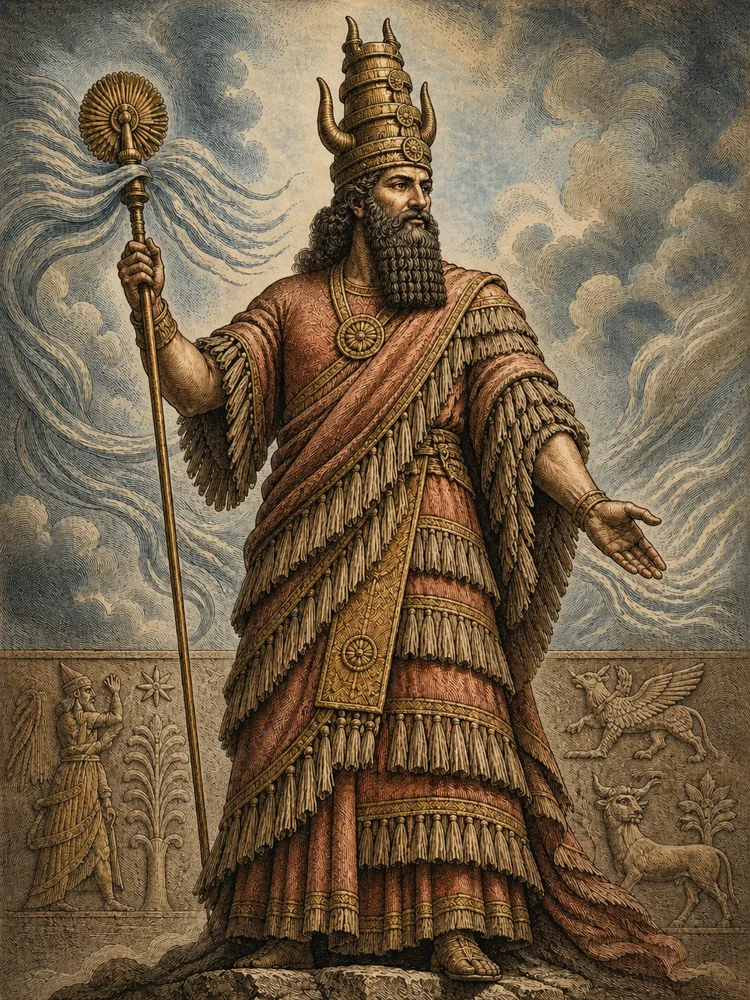
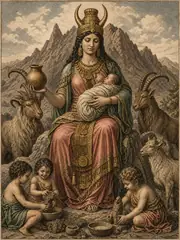
Enlil was the air, the breath, the great wind that moves between heaven and earth; and he was, in the working theology of Sumer, the active king of the gods. Anu was higher, but Anu was distant; Enlil was the one whose decree set the world in motion. He held the Tablet of Destinies; he assigned to each god his portion; he could pronounce the word that no god could change. His city was Nippur, and his temple there, the Ekur — "the Mountain House" — was the holiest precinct in the land of Sumer, the place where the gods gathered in council and where, in the historical period, the kings of the Sumerian and Akkadian states came to receive their kingship from Enlil's hand.
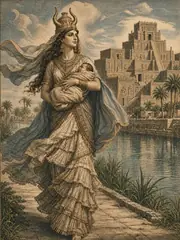
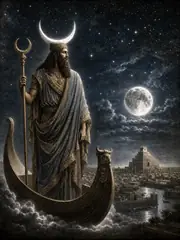
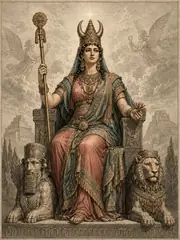
There is one tale of his youth that the Sumerians remembered with some awe. Enlil walked one day in the city, and saw the maiden Ninlil bathing in the bright stream; and he came upon her by force, and lay with her against her will. For this the assembly of the gods cast him out and sent him down to the underworld, that he might be punished. But Ninlil — already with child by him — followed him into the dark realms; for she would not be parted from him. There, in the netherworld, Enlil disguised himself three times — as the gatekeeper, as the man of the river of the dead, and as the ferryman — and three times lay with her again, that the child she carried (Nanna, the moon) might have brothers to take his place in the underworld and let him rise into the sky. So Nergal, Ninazu, and Enbilulu were begotten in the dark to ransom their elder brother into the light. The story is harsh, and it troubled the later compilers as much as it troubles us; but it stood in their literature, and they did not strike it out.
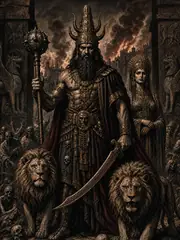
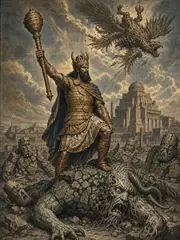
In other tales Enlil was the giver of grain to mankind, the bringer of the plough, the father of Ninurta the warrior, of Nanna the moon, and of Nergal the lord of the dead. It was Enlil who decreed the Flood, when the noise of mankind grew unbearable; and it was upon Enlil's word that kingship was bestowed upon city after city in the great Sumerian King List. He could be terrible, but he was reckoned just; and his title in the hymns was Lugal-Kur-Kur-ra, "King of the Lands."