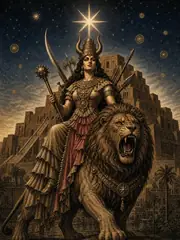
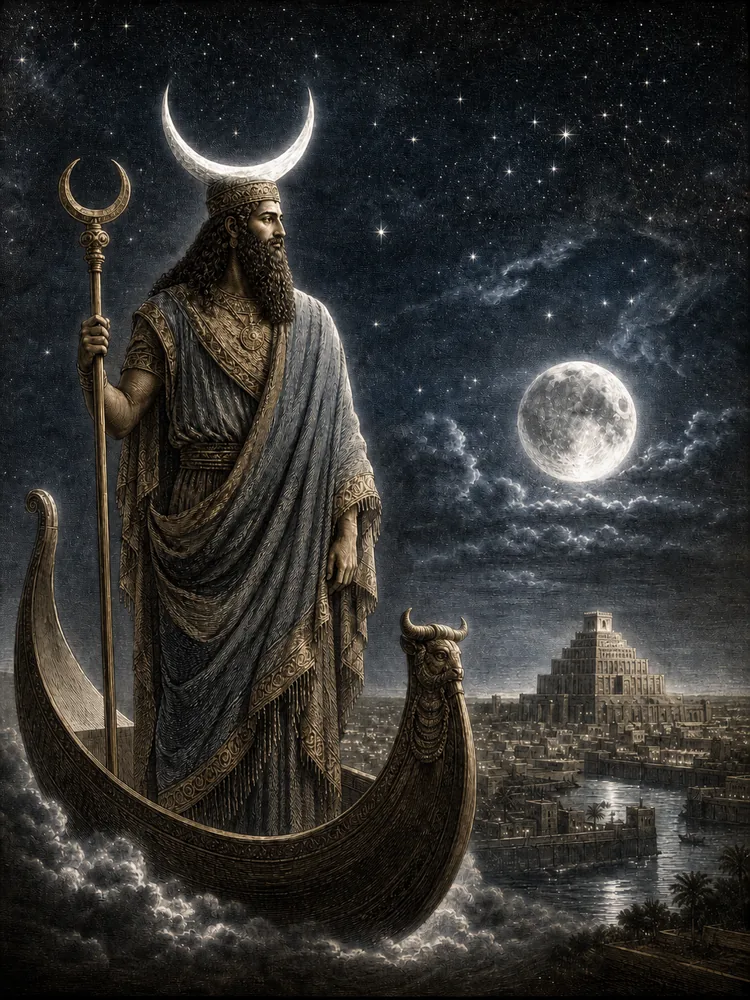
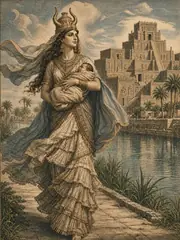
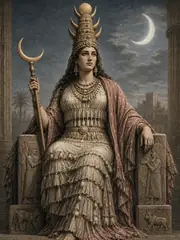
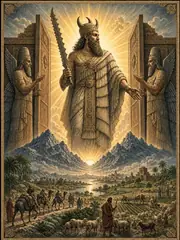
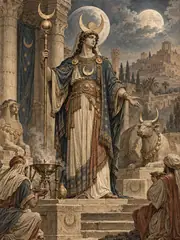
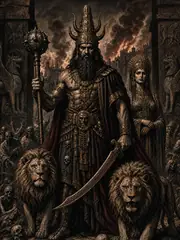
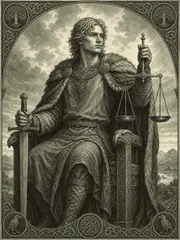
Nanna was the moon, the bright bull of heaven that wandered the night sky; and his city was Ur of the Chaldees, where his temple-tower the Ekishnugal stood, and where the kings of the great Third Dynasty made him patron of their state. He was the son of Enlil and Ninlil, begotten in the dark of the underworld and brought up into the light. His consort was Ningal, the great lady; and his children were Utu the sun, and Inanna the morning and evening star. Of his sons and daughters, then, came light and the planet Venus.
There is little narrative of Nanna himself; his role is rather to be present, brilliant, regular, and to be invoked. The hymns to him are many, the stories few. He sailed each night across the sky in his barque of silver; he gave light to the wakers and dreams to the sleepers; the cattle and the flocks were under his protection. To swear by Nanna was to swear by all that is steady in heaven.
When the sources speak
Dated witnesses for Sumer. A date marks when the evidence was written down, not when the belief began. The whole timeline
- c. 3400–3000 BCE
- Uruk-period writing and monumental temple economies create the earliest recoverable administrative setting for named divine institutions.
- c. 2900–2350 BCE
- Early Dynastic city-states preserve local cults, hymns, royal inscriptions, and god lists; later copies often transmit older compositions.
- c. 2334–2154 BCE
- The Akkadian Empire expands bilingual and imperial patterns of divine identification without erasing local cult titles.
- c. 2112–2004 BCE
- Ur III administration and scribal schooling standardize many Sumerian literary and liturgical forms.
- c. 2000–1600 BCE
- Old Babylonian schools copy major myths, laments, hymns, debates, and heroic narratives in the form most often used by modern editors.
- c. 1650–1200 BCE
- Hittite and Hurrian archives at Hattusa transmit Anatolian myths, imported Syrian materials, and ritual compositions.
- c. 1400–1190 BCE
- The tablets of Ugarit preserve the Baal Cycle, Kirta, Aqhat, ritual lists, and a dense Late Bronze Age West Semitic pantheon.
- c. 1000–612 BCE
- Neo-Assyrian and Neo-Babylonian empires collect, revise, and politically reinterpret older learned traditions.