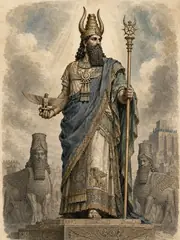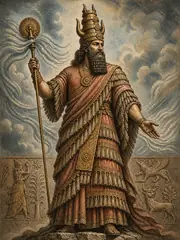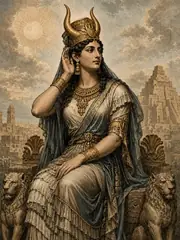
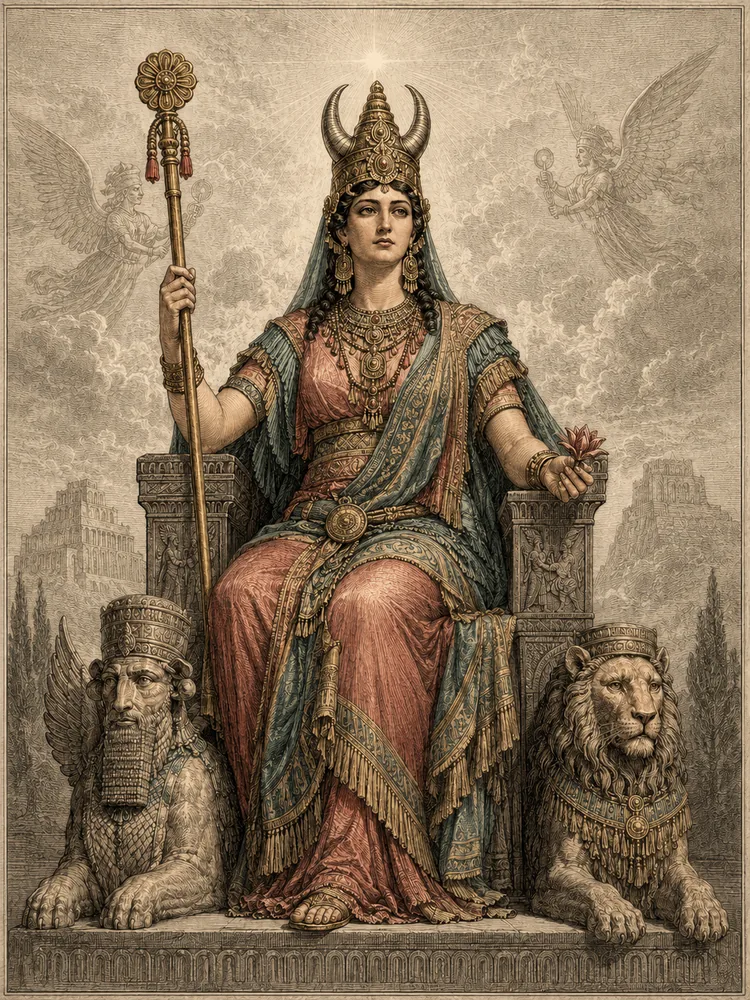
When the Assyrians, in the great period of their imperial supremacy from the ninth to the seventh centuries BCE, looked up to their high god Ashur, they looked also to his queen Mullissu — known in older Babylonian tradition as Ninlil, but among the Assyrians given a sharper character of her own. She was the queen of the Assyrian heaven, and her oracular utterances were among the most politically significant religious documents of her time.
For the Sargonid kings of Assyria — Esarhaddon and Ashurbanipal in particular — relied upon prophecies issued in Mullissu's name and recorded by her female prophets at the temples of Arbela and Nineveh. These oracles, preserved on tablets from the royal archives, address the king directly, in the goddess's voice: "Have no fear, Esarhaddon. I am Ishtar of Arbela. I will go before you, I will go behind you. Do not fear." They are among the most personal divine voices preserved from the ancient Near East, and constitute a remarkable body of female prophetic literature within the otherwise male-dominated record of imperial religion.
When the Assyrian Empire fell in 612 BCE, Mullissu's principal cult fell with it; but her older Babylonian identity as Ninlil, wife of Enlil, persisted in the south, and her image — the queen seated beside the king of the gods — remained a fixture of Mesopotamian religious imagination.