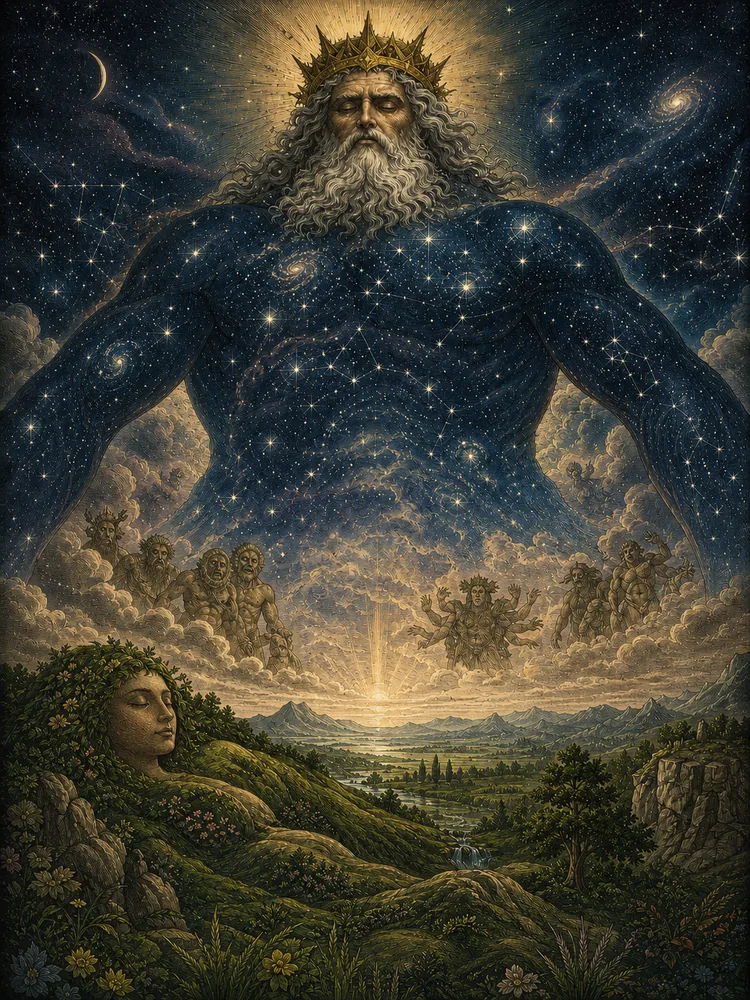
Uranus was the starry heaven, the canopy of the world, born of Gaia without father and made by her to be the cover under which she would bring forth the gods. Lying upon her, he begot upon her the twelve Titans, the three Cyclopes, and the three Hecatoncheires (the Hundred-Handed Ones). But Uranus hated his offspring, fearing them; as soon as each was born, he thrust them back into Gaia's body, that they might not see the light. Gaia groaned with the weight of her hidden children, and at last conspired with the youngest of the Titans, Cronus, to take revenge. She forged a sickle of grey adamant; she gave it to Cronus; and when Uranus next came down upon her in love, Cronus emerged from his hiding-place, cut off his father's genitals with the sickle, and threw them away into the sea behind him. The blood that fell upon the earth gave rise to the Erinyes, the Giants, and the ash-tree nymphs; the severed members, drifting on the sea, gave rise (in time and from the foam) to Aphrodite. So passed the first king of heaven, and Cronus assumed his father's throne; and Uranus, mutilated and unmanned, ceased to be a power in the world.
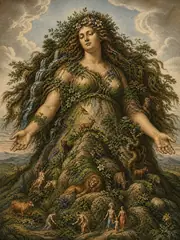 Before thisGaia
 Next on the wallNyx
Curator’s note
What the sources say, and what later tradition added. The sources for this bay
Hesiod, Theogony 154–210, is the principal source. The myth of the castration of the sky-god by his son is one of the most striking in Greek tradition, and it has parallels — sometimes startlingly close — in the Hurrian-Hittite Song of Kumarbi (treated in Volume I), where Kumarbi castrates Anu the sky-god. The Hurrian source predates Hesiod by some six or seven centuries, and direct or indirect transmission through the Aegean contacts of the Mycenaean Bronze Age is the most plausible explanation; the case is one of the clearer instances of Near Eastern influence on early Greek cosmogony. Uranus had no cult in the Greek world; he was a cosmogonic figure only, the first king who ceded the throne and disappeared.
Kin in the sources
Each tie is quoted from the entry that states it.
- Child ofGaia
born of Gaia without father and made by her to be the cover under which she would bring forth the gods
- Consort ofGaia
Lying upon her, he begot upon her the twelve Titans, the three Cyclopes, and the three Hecatoncheires
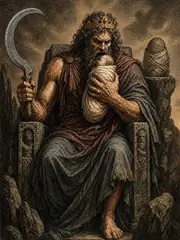 Parent ofCronus
conspired with the youngest of the Titans, Cronus, to take revenge
- Rival ofCronus
Cronus emerged from his hiding-place, cut off his father's genitals with the sickle, and threw them away into the sea behind him
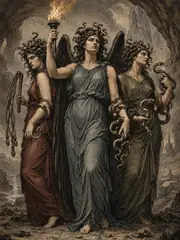 CreatedThe Erinyes
The blood that fell upon the earth gave rise to the Erinyes, the Giants, and the ash-tree nymphs
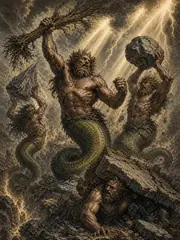 CreatedThe Gigantes
The blood that fell upon the earth gave rise to the Erinyes, the Giants, and the ash-tree nymphs
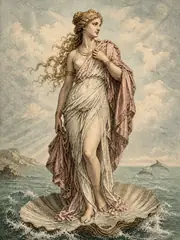 CreatedAphrodite
the severed members, drifting on the sea, gave rise (in time and from the foam) to Aphrodite
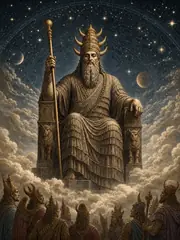 Compared withAnu
where Kumarbi castrates Anu the sky-god
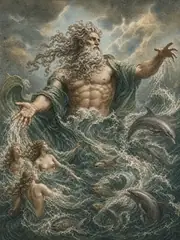 Sibling ofPontus
Pontus was the sea, son of Gaia without father, brother of Uranus and the Mountains
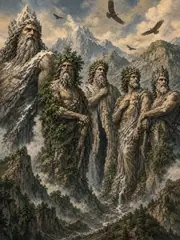 Sibling ofOurea
a brood of primordial divinities born of Gaia without father, brothers of Uranus and Pontus
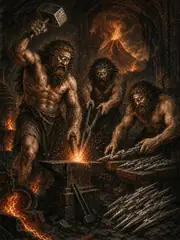 Parent ofThe Cyclopes
Of the children whom Gaia bore to Uranus, three were the Cyclopes
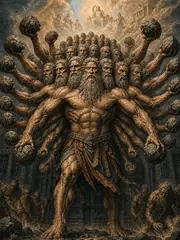 Parent ofThe Hecatoncheires
they were the eldest sons of Gaia and Uranus, born before the Cyclopes and before the Titans
When the sources speak
Dated witnesses for The Primordial Powers. A date marks when the evidence was written down, not when the belief began. The whole timeline
- c. 1600–1100 BCE
- Mycenaean palace tablets in Linear B record offerings and divine names, but little continuous myth.
- c. 1100–800 BCE
- Post-palatial oral traditions and changing cult landscapes precede the surviving alphabetic epics.
- late 8th–7th centuries BCE
- The Iliad, Odyssey, Hesiodic Theogony and Works and Days give influential but non-exclusive divine orders.
- 7th–6th centuries BCE
- Homeric Hymns, lyric poetry, colonization, and local sanctuary traditions multiply regional narratives.
- 6th–5th centuries BCE
- Orphic, Pythagorean, and mystery materials develop alternative cosmogonies and afterlife doctrines.
- 5th century BCE
- Athenian tragedy and comedy recast heroic houses and divine justice for civic audiences.
- 4th century BCE
- Philosophers, antiquarians, and local historians interpret or criticize inherited myth.
- 323–31 BCE
- Hellenistic poets and scholars systematize variants across an enlarged Greek world.