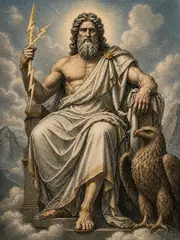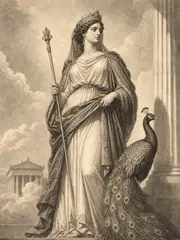
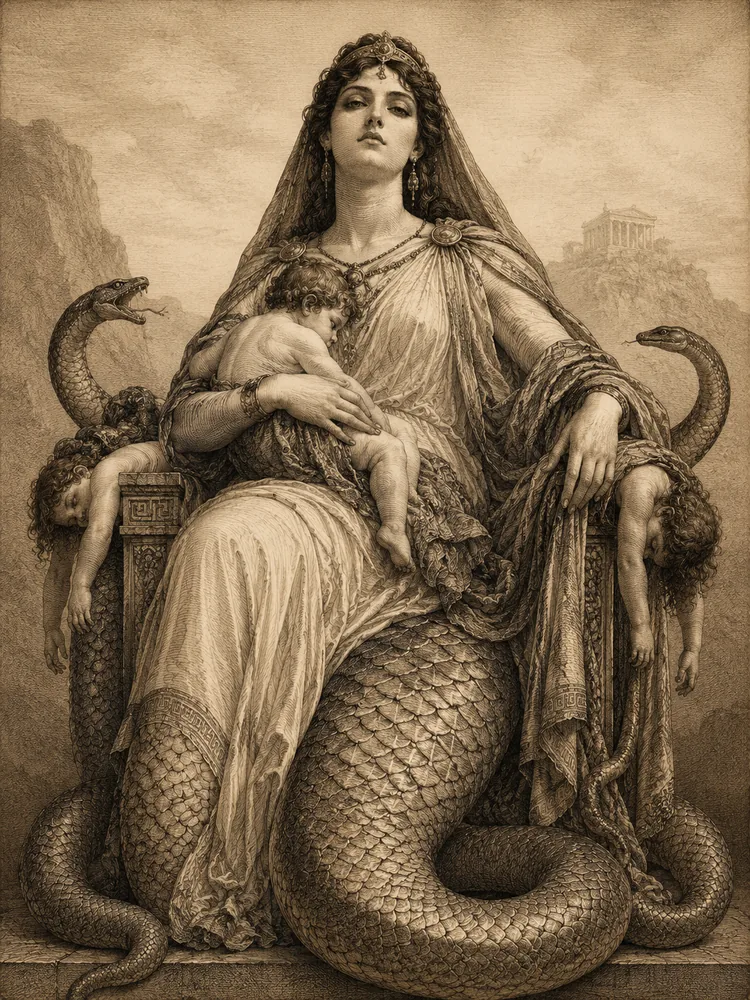
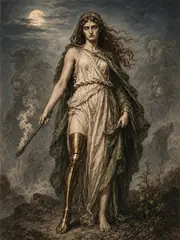
Lamia was originally (in the version preserved by Diodorus) a beautiful queen of Libya, beloved of Zeus, who bore him several children — all of whom were killed by the jealous Hera. In her grief Lamia became a monster, devouring the children of others as her own had been devoured; her face was twisted with weeping, her aspect terrible, and she preyed especially upon young children whom she snatched from cradles in the night. She was used by Greek mothers as a bogey to frighten misbehaving children — "Lamia will get you" — and the figure passed through Hellenistic and Roman tradition into European folklore as one of the prototypes of the night-witch and child-stealing crone. In late Greek tradition she became, like Empusa below, a generic name for a class of female demons rather than an individual.
Through this folkloric line, Lamia entered Renaissance and Romantic literature as a more sympathetic figure: in Keats's "Lamia" (1820), drawing on a tale from Philostratus's Life of Apollonius of Tyana, she is a serpent-woman who takes human form to win a young scholar's love, only to be exposed and to perish when his philosopher-mentor identifies her true nature. The figure has remained a productive one in Western fantasy literature.