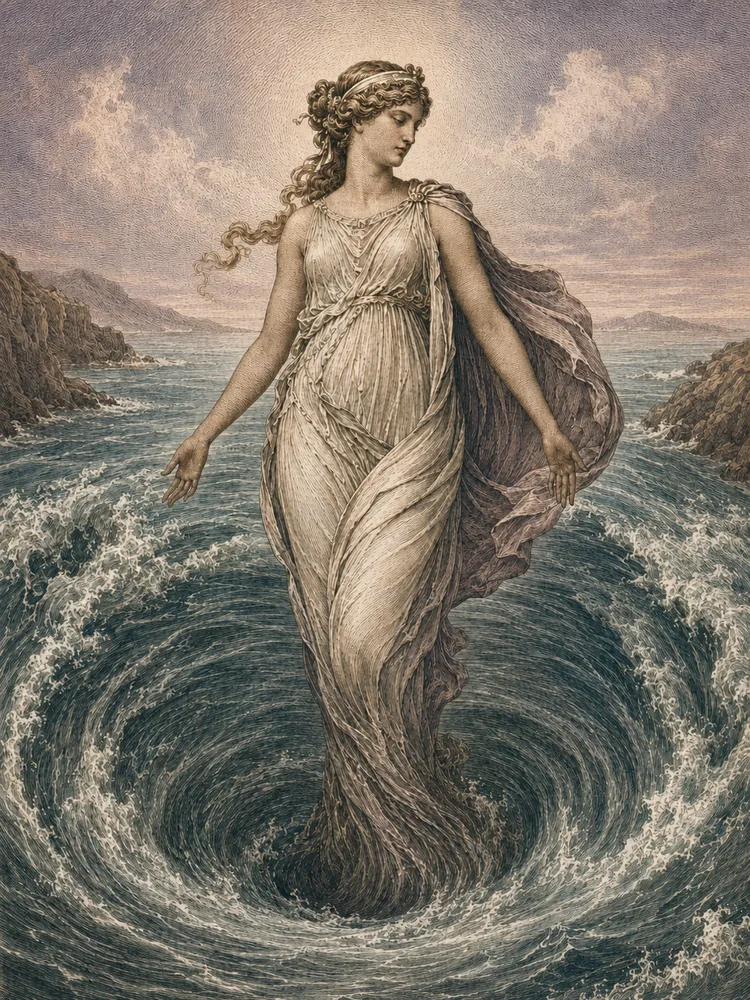
Charybdis was the sea-monster of the opposite side of the strait — a vast whirlpool that thrice each day swallowed and thrice spewed forth the seawater, drawing in any ship that came too close. In the personified form she was sometimes given as a daughter of Poseidon and Gaia, who had been thrown into the sea by Zeus's thunderbolt as punishment for some transgression and there transformed into the engulfing whirlpool. Odysseus survived her by clinging to a fig-tree on the cliff above as his ship was swallowed beneath him, then dropping back onto the floating wreckage when she spewed it forth again. Like Scylla, she became proverbial; the pairing of the two — the ship's-captain's choice between the snatching jaws of one and the engulfing waters of the other — was a recurring image of unwinnable dilemma in classical and later literature.
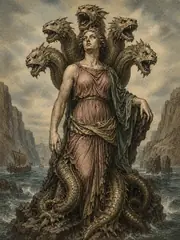 Before thisScylla
 Next on the wallLamia
Curator’s note
What the sources say, and what later tradition added. The sources for this bay
Homer, Odyssey 12.101–110, 235–259, 426–446; the personified parentage is in Servius's commentary on Vergil's Aeneid (3.420). The pairing is one of the most enduring metaphorical structures in Greek imagination.
Kin in the sources
Each tie is quoted from the entry that states it.
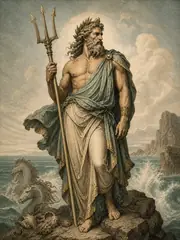 Child ofPoseidon
a daughter of Poseidon and Gaia, who had been thrown into the sea by Zeus's thunderbolt
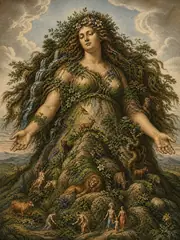 Child ofGaia
a daughter of Poseidon and Gaia, who had been thrown into the sea by Zeus's thunderbolt
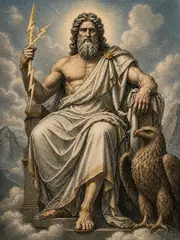 Rival ofZeus
thrown into the sea by Zeus's thunderbolt as punishment for some transgression
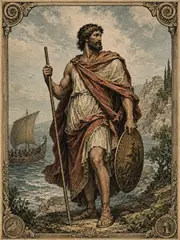 Rival ofOdysseus
Odysseus survived her by clinging to a fig-tree on the cliff above as his ship was swallowed beneath him
- Companion ofScylla
Like Scylla, she became proverbial; the pairing of the two
When the sources speak
Dated witnesses for The Heroic Bestiary. A date marks when the evidence was written down, not when the belief began. The whole timeline
- c. 1600–1100 BCE
- Mycenaean palace tablets in Linear B record offerings and divine names, but little continuous myth.
- c. 1100–800 BCE
- Post-palatial oral traditions and changing cult landscapes precede the surviving alphabetic epics.
- late 8th–7th centuries BCE
- The Iliad, Odyssey, Hesiodic Theogony and Works and Days give influential but non-exclusive divine orders.
- 7th–6th centuries BCE
- Homeric Hymns, lyric poetry, colonization, and local sanctuary traditions multiply regional narratives.
- 6th–5th centuries BCE
- Orphic, Pythagorean, and mystery materials develop alternative cosmogonies and afterlife doctrines.
- 5th century BCE
- Athenian tragedy and comedy recast heroic houses and divine justice for civic audiences.
- 4th century BCE
- Philosophers, antiquarians, and local historians interpret or criticize inherited myth.
- 323–31 BCE
- Hellenistic poets and scholars systematize variants across an enlarged Greek world.