A Compendium of the Ancient Gods
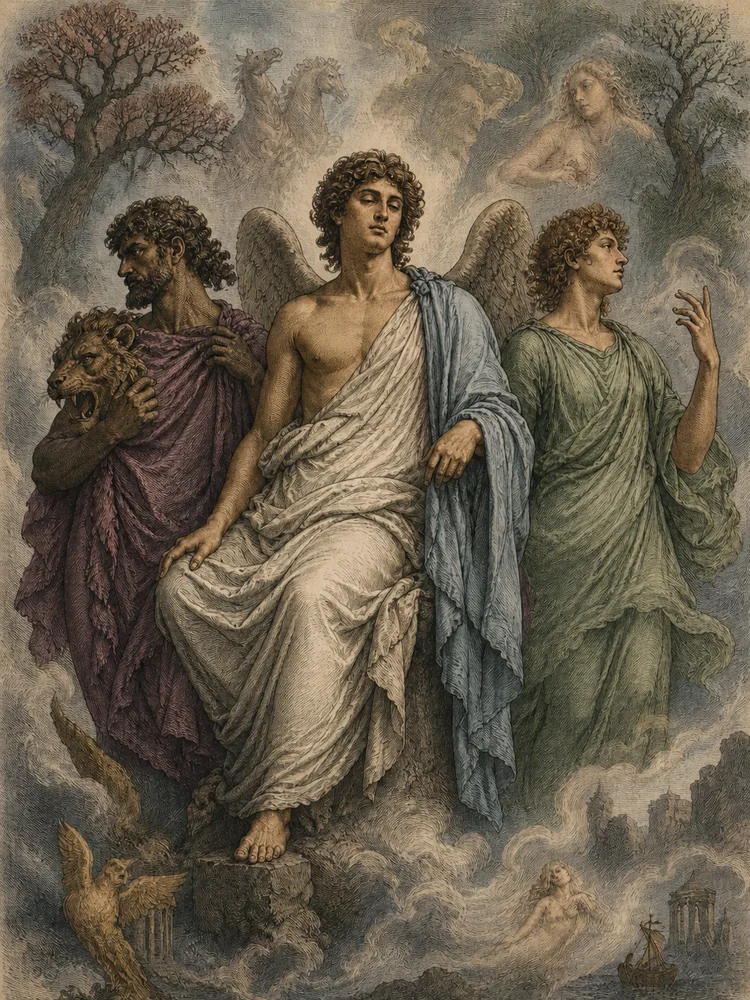
Morpheus and the Oneiroi, plate

In the deep cave of Sleep, where Hypnos lay upon his couch of black-petalled poppies, there dwelt also his thousand sons, the Oneiroi — the Dreams. Of these the chief were three: Morpheus, who took the shapes of men and women and could bear in his face every gesture, every voice, every gait of mortal kind; Phobetor (whom the gods called Icelos), who took the shapes of beasts and birds and serpents; and Phantasos, who took the shapes of inanimate things — of rocks, and water, and the wood of trees.

These three were the messengers Hypnos sent forth into the world by night, to bring to sleeping mortals the figures of their dreams. They came on silent wings out of the cave and into the bedchambers of men, and what they did there the dreaming knew but the waking forgot. There were said to be two gates from the cave of Sleep: one of horn, through which the true dreams came, and one of ivory, through which came the dreams that deceive. Through which gate any given dream had come, no waking person could tell; but the gods knew, and sometimes the seers could read the signs.

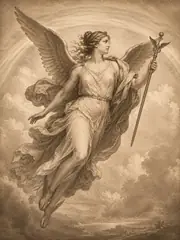
Morpheus had the chief place among the Oneiroi, and his name has come down into our speech for the medicine of poppy juice that gives the sleep he himself attended. When the gods wished to send a true vision to a sleeping mortal — Iris, in the matter of Alcyone, came down to Sleep's cave and woke Morpheus to bear the shape of her drowned husband Ceyx, that she might know — Morpheus was sent. But the lying dreams the brothers also bore, when fates required it; for not every sleep was a comfort, and the dreams that warned and the dreams that misled both came from the same cave.
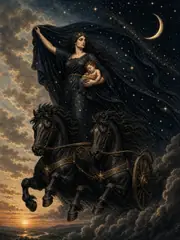
Curator’s note

What the sources say, and what later tradition added. The sources for this bay

Morpheus and the three sons of Sleep appear in Ovid (Metamorphoses 11.633-676, the Ceyx-and-Alcyone narrative), which is our principal source for the names and specializations of the three. The two gates of dreams — horn and ivory — are first described in Odyssey 19.560-569, where Penelope speaks of them; Virgil borrows the image at Aeneid 6.893-898. Hesiod (Theogony 211-212) names the Oneiroi as children of Nyx, but does not individuate them; the Hesiodic Oneiroi and the Ovidian sons of Sleep are not the same family in the surviving sources, and ancient mythography conflated them only loosely. The cave of Sleep itself is described in Iliad 14.231-291 (where Hypnos is summoned by Hera) and elaborated in Ovid's account. Lucian's True History 2.32-35 contains a satirical visit to the city of dreams which incorporates the older traditions.

Kin in the sources

Each tie is quoted from the entry that states it.

When the sources speak

Dated witnesses for The Sea, the Wild and the Wind. A date marks when the evidence was written down, not when the belief began. The whole timeline

c. 1600–1100 BCE
Mycenaean palace tablets in Linear B record offerings and divine names, but little continuous myth.
c. 1100–800 BCE
Post-palatial oral traditions and changing cult landscapes precede the surviving alphabetic epics.
late 8th–7th centuries BCE
The Iliad, Odyssey, Hesiodic Theogony and Works and Days give influential but non-exclusive divine orders.
7th–6th centuries BCE
Homeric Hymns, lyric poetry, colonization, and local sanctuary traditions multiply regional narratives.
6th–5th centuries BCE
Orphic, Pythagorean, and mystery materials develop alternative cosmogonies and afterlife doctrines.
5th century BCE
Athenian tragedy and comedy recast heroic houses and divine justice for civic audiences.
4th century BCE
Philosophers, antiquarians, and local historians interpret or criticize inherited myth.
323–31 BCE
Hellenistic poets and scholars systematize variants across an enlarged Greek world.

Floor plan

The rooms follow one another in the order their peoples first appear in the written record.

  1. The Cradle of Citiesc. 3400 BCE to 395 CE. 115 works
  2. The Gift of the Nilec. 4000 BCE to 395 CE. 73 works
  3. The Olympian Orderc. 1600 BCE to 750 CE. 152 works
  4. The Persian Worldc. 2000 BCE to 1010 CE. 30 works
  5. The Levantine Borderlandsc. 1200 BCE to 500 CE. 20 works
  6. The Edges of Empirec. 2000 BCE to 1500 CE. 33 works
  7. The Etruscan Worldc. 900 BCE to 750 CE. 22 works
  8. The Roman Inheritancec. 1200 BCE to 500 CE. 58 works
  9. The Northern Inheritancec. 2000 BCE to 1600 CE. 131 works