A Compendium of the Ancient Gods
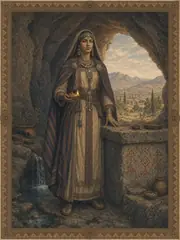
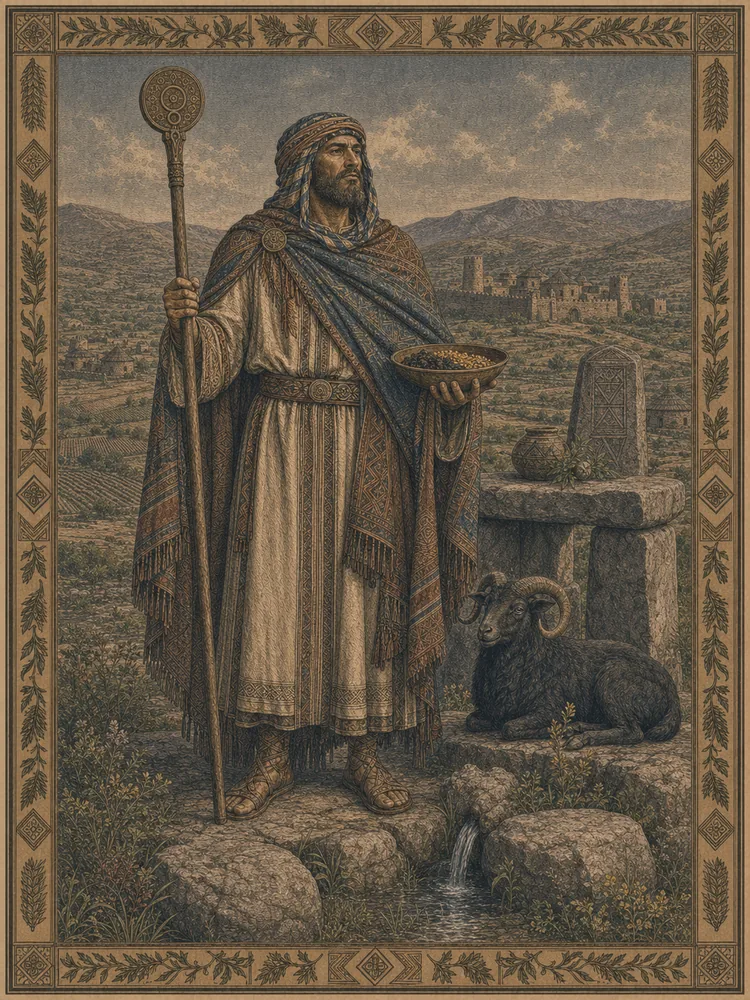
Bonchor, plate

Bonchor was a Numidian local deity, attested chiefly through Latin inscriptions of the Roman provincial period. The dedications to Bonchor are concentrated in the territory of modern central Algeria (the Roman province of Numidia), with the typical pattern of a tribal-local cult preserved under Roman administration. The Romans identified him with various Mediterranean deities (with Pluto in some inscriptions, with Saturn in others), reflecting the chthonic-and-supreme-god ambiguity of his function.

The figure is one of many such local Numidian and Mauretanian deities documented in the Roman provincial inscriptions of North Africa. The pattern is identical to that of Bandua in Iberia (treated in Book III above) and of the various local Illyrian deities (treated in Book II): each tribal community had its own tutelary deity, with a name particular to its location, and the Roman administrative absorption preserved these local cults rather than consolidating them into a single regional pantheon.

Bonchor's specific function — chthonic, supreme-god, or some combination — is hard to determine from the available evidence. The Roman identifications with both Pluto and Saturn are revealing of the difficulty Roman administrators had in placing non-Mediterranean deities within the standard interpretatio Romana scheme. The deity may have been originally an undifferentiated tutelary protector of the tribal community, with chthonic and supreme-god aspects coexisting in ways that the Roman administrative-religious system could not cleanly map.

After the Christianization of Roman North Africa in the fourth and fifth centuries, the Bonchor-cult disappears from the public record. The Berber tribal religion was extinguished as a public institution by both Christianization and (from the seventh century) Islamization, but the underlying tribal-religious sensibility (with local saints replacing local deities) was preserved in the Berber folk-religion that survived into the modern period.
Curator’s note

What the sources say, and what later tradition added. The sources for this bay

Bonchor is documented in Latin inscriptions from Numidia; the standard collection is the CIL VIII volumes. The standard scholarly treatments are in Marcel Le Glay's Saturne africain: histoire (1966) and in Gabriel Camps's various works on the Berbers. The wider pattern of local Numidian and Mauretanian deities is in the volumes of the Encyclopédie berbère.

Kin in the sources

Each tie is quoted from the entry that states it.

When the sources speak

Dated witnesses for The Berber Amazigh Pantheon. A date marks when the evidence was written down, not when the belief began. The whole timeline

2nd–1st millennia BCE
Bronze and Iron Age regional cultures establish the archaeological backgrounds later labeled Thracian, Illyrian, Iberian, Caucasian, and Libyan.
8th–6th centuries BCE
Greek and Phoenician colonization creates new inscriptional, artistic, and commercial contact zones.
6th–4th centuries BCE
Classical authors begin describing frontier peoples and translating local gods into Greek categories.
3rd–1st centuries BCE
Hellenistic kingdoms, Carthage, and Rome intensify political and cultic exchange.
1st century BCE–3rd century CE
Roman provincial rule produces dedications, coins, reliefs, and interpretive equations across the Balkans, Iberia, Caucasus, and North Africa.
4th–7th centuries CE
Christianization and imperial change end or transform many public cult institutions while names persist in texts and places.
medieval period
Georgian chronicles and epic traditions, Iberian memory, and North African historical sources reshape pre-Christian inheritances.
2nd–1st millennia BCE
Libyan groups appear in Egyptian records and regional archaeology.

Floor plan

The rooms follow one another in the order their peoples first appear in the written record.

  1. The Cradle of Citiesc. 3400 BCE to 395 CE. 115 works
  2. The Gift of the Nilec. 4000 BCE to 395 CE. 73 works
  3. The Olympian Orderc. 1600 BCE to 750 CE. 152 works
  4. The Persian Worldc. 2000 BCE to 1010 CE. 30 works
  5. The Levantine Borderlandsc. 1200 BCE to 500 CE. 20 works
  6. The Edges of Empirec. 2000 BCE to 1500 CE. 33 works
  7. The Etruscan Worldc. 900 BCE to 750 CE. 22 works
  8. The Roman Inheritancec. 1200 BCE to 500 CE. 58 works
  9. The Northern Inheritancec. 2000 BCE to 1600 CE. 131 works