A Compendium of the Ancient Gods
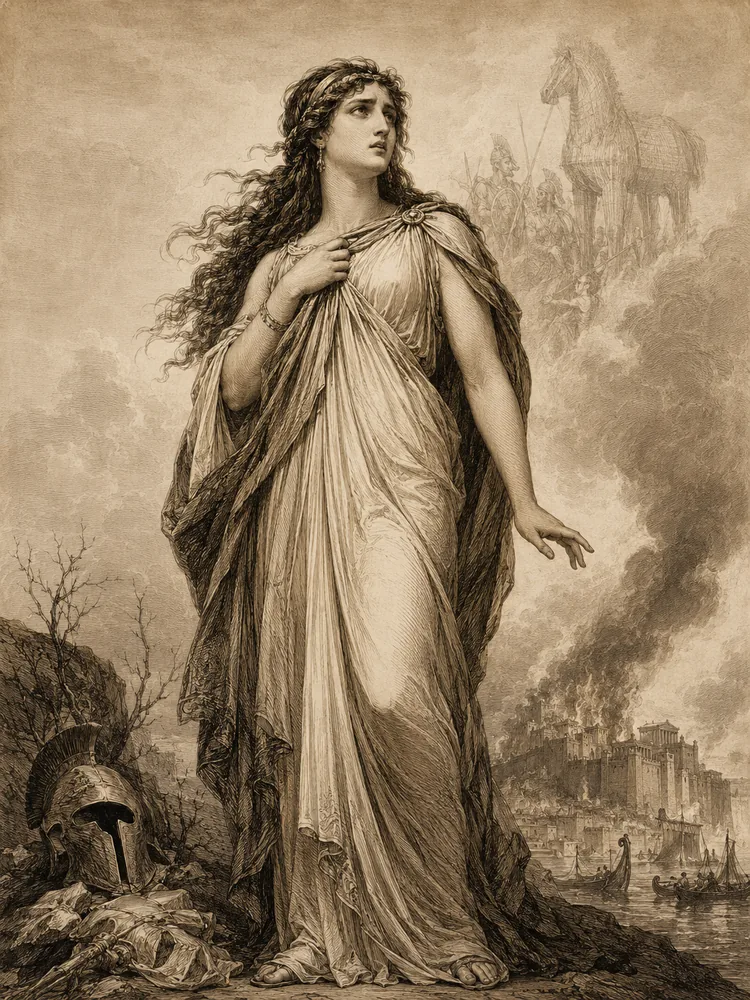
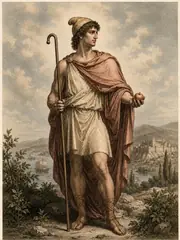
Cassandra, plate

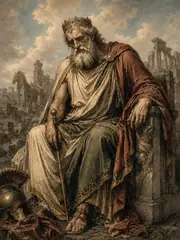
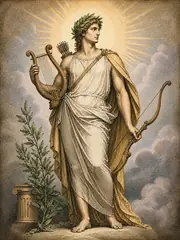
Cassandra was a daughter of Priam and Hecuba, and she was beloved of Apollo. The god gave her the gift of true prophecy, on condition that she would lie with him; and she accepted the gift but refused the condition. Apollo, unable to revoke his gift, modified it: she should prophesy truly, but no one should ever believe her. So Cassandra was set apart from her people by a curse that worked through her own success — she always knew, and was always disregarded.

She was the first to recognize Paris when he returned from his exposure on Mount Ida, and to warn the city against him. She prophesied to her brother that the Greek embassy would carry away Helen and that the war would come. She warned the Trojans against the wooden horse — "there are armed men inside, do not bring it within the walls" — and was not heeded. She was foreseeing the city's fall when the Greeks broke through. Throughout, she was treated as mad — and by the curse, this was the only fate possible for her.

On the night of Troy's fall, Cassandra fled to the temple of Athena and clung to the wooden image of the goddess. There Ajax the Lesser, son of Oileus, found her, dragged her from the altar by her hair, and violated her in the very temple — an outrage so great that even the Greeks turned against him afterward. Athena could not avenge it directly while Ajax was within Cassandra's protection of the altar, but on the voyage home she struck his ship with a thunderbolt; he survived in the water, boasted that he had escaped the gods' wrath, and Poseidon split the rock he was clinging to and drowned him.

Cassandra herself was taken as a captive by Agamemnon and brought back to Mycenae. There she prophesied her own death and his at the hand of Clytemnestra, and was again disbelieved; and so she walked to her killing with full foreknowledge, the curse fulfilled to the very end. Aeschylus's Cassandra, in the Agamemnon, is the supreme dramatic treatment — the prophet led to slaughter, speaking what is true and going unheeded one final time.
Curator’s note

What the sources say, and what later tradition added. The sources for this bay

Cassandra appears throughout Greek literature: in the Iliad (24.699-706, recognizing the body of Hector returning), in Aeschylus's Agamemnon (the great prophecy-scene at 1072-1330, one of the most famous passages of Greek tragedy), in Euripides's Trojan Women, in Lycophron's Alexandra (a deliberately obscure third-century BCE poem of more than 1400 lines spoken in her voice), in Pseudo-Apollodorus (Epitome 5.22-23, 6.23), and in Virgil's Aeneid 2.246-247, 403-406. The story of Apollo's gift and the betrayed condition is given in Pseudo-Apollodorus (3.12.5) and in the scholia to Lycophron. The Locrian Maidens — a yearly tribute of two girls sent from Locris to Athena's temple at Troy in expiation of the rape of Cassandra by Locrian Ajax — is a real cultic practice attested through the imperial period; see Polybius 12.5, Strabo 13.1.40.

Kin in the sources

Each tie is quoted from the entry that states it.

When the sources speak

Dated witnesses for The Heroic Cycle and the Tragic Houses. A date marks when the evidence was written down, not when the belief began. The whole timeline

c. 1600–1100 BCE
Mycenaean palace tablets in Linear B record offerings and divine names, but little continuous myth.
c. 1100–800 BCE
Post-palatial oral traditions and changing cult landscapes precede the surviving alphabetic epics.
late 8th–7th centuries BCE
The Iliad, Odyssey, Hesiodic Theogony and Works and Days give influential but non-exclusive divine orders.
7th–6th centuries BCE
Homeric Hymns, lyric poetry, colonization, and local sanctuary traditions multiply regional narratives.
6th–5th centuries BCE
Orphic, Pythagorean, and mystery materials develop alternative cosmogonies and afterlife doctrines.
5th century BCE
Athenian tragedy and comedy recast heroic houses and divine justice for civic audiences.
4th century BCE
Philosophers, antiquarians, and local historians interpret or criticize inherited myth.
323–31 BCE
Hellenistic poets and scholars systematize variants across an enlarged Greek world.

Floor plan

The rooms follow one another in the order their peoples first appear in the written record.

  1. The Cradle of Citiesc. 3400 BCE to 395 CE. 115 works
  2. The Gift of the Nilec. 4000 BCE to 395 CE. 73 works
  3. The Olympian Orderc. 1600 BCE to 750 CE. 152 works
  4. The Persian Worldc. 2000 BCE to 1010 CE. 30 works
  5. The Levantine Borderlandsc. 1200 BCE to 500 CE. 20 works
  6. The Edges of Empirec. 2000 BCE to 1500 CE. 33 works
  7. The Etruscan Worldc. 900 BCE to 750 CE. 22 works
  8. The Roman Inheritancec. 1200 BCE to 500 CE. 58 works
  9. The Northern Inheritancec. 2000 BCE to 1600 CE. 131 works