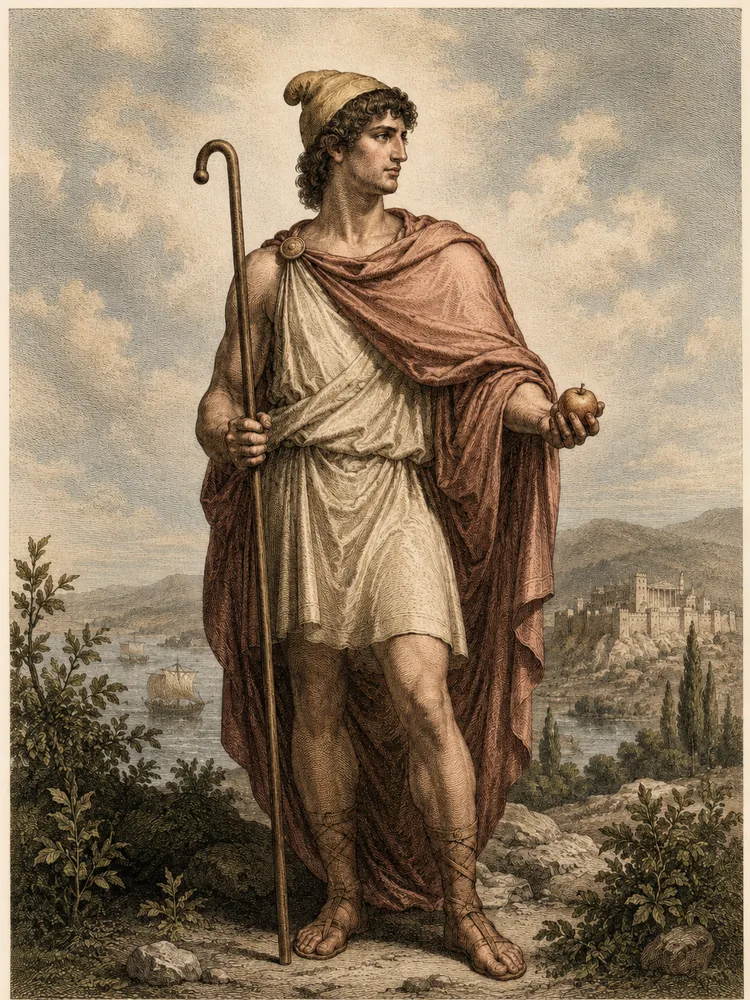
Hecuba queen of Troy, when she was carrying Paris, dreamed that she would bring forth a flaming torch that would burn the city; the seers, consulted, told her that this child would be the destruction of Troy, and the king Priam ordered him to be exposed upon Mount Ida. But the herdsman charged with the task could not slay the boy, and so left him on the mountainside, where he was suckled by a she-bear and afterwards taken in by a shepherd, who raised him as his own son. So Paris grew up among the herdsmen of Ida, ignorant of his true birth.
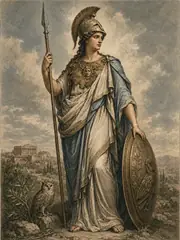
It was while he was tending sheep on the mountain that the three goddesses came to him: Hera, Athena, and Aphrodite, sent by Zeus to ask him to judge which of them was the fairest, after Eris had thrown among the gods the apple inscribed "to the fairest." Each goddess offered him a bribe: Hera promised power, Athena promised wisdom and skill in war, and Aphrodite promised the most beautiful woman in the world. Paris chose Aphrodite, and so the judgment was made; and when afterward he was recognized at Troy and restored to his royal place, he set sail for Greece — visited Sparta — was received as a guest of Menelaus — and carried off Helen, as Aphrodite had promised. So began the Trojan War.
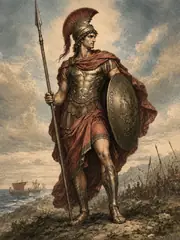
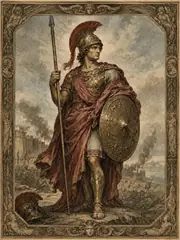
In the war itself Paris was no champion. The Greeks despised him as a coward, and the Iliad shows him with little affection: he fights mostly with the bow rather than face to face, and on one famous occasion (Iliad 3) he is matched in single combat against Menelaus and is rescued from death only by Aphrodite's intervention. His brother Hector reproaches him bitterly more than once for his uselessness in the city's defense. Yet it was Paris, in the end, who killed Achilles — the arrow that struck the heel was guided by Apollo but loosed by his bow. Paris himself was slain shortly afterward by the arrows of Philoctetes, in the last year of the war, before Troy fell.