A Compendium of the Ancient Gods
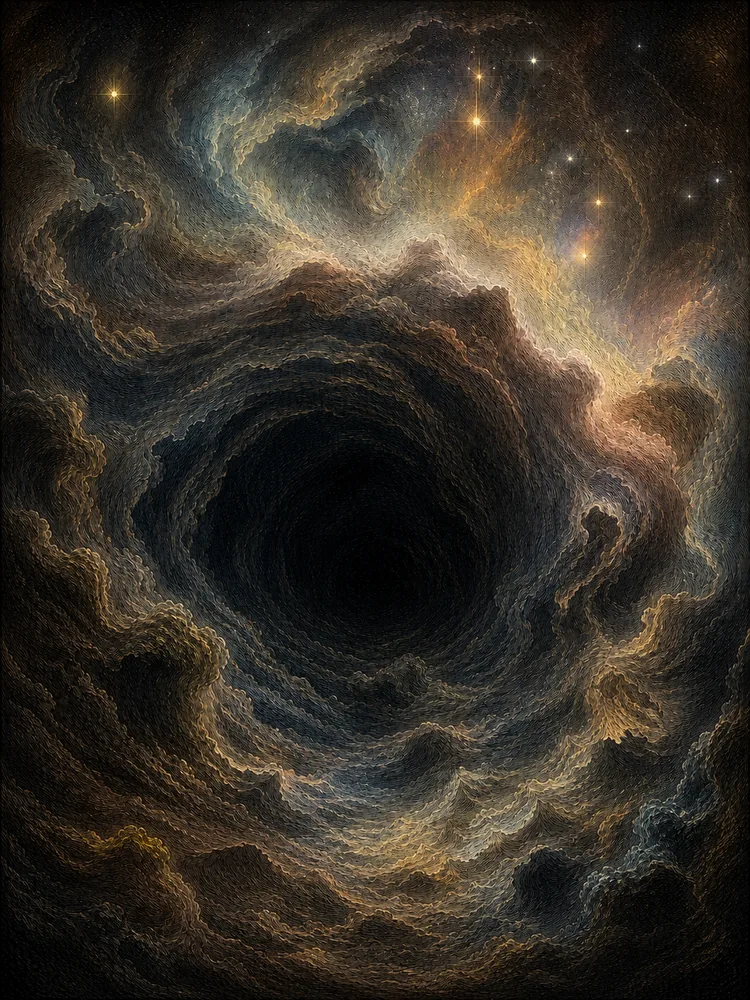
Chaos, plate

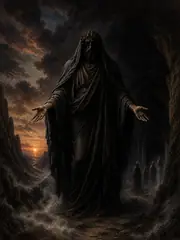
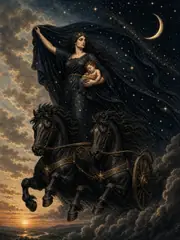
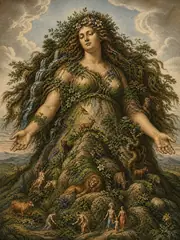
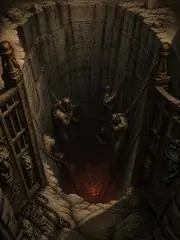
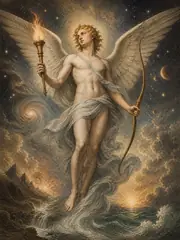
Chaos was the first, and from Chaos all else proceeded. The Greek word does not mean disorder, in the modern sense; it derives from a verbal root meaning to gape or to yawn, and signifies a gap, an opening, a vast emptiness within which other things may be. Chaos was not the formless matter of later philosophical speculation; it was rather the empty place in which the cosmos would be made — the precondition of being, the room within which existence could find room. From this Chaos, by no parentage, came forth Gaia the broad-bosomed earth, Tartarus the gloomy pit, and Eros the binding love; and from Chaos itself, by spontaneous generation, came Erebus the underworld darkness and black Night.

Chaos had no cult, no temple, no statue. It was a poetic and theological postulate — the necessary first term in any account of how the world came to be. Later philosophers, particularly the Stoics and the Neoplatonists, made of Chaos a more positive principle (the formless matter awaiting form, the precosmic plenum); but Hesiod's Chaos is the simpler and starker thing, the gap before the things that fill it.
Curator’s note

What the sources say, and what later tradition added. The sources for this bay

Hesiod, Theogony 116–125, is the foundational text. The etymology from chaino ("to gape") is securely established and rules out the modern English sense of "chaos" as disorder. Aristophanes and Plato later played with the term in various directions; the Stoic and Orphic traditions identified Chaos with primordial water or with formless matter, departing from Hesiod's stricter sense. The translation "void" or "gap" is preferable to "chaos" where the Hesiodic term is meant.

Kin in the sources

Each tie is quoted from the entry that states it.

When the sources speak

Dated witnesses for The Primordial Powers. A date marks when the evidence was written down, not when the belief began. The whole timeline

c. 1600–1100 BCE
Mycenaean palace tablets in Linear B record offerings and divine names, but little continuous myth.
c. 1100–800 BCE
Post-palatial oral traditions and changing cult landscapes precede the surviving alphabetic epics.
late 8th–7th centuries BCE
The Iliad, Odyssey, Hesiodic Theogony and Works and Days give influential but non-exclusive divine orders.
7th–6th centuries BCE
Homeric Hymns, lyric poetry, colonization, and local sanctuary traditions multiply regional narratives.
6th–5th centuries BCE
Orphic, Pythagorean, and mystery materials develop alternative cosmogonies and afterlife doctrines.
5th century BCE
Athenian tragedy and comedy recast heroic houses and divine justice for civic audiences.
4th century BCE
Philosophers, antiquarians, and local historians interpret or criticize inherited myth.
323–31 BCE
Hellenistic poets and scholars systematize variants across an enlarged Greek world.

Floor plan

The rooms follow one another in the order their peoples first appear in the written record.

  1. The Cradle of Citiesc. 3400 BCE to 395 CE. 115 works
  2. The Gift of the Nilec. 4000 BCE to 395 CE. 73 works
  3. The Olympian Orderc. 1600 BCE to 750 CE. 152 works
  4. The Persian Worldc. 2000 BCE to 1010 CE. 30 works
  5. The Levantine Borderlandsc. 1200 BCE to 500 CE. 20 works
  6. The Edges of Empirec. 2000 BCE to 1500 CE. 33 works
  7. The Etruscan Worldc. 900 BCE to 750 CE. 22 works
  8. The Roman Inheritancec. 1200 BCE to 500 CE. 58 works
  9. The Northern Inheritancec. 2000 BCE to 1600 CE. 131 works