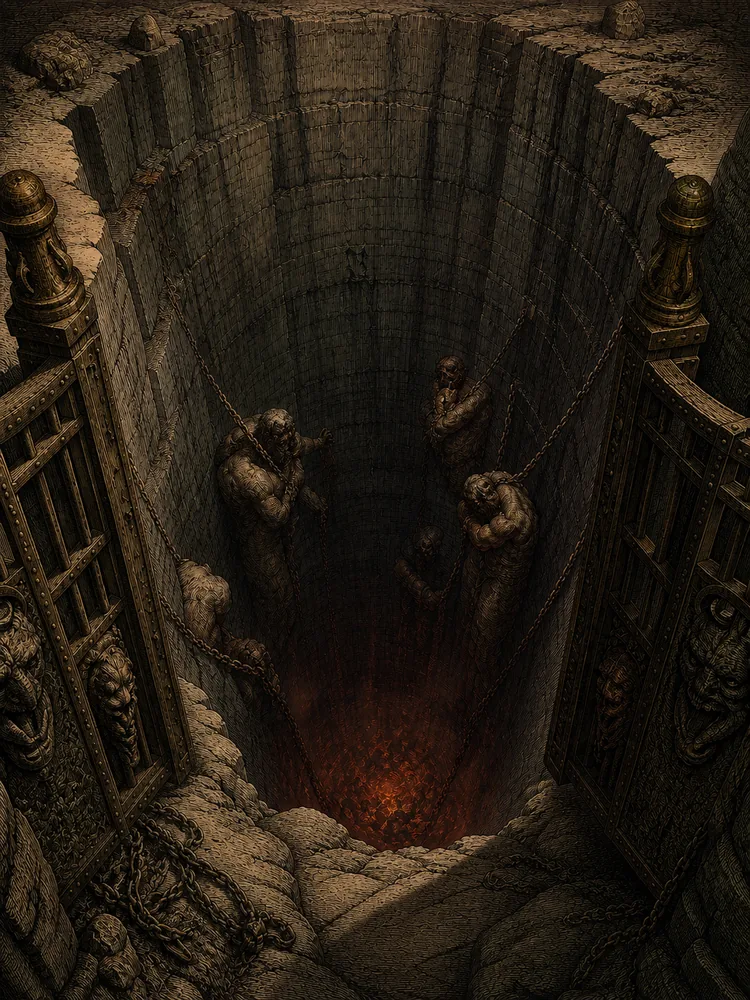
Tartarus was the great pit beneath the earth, the deepest part of the underworld, as far below Hades' realm as Hades was below the earth — for, as Hesiod measured it, an anvil dropped from heaven would fall nine days and nights before reaching the earth on the tenth, and another nine days from earth before reaching Tartarus on the tenth. He was both place and person: the abyss into which the defeated Titans were cast after their war with Zeus, where they were imprisoned forever behind walls of bronze; and a primordial divine power, son of Chaos in some accounts, who as a person mated with Gaia to engender the great serpent Typhon. As the prison of the defeated divine generations, Tartarus contained Cronus and his Titan brothers (in Hesiod's account; in some later accounts, Cronus was reconciled and ruled in the Isles of the Blessed); the Hundred-Handed Ones served as their gaolers. As the deepest pit of the underworld, Tartarus was the place of the punishments of the wicked dead — Tantalus stretching for the food he could not reach, Sisyphus pushing his stone, Ixion bound upon his wheel — though this judicial sense of Tartarus as the punishment of mortal sinners is mostly a later development.
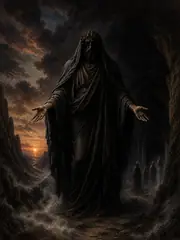 Before thisErebus
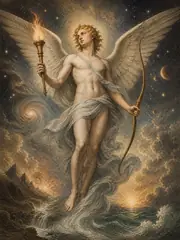 Next on the wallEros (Primordial)
Curator’s note
What the sources say, and what later tradition added. The sources for this bay
Hesiod, Theogony 116, 717–745, 821–822, is the principal source; the figure of Tartarus as a divine person is treated in Theogony 821–822 (where Tartarus mates with Gaia to produce Typhon). The topographical conception of Tartarus as the deepest pit is elaborated in Plato (Phaedo 112a–113c, with detailed underground geography) and in Vergil (Aeneid 6.548–627). The shift in usage from "prison of the defeated Titans" to "place of punishment for the wicked dead" begins as early as the fifth century but is not universally established; some classical sources still distinguish Tartarus from the place of mortal punishment.
Kin in the sources
Each tie is quoted from the entry that states it.
 Child ofChaos
son of Chaos in some accounts, who as a person mated with Gaia to engender the great serpent Typhon
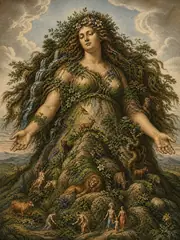 Consort ofGaia
son of Chaos in some accounts, who as a person mated with Gaia to engender the great serpent Typhon
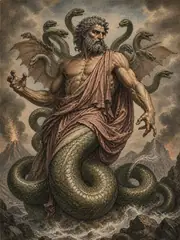 Parent ofTyphon
son of Chaos in some accounts, who as a person mated with Gaia to engender the great serpent Typhon
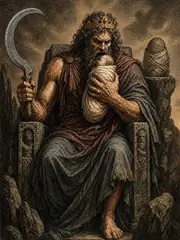 Rival ofCronus
Tartarus contained Cronus and his Titan brothers
- Sibling ofEros (Primordial)
He came forth from Chaos at the beginning along with Gaia and Tartarus
When the sources speak
Dated witnesses for The Primordial Powers. A date marks when the evidence was written down, not when the belief began. The whole timeline
- c. 1600–1100 BCE
- Mycenaean palace tablets in Linear B record offerings and divine names, but little continuous myth.
- c. 1100–800 BCE
- Post-palatial oral traditions and changing cult landscapes precede the surviving alphabetic epics.
- late 8th–7th centuries BCE
- The Iliad, Odyssey, Hesiodic Theogony and Works and Days give influential but non-exclusive divine orders.
- 7th–6th centuries BCE
- Homeric Hymns, lyric poetry, colonization, and local sanctuary traditions multiply regional narratives.
- 6th–5th centuries BCE
- Orphic, Pythagorean, and mystery materials develop alternative cosmogonies and afterlife doctrines.
- 5th century BCE
- Athenian tragedy and comedy recast heroic houses and divine justice for civic audiences.
- 4th century BCE
- Philosophers, antiquarians, and local historians interpret or criticize inherited myth.
- 323–31 BCE
- Hellenistic poets and scholars systematize variants across an enlarged Greek world.