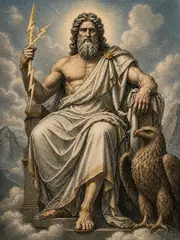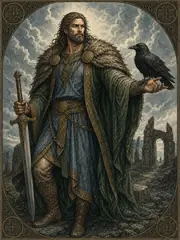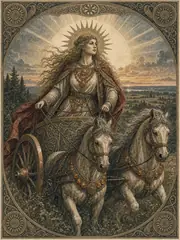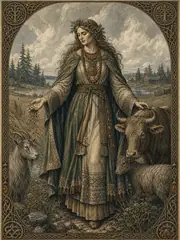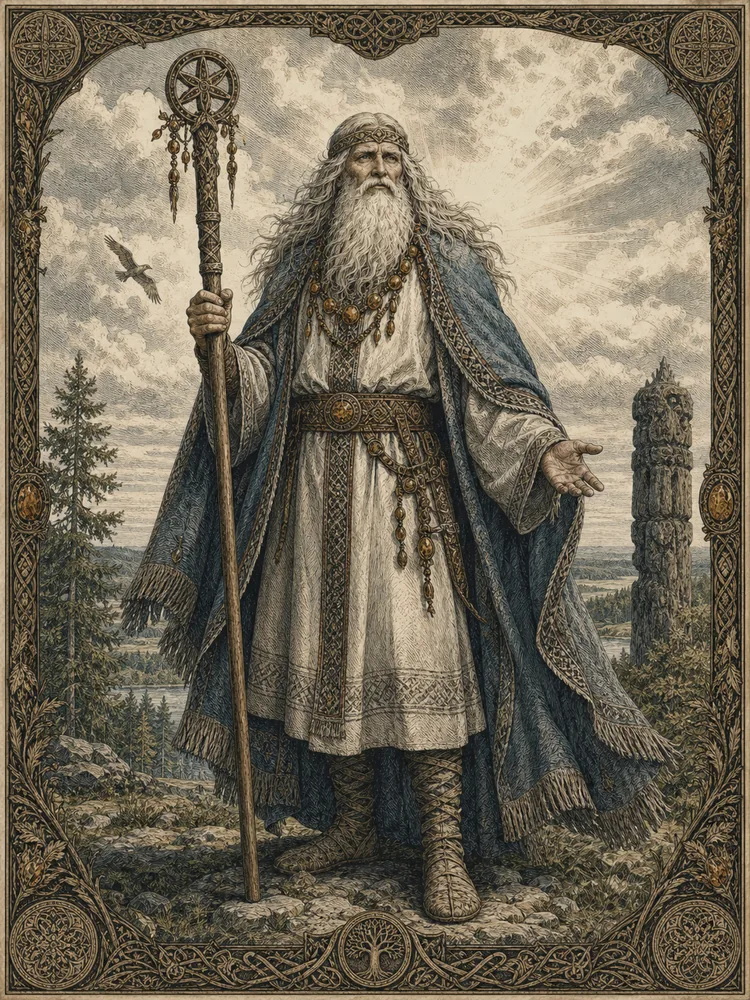
Dievas (Lithuanian) and Dievs (Latvian) was the Baltic sky-god, the high god of the heavens, etymologically identical with the Indo-European *Dyeus that gave Greek Zeus, Latin Jupiter (from *Dyeus pater), Vedic Dyaus Pitar, and Norse Týr. The Baltic Dievas, however, retained a less mythologically active character than his Indo-European cousins; the Baltic religion did not have an elaborate central narrative concerning him. He was the god who lived above (in his celestial homestead, which was depicted in folk-tradition as a kind of farmstead with horses, daughters, and the regular activities of a Baltic farm), who watched over human affairs at a distance, who was invoked in oaths and at significant moments. His feminine consort and household — the daughters Saulė (the sun) and the dawn-star, the wife sometimes named (variously across regions), and the household servants — appears in the Latvian dainas in a remarkable extended cycle of poems describing the doings of the divine homestead in metaphorical terms drawn from human farm-life.
The Christian-era word for "God" in modern Lithuanian (Dievas) and Latvian (Dievs) is the same word as the pre-Christian sky-god's name; the conversion accordingly transferred the name to the Christian God without introducing a new term, a linguistic continuity that has preserved the etymological line unbroken from Indo-European antiquity to the present.