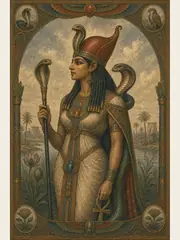
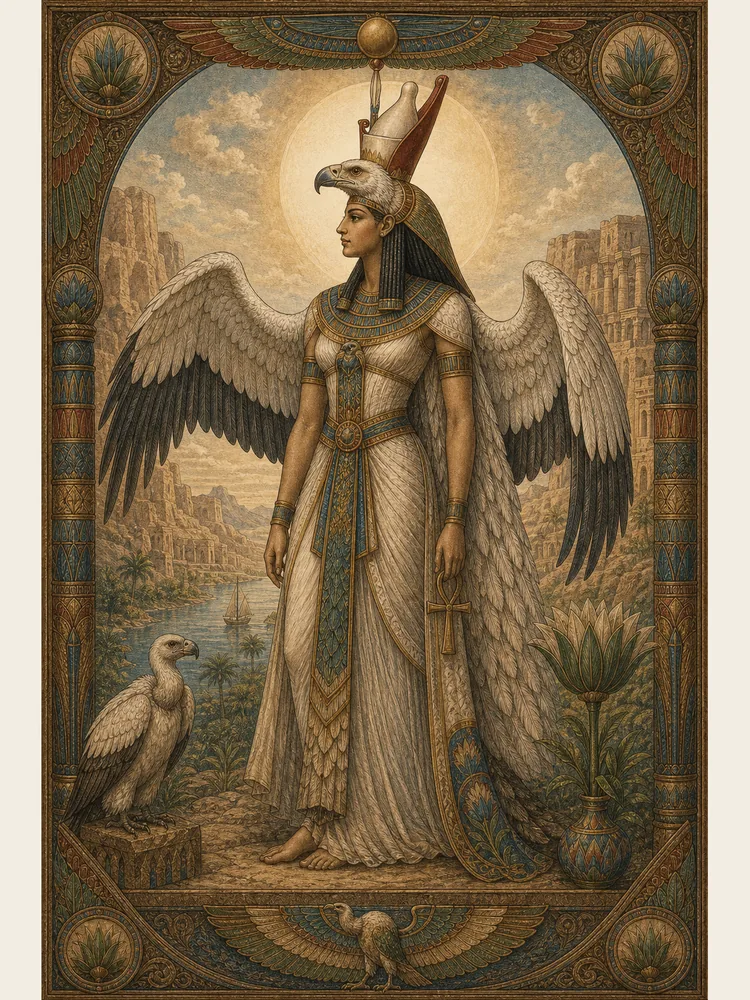
Nekhbet was the vulture-goddess of Upper Egypt, whose cult-city was el-Kab (ancient Nekheb), opposite Hierakonpolis on the east bank of the Nile in Upper Egypt. She was the tutelary goddess of the southern half of Egypt, paired with Wadjet the cobra-goddess of Lower Egypt; the two together formed the Two Ladies (Nebty), one of the principal royal titles of the pharaoh from the earliest dynasties onward. Their images appeared on the king's brow in the form of the vulture and the cobra side by side — the so-called "Two Ladies" of the royal headdress — symbolizing the king's rule over the Two Lands. Nekhbet was depicted as a white vulture (the African white-headed vulture, a distinctive species of the Nile valley), or as a woman with a vulture's outspread wings forming her headdress.
Beyond her royal-protective function, Nekhbet was a goddess of mothers and of children; the vulture in Egyptian thought was a maternal symbol (the same hieroglyph that wrote the name Mut, "mother"), associated with the protection of the young. Royal mothers and queens regularly wore vulture-headdresses in their iconography, identifying themselves with Nekhbet as the divine mother of the king.