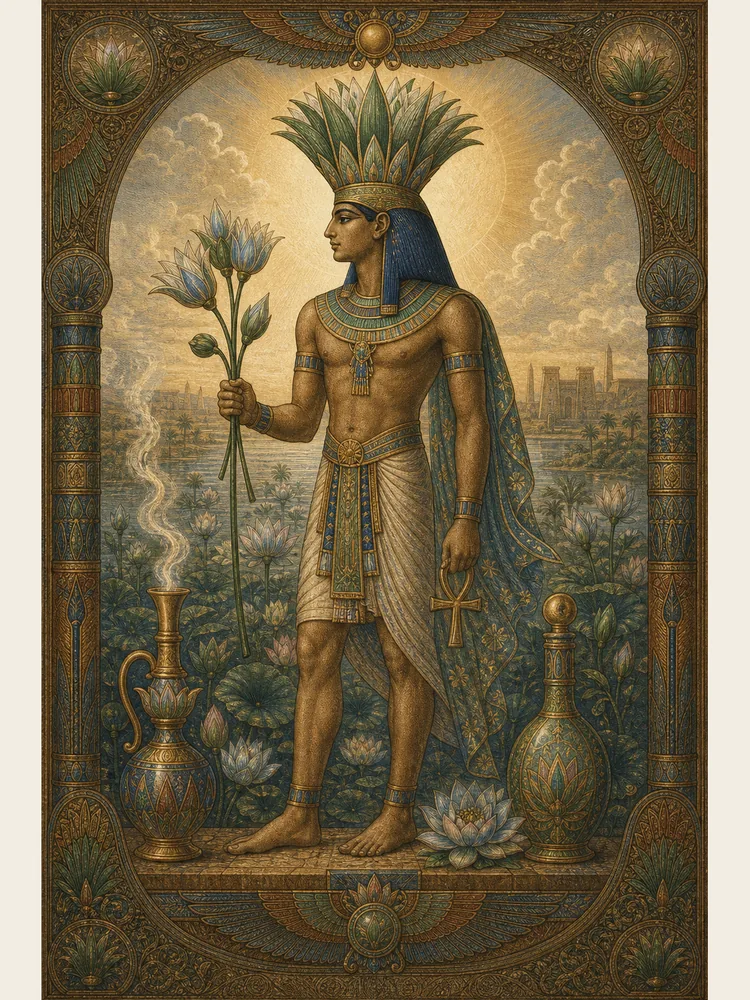
Nefertum was the lotus-god, depicted as a young man crowned with a blue lotus blossom (sometimes upon a tall stem with a pair of plumes), or simply as the lotus itself rising from the primal waters. He was the son of Ptah and Sekhmet at Memphis, the third member of the Memphite triad; he was a god of fragrance, of fresh air, of the sweetness that arose with the lotus's morning blossoming on the still water of the canals. The Memphite cosmogony held that at the beginning of creation, when the primal lotus opened upon the still waters of Nun, the young sun-god Nefertum emerged from its blossom — a creation-myth alternative to the Heliopolitan, locating the world's first dawn in the fragrant unfolding of a lotus rather than the self-generation of Atum upon a hill.
 Before thisMehen
 Next on the wallNekhbet
Curator’s note
What the sources say, and what later tradition added. The sources for this bay
Nefertum's cult is principally Memphite. His name signifies something like "the perfecting of Atum" or "the beautiful Atum," and connects him to the Heliopolitan creator while distinguishing him from him. The lotus-creation motif (the young sun emerging from the primordial lotus) is best preserved in a series of small wooden sculptures from the New Kingdom, depicting a child's head emerging from a lotus blossom; one such sculpture from Tutankhamun's tomb is among the most familiar pieces of Egyptian art. The lotus-and-fragrance association seems to have been theologically deepened in the New Kingdom temple of Memphis.
Kin in the sources
Each tie is quoted from the entry that states it.
 Child ofPtah
He was the son of Ptah and Sekhmet at Memphis
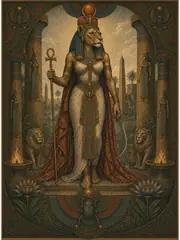 Child ofSekhmet
He was the son of Ptah and Sekhmet at Memphis
The same god in other rooms
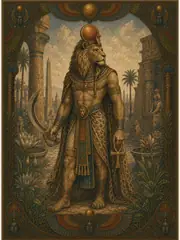
The ancient sources themselves name these as one god under different names. See Maahes and Nefertum hung together
When the sources speak
Dated witnesses for The Protectors and the Sages. A date marks when the evidence was written down, not when the belief began. The whole timeline
- c. 4000–3100 BCE
- Predynastic regional symbols, burials, standards, and animal cults provide the deep background to later divine iconography.
- c. 3100–2686 BCE
- Early Dynastic kingship joins royal ideology to local cult centers and establishes many durable divine emblems.
- c. 2686–2181 BCE
- Old Kingdom pyramid complexes and the Pyramid Texts preserve the earliest large religious corpus.
- c. 2181–1650 BCE
- First Intermediate and Middle Kingdom traditions broaden mortuary access; Coffin Texts develop older royal materials.
- c. 1550–1070 BCE
- New Kingdom temple wealth, royal hymns, underworld books, and the Book of Going Forth by Day greatly expand the record.
- c. 1353–1336 BCE
- Akhenaten’s Aten program reorganizes royal cult but does not permanently erase the older divine plurality.
- c. 1070–664 BCE
- Third Intermediate Period priestly and regional powers reshape cult administration and divine kingship.
- 664–332 BCE
- Late Period archaism, animal cults, and temple scholarship preserve and reinterpret older forms.