A Compendium of the Ancient Gods
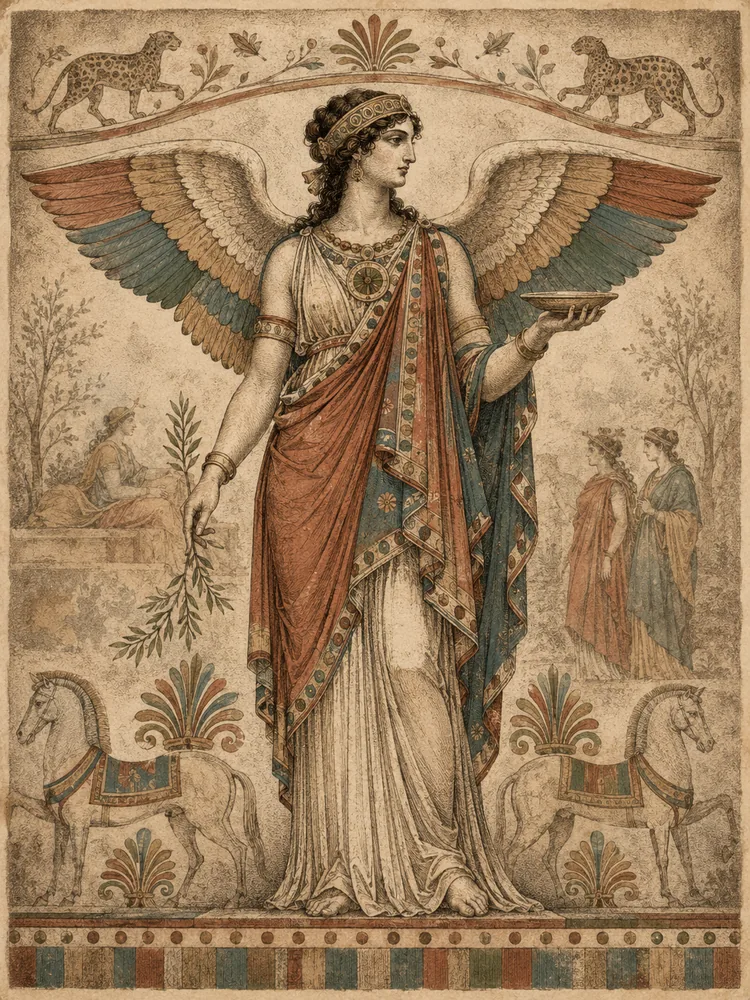
The Lasa, plate

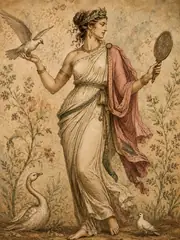
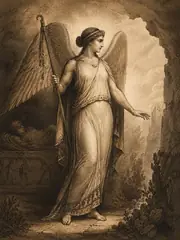
The Lasa were a group of female spirits who attended Turan and other Etruscan goddesses in their public appearances. They were depicted on bronze mirrors and in tomb paintings as winged young women, sometimes nude, sometimes lightly draped, holding mirrors, perfume-bottles, garlands of flowers, and the small implements of feminine beauty and grace. They had no exact Greek or Roman counterpart — though they overlap functionally with the Greek Charites (Graces) and with the Roman Camenae — and their distinct character is one of the surest signs that the Etruscan religion preserved indigenous structures even where it borrowed Hellenizing imagery.

Each Lasa, in some inscriptions, was named: Lasa Vecu, Lasa Sitmica, Lasa Achununa, Lasa Racuneta, and others. These names probably reflect particular shrines or cities or functions; the precise meaning of most of them is lost. The general role was clear: the Lasa were the divine attendants who accompanied the higher goddess (Turan most often, but also Menrva and others) in her appearances among mortals, just as a queen would be attended by her ladies-in-waiting. They were also, on their own, beneficent spirits who could be invoked for matters of beauty, grace, and fortune.

The Lasa appear in funerary contexts as well, where they sometimes function as escorts of the dead — winged figures who lead the soul along the underworld road, in a role that overlaps somewhat with the figure of Vanth (treated in the next book). Whether the Lasa and the Vanth were strictly distinguished or whether they overlapped is unclear; the iconographic boundaries between the two categories are not always sharp.

The Lasa-attendants of the Etruscan goddesses were one of the distinctive features of the religion that did not survive into the Roman absorption. The Romans had no equivalent class of attending female spirits (though the Camenae and the Nymphs cover some of the same ground), and after the Romanization of Etruria the Lasa disappeared as a coherent category. Their iconographic memory survived in certain late-Etruscan and early-Roman funerary art, where winged female figures continue to appear in soul-escort roles, but the distinct theological category was lost.
Curator’s note

What the sources say, and what later tradition added. The sources for this bay

The Lasa are named on numerous bronze mirrors (with named individuals on at least a dozen) and in inscriptions. The standard study is Inghild Mackay's chapter in Erika Simon's Götter der Etrusker and the entries in Cristofani's Dizionario. The named Lasa are catalogued in the Lexicon Iconographicum Mythologiae Classicae (LIMC). The distinction (or non-distinction) from Vanth is discussed by Theresa Huntsman and by de Grummond. The functional comparison with the Greek Charites is suggestive but not exact; the Charites were three in number and had a developed Greek mythology, while the Lasa were many and had no narrative myth.

Kin in the sources

Each tie is quoted from the entry that states it.

When the sources speak

Dated witnesses for The Gods of Love, Wine, War and Craft. A date marks when the evidence was written down, not when the belief began. The whole timeline

c. 900–750 BCE
Villanovan communities establish the Iron Age background from which historically Etruscan cities emerge.
c. 750–600 BCE
Orientalizing exchange and urban growth transform elite ritual, iconography, writing, and sanctuary display.
c. 600–475 BCE
Etruscan city-states reach their widest political and artistic influence; temples and mythic imagery proliferate.
c. 474 BCE
The defeat at Cumae marks changing Etruscan power in Campania and the Tyrrhenian world.
5th–4th centuries BCE
Tomb painting, mirrors, votive deposits, and regional cults provide dense evidence for divine and funerary imagery.
396–264 BCE
Roman conquest progressively incorporates Etruscan cities while Etruscan priestly expertise remains prestigious.
2nd–1st centuries BCE
Late inscriptions and Roman antiquarian interest document cultural integration and the persistence of divinatory traditions.
1st century BCE–1st century CE
Cicero, Varro, Livy, Seneca, and others preserve testimony about haruspicy, lightning, and prodigies.

Floor plan

The rooms follow one another in the order their peoples first appear in the written record.

  1. The Cradle of Citiesc. 3400 BCE to 395 CE. 115 works
  2. The Gift of the Nilec. 4000 BCE to 395 CE. 73 works
  3. The Olympian Orderc. 1600 BCE to 750 CE. 152 works
  4. The Persian Worldc. 2000 BCE to 1010 CE. 30 works
  5. The Levantine Borderlandsc. 1200 BCE to 500 CE. 20 works
  6. The Edges of Empirec. 2000 BCE to 1500 CE. 33 works
  7. The Etruscan Worldc. 900 BCE to 750 CE. 22 works
  8. The Roman Inheritancec. 1200 BCE to 500 CE. 58 works
  9. The Northern Inheritancec. 2000 BCE to 1600 CE. 131 works