
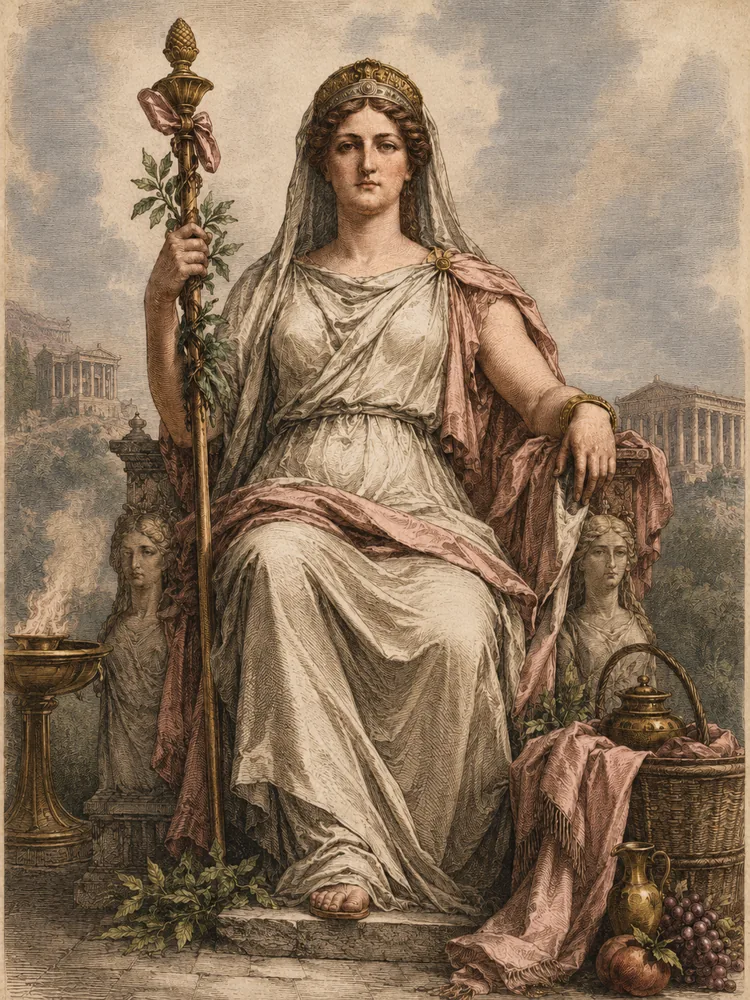

The Bona Dea ("the Good Goddess") was the focus of an exclusively female Roman cult of considerable antiquity, whose annual rite no man might attend. Her proper name was kept secret from men; the substitute name Bona Dea was a euphemism. She was variously identified with Fauna (Faunus's sister or wife or daughter), with Damia (a Tarentine goddess), with various Italic figures, but her own identity was held to be sacred and undisclosable. Her temple was on the Aventine, and her annual public rite was held in early December at the house of one of the principal magistrates of the year — the consul or the praetor — by the women of the city under the leadership of the magistrate's wife. The men of the household, including the magistrate himself, were required to leave for the night; even male animals were removed; even male images were covered. The rites were celebrated in nighttime secrecy, with music, with the sacrifice of a sow, with wine called milk and honey called myrrh by ritual euphemism (since wine and honey were forbidden — though the men were assured that wine was nevertheless drunk under the disguised name).
The most famous moment of the Bona Dea's history was the scandal of 62 BCE, when the young patrician Publius Clodius Pulcher disguised himself as a woman and infiltrated the rites at the house of Julius Caesar (then Pontifex Maximus, whose wife Pompeia was hosting the festival), allegedly to pursue an affair with Pompeia. He was discovered, brought to trial for sacrilege, and acquitted by what was widely understood to be a bribed jury — but the political scandal was enormous, and was the proximate cause of Caesar's divorcing Pompeia (with the famous remark that Caesar's wife must be above suspicion). The episode is treated in detail in several ancient sources and was referred to as a notorious example of religious sacrilege for the rest of antiquity.