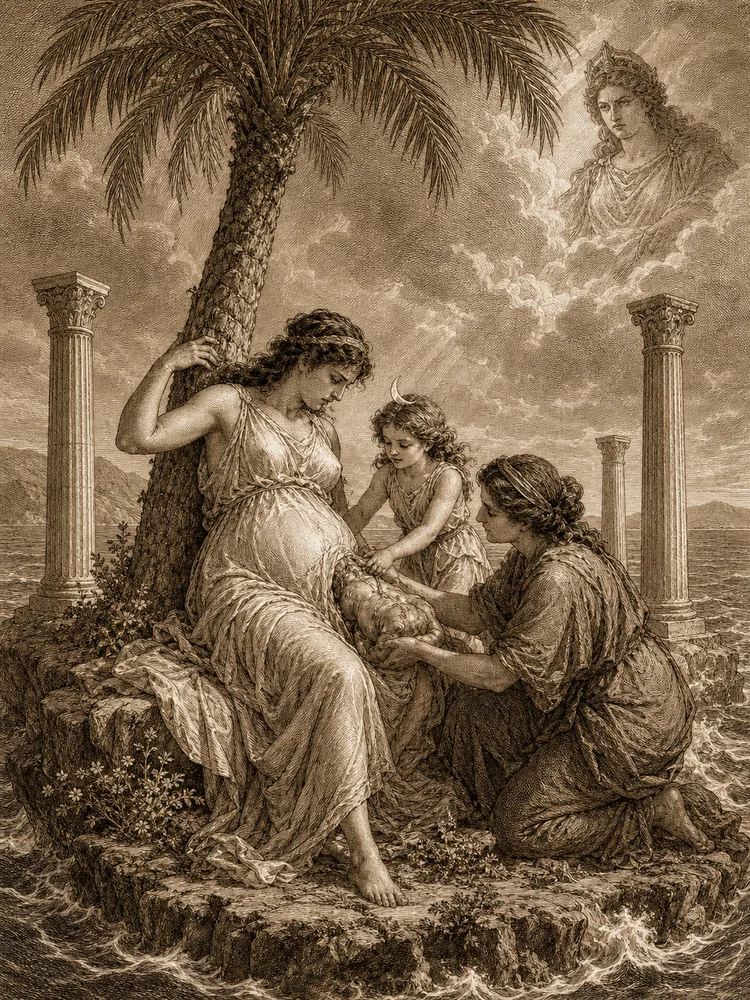
Leto was a Titaness of the second generation, daughter of Coeus and Phoebe. She was loved by Zeus and conceived twins by him; but Hera, in her jealousy, forbade any land that lay beneath the sun from giving Leto refuge for her labor. The hidden floating island of Delos — said by some traditions to have been beneath the waters until that moment — agreed to receive her, on condition that her divine son should there have his temple. There, after a labor of nine days and nights, attended by Eileithyia (whom Hera had at first detained, but who at last came), Leto bore Artemis first and then, with Artemis's assistance, Apollo. Mother and twins were thereafter inseparable; and when, in later days, the mortal Niobe boasted of her many children that she was greater than Leto with her two, Apollo and Artemis came in vengeance and shot down Niobe's seven sons and seven daughters, leaving her childless and turning her at length, as she wept, into a stone perpetually weeping (the famous "Niobe rock" on Mount Sipylus in Asia Minor).
 Before thisMnemosyne
 Next on the wallPrometheus
Curator’s note
What the sources say, and what later tradition added. The sources for this bay
Leto's labor on Delos is in the Homeric Hymn to Apollo 25–139, the principal text. The Niobe vengeance is in Homer (Iliad 24.602–617) and in many subsequent tellings. Leto's cult at Delos was substantial, as the mother of the divine twins to whom the great pan-Hellenic sanctuary was dedicated; she had additional cult in Lycia (where she was sometimes considered native) and at Argos.
Kin in the sources
Each tie is quoted from the entry that states it.
 Child ofCoeus
daughter of Coeus and Phoebe. She was loved by Zeus and conceived twins by him
 Child ofPhoebe
daughter of Coeus and Phoebe. She was loved by Zeus and conceived twins by him
 Consort ofZeus
She was loved by Zeus and conceived twins by him
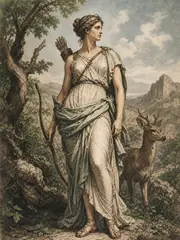 Parent ofArtemis
Leto bore Artemis first and then, with Artemis's assistance, Apollo
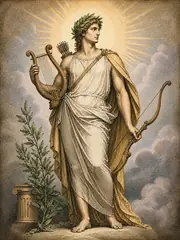 Parent ofApollo
Leto bore Artemis first and then, with Artemis's assistance, Apollo
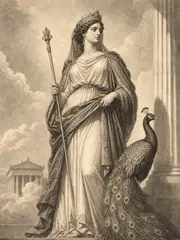 Rival ofHera
but Hera, in her jealousy, forbade any land that lay beneath the sun from giving Leto refuge
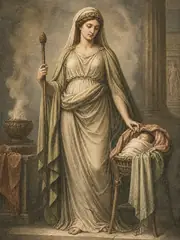 Companion ofEileithyia
attended by Eileithyia (whom Hera had at first detained, but who at last came)
 Sibling ofAsteria
daughter of Coeus and Phoebe, sister of Leto
When the sources speak
Dated witnesses for The Titans and Their Children. A date marks when the evidence was written down, not when the belief began. The whole timeline
- c. 1600–1100 BCE
- Mycenaean palace tablets in Linear B record offerings and divine names, but little continuous myth.
- c. 1100–800 BCE
- Post-palatial oral traditions and changing cult landscapes precede the surviving alphabetic epics.
- late 8th–7th centuries BCE
- The Iliad, Odyssey, Hesiodic Theogony and Works and Days give influential but non-exclusive divine orders.
- 7th–6th centuries BCE
- Homeric Hymns, lyric poetry, colonization, and local sanctuary traditions multiply regional narratives.
- 6th–5th centuries BCE
- Orphic, Pythagorean, and mystery materials develop alternative cosmogonies and afterlife doctrines.
- 5th century BCE
- Athenian tragedy and comedy recast heroic houses and divine justice for civic audiences.
- 4th century BCE
- Philosophers, antiquarians, and local historians interpret or criticize inherited myth.
- 323–31 BCE
- Hellenistic poets and scholars systematize variants across an enlarged Greek world.