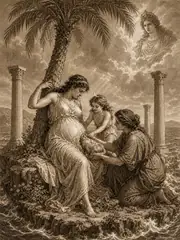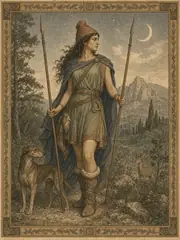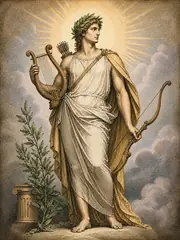
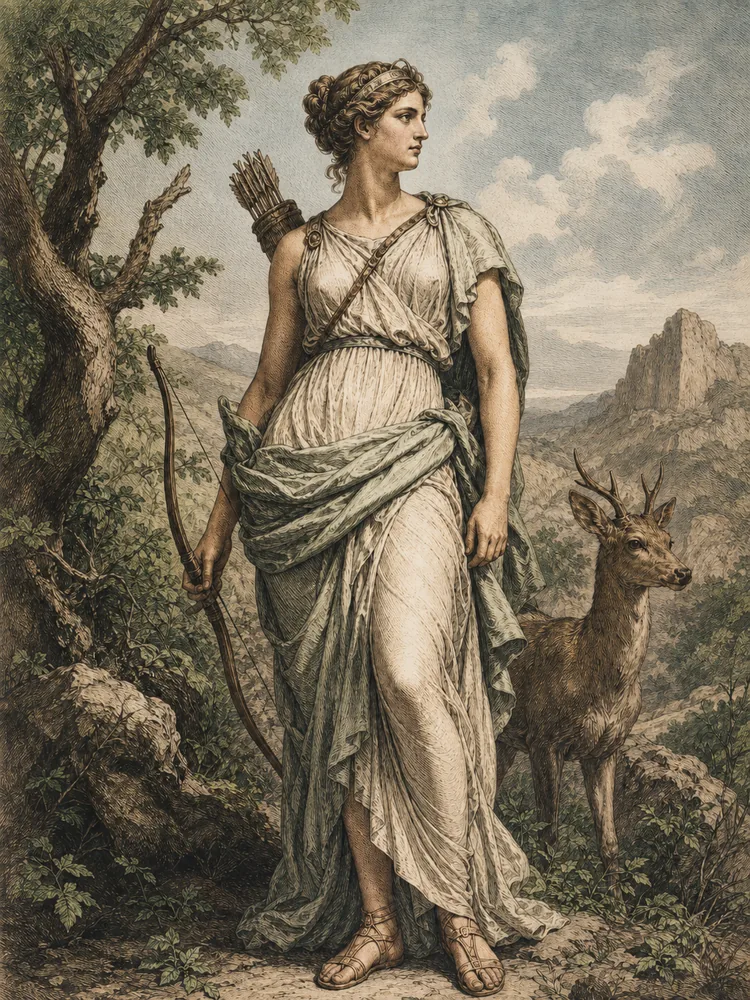
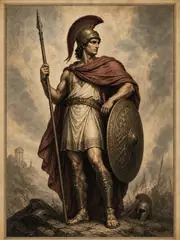
Artemis was the twin sister of Apollo, daughter of Zeus and Leto, born on Delos before her brother (and assisting at his birth, though herself only newly arrived). She was the goddess of the hunt, of wild places, of untamed nature, of unmarried women, of childbirth (a curious double-office for a virgin goddess, but the Greeks held that her own painless emergence on Delos qualified her to assist others), and — as her brother absorbed the sun — she increasingly absorbed the moon, becoming in late antiquity inseparable from Selene. She was a virgin, like Athena and Hestia; her chastity was severe and was protected with sometimes lethal vigilance.
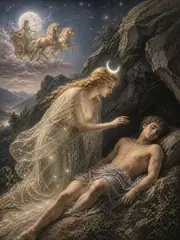
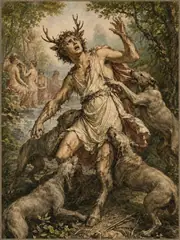
The hunter Actaeon, having accidentally come upon her bathing naked in a forest pool, was turned by her into a stag and torn apart by his own hounds. Her companion the nymph Callisto, having been seduced by Zeus in disguise as Artemis herself, was discovered to be pregnant and was either turned into a bear by Artemis (in some versions) or by Hera (in others), and was eventually placed in the heavens as the constellation Ursa Major. The giant Orion — a great hunter, her companion, in some versions her beloved — was killed at her own hand (or her brother's, in tactful versions) when his presumption became too great; he became the constellation Orion, with his hunting-dog Sirius. The mortal Niobe, having boasted that her many children made her greater than Leto with her two, saw her seven daughters slain by Artemis's arrows and her seven sons by Apollo's. Iphigeneia, daughter of Agamemnon, was demanded as sacrifice by Artemis when the Greek fleet was becalmed at Aulis on its way to Troy; the sacrifice's accomplishment (or, in tactful versions, its substitution at the last moment by a deer) loomed over the entire Trojan-War cycle and provided the matter of two of Euripides's tragedies.
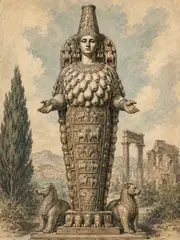
Her cult was widespread. Her great pan-Ionic sanctuary at Ephesus housed the famous many-breasted statue (the so-called "Diana of Ephesus," a much-debated iconography in which the original Anatolian mother-goddess of Ephesus was identified with Artemis without losing her older many-breasted form); her temple there, rebuilt repeatedly through the centuries, was reckoned among the Seven Wonders. At Brauron in Attica, girls served her in the years before marriage in the cult of the bear; at Sparta, young men were ritually whipped at her altar (the Artemis Orthia rite). Her Roman counterpart was Diana, with whom her identification was thoroughgoing.