A Compendium of the Ancient Gods
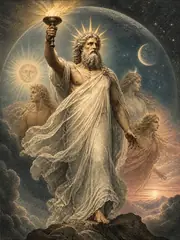
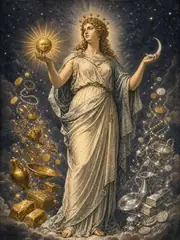
Selene, plate

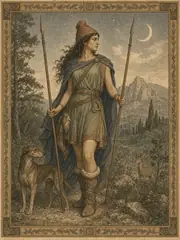
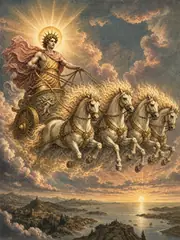
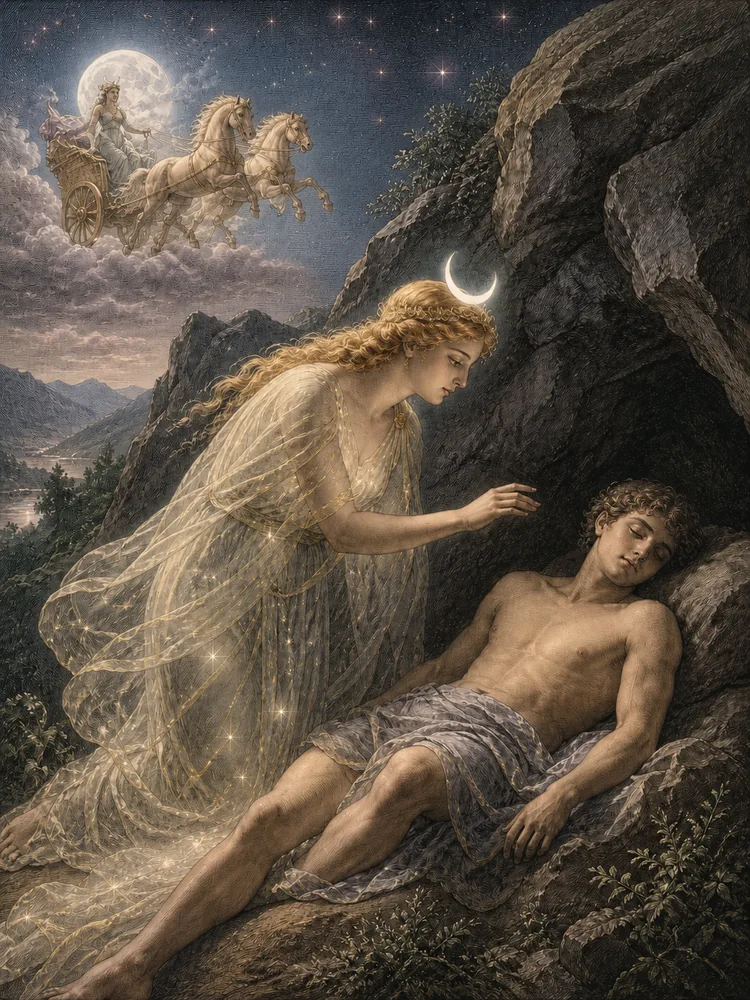
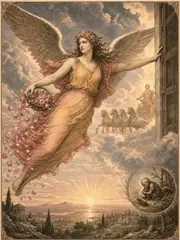
Selene was the moon, sister of Helios and Eos, daughter of Hyperion and Theia. She drove a silver chariot drawn by two horses (or, in some versions, two oxen) across the night sky each night, as her brother drove his fiery one across the day. She had a famous love-affair with the mortal shepherd Endymion, whom she saw sleeping on Mount Latmus and loved at first sight; she begged Zeus that her sleeping beloved should never grow old or die, and Zeus granted it — Endymion sleeps forever upon his mountain, the eternal beautiful sleeper, and Selene comes down from the sky each night to lie beside him. The narrative is one of the gentler in Greek mythology and was popular subject for Hellenistic and Roman art.

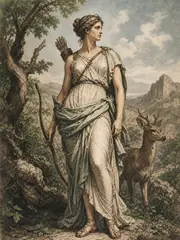
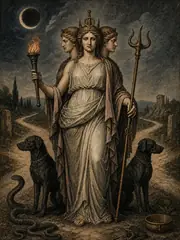
Like her brother, Selene was identified in late antiquity with another Olympian (in her case, Artemis, and through Artemis with Hecate, producing the late triple-form Hecate-Selene-Artemis of magical and theurgical literature). The identification was not original to the older Greek tradition, in which Selene was a separate Titanic figure with her own iconography (the lunar disk between her brows or behind her shoulders, distinct from the silver bow of Artemis).
Curator’s note

What the sources say, and what later tradition added. The sources for this bay

Selene appears in Hesiod, Theogony 371; the Endymion narrative is in Apollodorus 1.7.5, Pausanias 5.1.4, and is a stock subject of Hellenistic and Roman art and poetry. The identification with Artemis is post-classical; the magical-theurgical Hecate-Selene-Artemis triad is principally a Late Antique development, attested in the Greek Magical Papyri and in Neoplatonist sources. Selene's Roman counterpart was Luna.

Kin in the sources

Each tie is quoted from the entry that states it.

The same god in other rooms

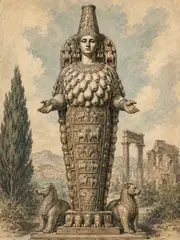
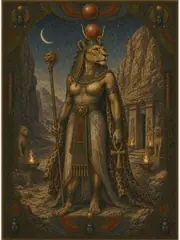
The ancient sources themselves name these as one god under different names. See Artemis of Ephesus, Pakhet, Selene, Artemis, Hecate and Bendis hung together

When the sources speak

Dated witnesses for The Titans and Their Children. A date marks when the evidence was written down, not when the belief began. The whole timeline

c. 1600–1100 BCE
Mycenaean palace tablets in Linear B record offerings and divine names, but little continuous myth.
c. 1100–800 BCE
Post-palatial oral traditions and changing cult landscapes precede the surviving alphabetic epics.
late 8th–7th centuries BCE
The Iliad, Odyssey, Hesiodic Theogony and Works and Days give influential but non-exclusive divine orders.
7th–6th centuries BCE
Homeric Hymns, lyric poetry, colonization, and local sanctuary traditions multiply regional narratives.
6th–5th centuries BCE
Orphic, Pythagorean, and mystery materials develop alternative cosmogonies and afterlife doctrines.
5th century BCE
Athenian tragedy and comedy recast heroic houses and divine justice for civic audiences.
4th century BCE
Philosophers, antiquarians, and local historians interpret or criticize inherited myth.
323–31 BCE
Hellenistic poets and scholars systematize variants across an enlarged Greek world.

Floor plan

The rooms follow one another in the order their peoples first appear in the written record.

  1. The Cradle of Citiesc. 3400 BCE to 395 CE. 115 works
  2. The Gift of the Nilec. 4000 BCE to 395 CE. 73 works
  3. The Olympian Orderc. 1600 BCE to 750 CE. 152 works
  4. The Persian Worldc. 2000 BCE to 1010 CE. 30 works
  5. The Levantine Borderlandsc. 1200 BCE to 500 CE. 20 works
  6. The Edges of Empirec. 2000 BCE to 1500 CE. 33 works
  7. The Etruscan Worldc. 900 BCE to 750 CE. 22 works
  8. The Roman Inheritancec. 1200 BCE to 500 CE. 58 works
  9. The Northern Inheritancec. 2000 BCE to 1600 CE. 131 works