A Compendium of the Ancient Gods
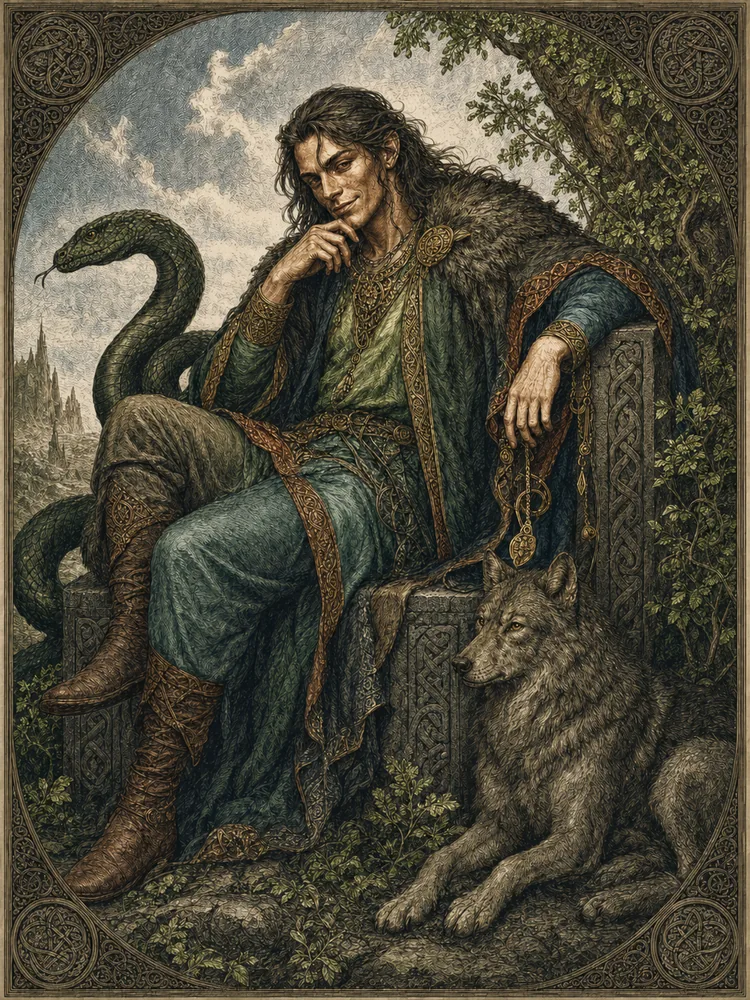
Loki, plate

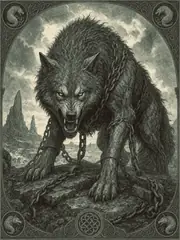
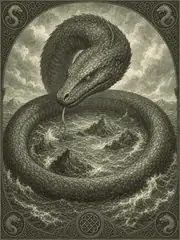
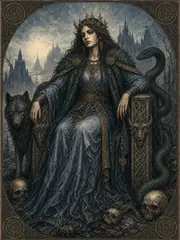
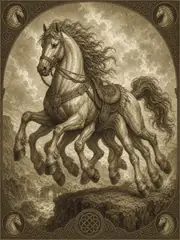
Loki was the great trickster of Norse mythology — son of the giant Fárbauti and the goddess (or giantess; sources differ) Laufey, sworn brother of Odin (the two had once mixed their blood, and Loki could not be wholly excluded from the company of the Aesir despite his giant paternity). He was beautiful, eloquent, quick of wit, and unreliable; he assisted the gods in many of their adventures (often having gotten them into the difficulty in the first place), and his gifts to them — Thor's hammer Mjölnir, Odin's spear Gungnir, the ship Skíðblaðnir — were the products of various wagers he had lost with the dwarves and had to make good. He was a shape-shifter (he had been a salmon, a mare, a fly, an old woman, and other forms in various narratives); he had borne, as a mare to the giant stallion Svaðilfari, the eight-legged horse Sleipnir whom he gave to Odin (one of the more striking gender-reversal episodes in Norse tradition). He was the father, by the giantess Angrboða, of three monstrous children: the wolf Fenrir, the World-Serpent Jörmungandr, and the half-corpse Hel.

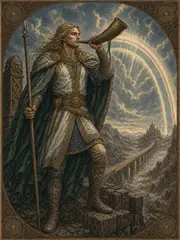
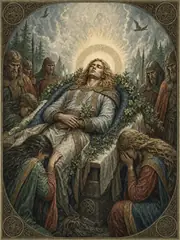
Loki's character was ambiguous — sometimes the gods' helper, sometimes their tormentor — but his role darkened progressively through the mythology. He arranged the death of Baldr, as told above. He was bound for it. At Ragnarök he will break his bonds and lead the army of the dead and the giants against the gods; he will fight his old companion Heimdallr, and the two will kill each other. The figure has accordingly proven irresistible to modern interpreters; Wagner's Loge in the Ring, Marvel Comics' Loki, and countless lesser adaptations have made Loki perhaps the second most familiar Norse figure after Thor in modern Anglophone popular culture, though the modern Loki has been sometimes prettied up and sometimes vilified in ways that the original Eddic figure does not quite support.

His final scene before his binding is the dramatic Lokasenna (Loki's Quarrel) — a Eddic poem of remarkable bite in which Loki, having crashed a feast of the gods at the hall of Aegir, sits at table and proceeds to insult each of the gods in turn, accusing them of various sexual and martial cowardices and infidelities, until at last Thor enters with his hammer raised and Loki, defiant to the end, departs with one last malediction.
Curator’s note

What the sources say, and what later tradition added. The sources for this bay

The principal sources are Lokasenna in the Poetic Edda; Gylfaginning chapters 33–34, 42, 49–50 in the Prose Edda; Þrymskviða (Loki's part in retrieving Mjölnir). The genealogy of Loki and his children is consistent across sources. The interpretation of Loki has been a major topic of modern Germanic religion scholarship; Georges Dumézil's Loki (1948) gave one influential treatment, comparing Loki to the Caucasian trickster Syrdon. The figure's relationship (if any) to the destruction-by-fire imagery of Loki's etymology (his name is sometimes connected to logi, fire, though the etymological case is uncertain) is debated.

Kin in the sources

Each tie is quoted from the entry that states it.

When the sources speak

Dated witnesses for The Norse and Germanic Gods. A date marks when the evidence was written down, not when the belief began. The whole timeline

2nd–1st millennia BCE
Indo-European language dispersals and regional Bronze Age cultures provide a remote comparative background, not a recoverable common canon.
c. 500 BCE–1 CE
Iron Age material culture, names, sanctuaries, and classical ethnography offer early but external evidence for Celtic and Germanic religions.
1st–4th centuries CE
Roman inscriptions and provincial cults preserve many Celtic, Germanic, and local divine names.
4th–8th centuries CE
Migration-period and early medieval conversion transform ritual institutions while heroic traditions continue.
8th–11th centuries CE
Viking Age poetry, runic evidence, archaeology, and Scandinavian conversion form the core context of Norse myth.
9th–12th centuries CE
Slavic, Baltic, and Finnic traditions enter chronicles and missionary accounts, often through hostile observers.
11th–14th centuries CE
Irish, Welsh, and Icelandic manuscripts preserve major narrative corpora in Christian literary environments.
12th–16th centuries CE
Saxo, saga compilers, Baltic chroniclers, and later antiquarians systematize or reinterpret older material.

Floor plan

The rooms follow one another in the order their peoples first appear in the written record.

  1. The Cradle of Citiesc. 3400 BCE to 395 CE. 115 works
  2. The Gift of the Nilec. 4000 BCE to 395 CE. 73 works
  3. The Olympian Orderc. 1600 BCE to 750 CE. 152 works
  4. The Persian Worldc. 2000 BCE to 1010 CE. 30 works
  5. The Levantine Borderlandsc. 1200 BCE to 500 CE. 20 works
  6. The Edges of Empirec. 2000 BCE to 1500 CE. 33 works
  7. The Etruscan Worldc. 900 BCE to 750 CE. 22 works
  8. The Roman Inheritancec. 1200 BCE to 500 CE. 58 works
  9. The Northern Inheritancec. 2000 BCE to 1600 CE. 131 works