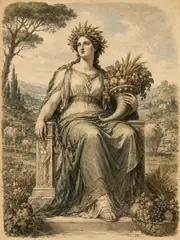
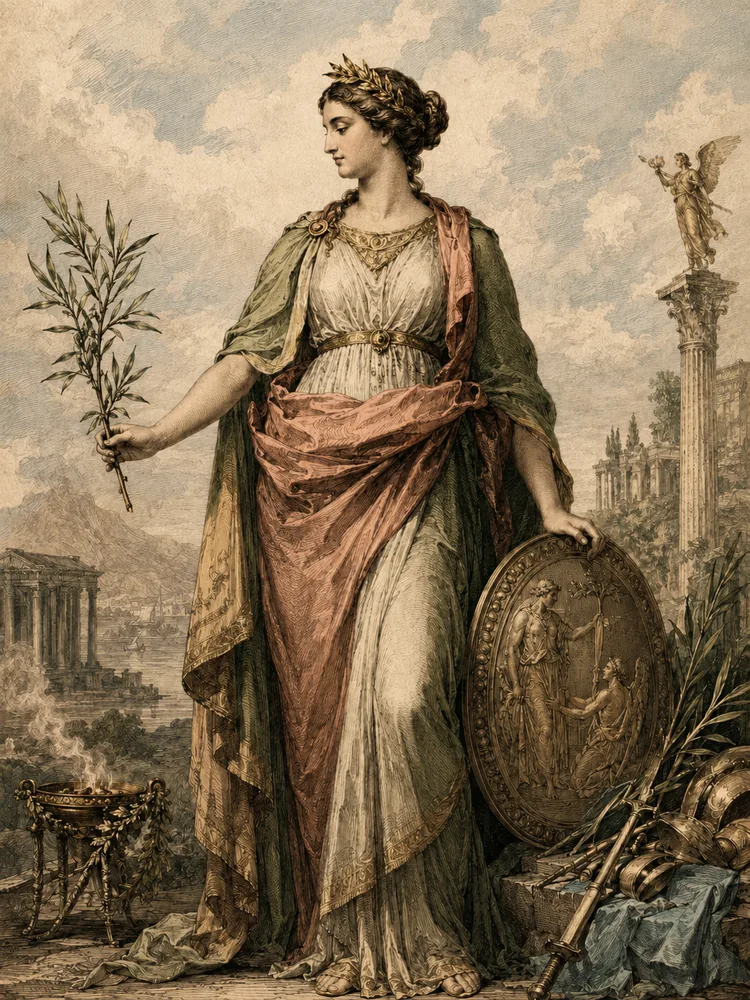

Pax was the Roman personification of peace, particularly the peace that the Roman state imposed by victory. She is older than Augustus — the cult is attested in the second century BCE — but she became, under his settlement, the great Augustan deity. The Pax Augusta or Pax Romana, the peace established by Augustus through the conclusion of the civil wars and the orderly administration of the empire, was the central ideological achievement of the principate, and Pax was its divine embodiment.
Augustus dedicated the Ara Pacis Augustae, the Altar of Augustan Peace, in 9 BCE upon the Campus Martius. This altar — rediscovered piece by piece between the sixteenth and twentieth centuries, finally reassembled and re-erected in a museum on the Tiber bank in 1938 — is one of the most important monuments of Roman imperial art. Its sculptural reliefs depict the imperial family in procession with priests and attendants, and on the side panels, allegorical scenes (one of which is identified with Tellus, treated above; the other with Roma) representing the fruitful peace that the empire had brought.
The temple of Pax was built later, by Vespasian, between 71 and 75 CE, on the eastern side of the Roman Forum, to mark the conclusion of the Jewish War and the establishment of the Flavian dynasty. The temple housed the spoils from Jerusalem, including the great seven-branched menorah depicted on the Arch of Titus, which was kept in the temple of Pax until the sack of Rome by the Vandals in 455. The temple itself was destroyed by fire in 192 and rebuilt by Septimius Severus, and was a landmark of imperial Rome until late antiquity.