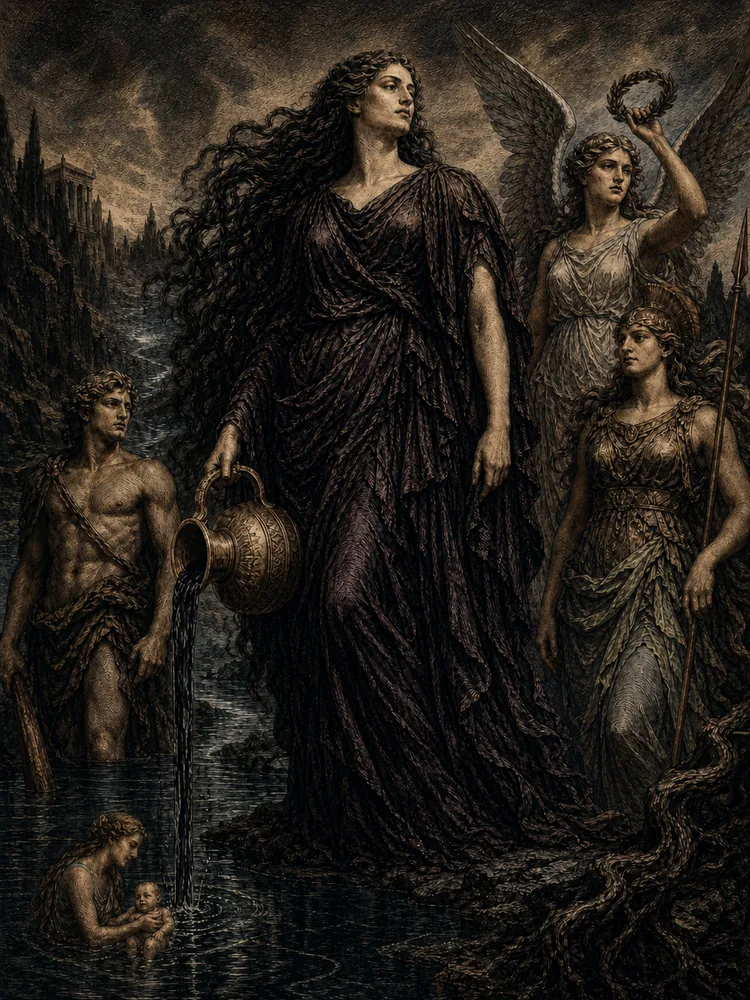
Styx was a daughter of Oceanus and Tethys, the eldest of the three thousand Oceanids, and the personification of the river of the same name in the underworld — the "hateful" river, whose name literally means "loathsome," by which the gods swore their unbreakable oaths. Hesiod relates that when Zeus called for allies in the Titanomachy, Styx came first to his support, with her four children Zelus, Nike, Cratos, and Bia (Zeal, Victory, Strength, Might); and Zeus rewarded her by establishing that thereafter the gods should swear their most binding oaths by her waters. A god who swore by Styx and broke his oath was struck unconscious for a year and exiled from the gods' company for nine. The river Styx itself ran through the underworld, encircling it; the souls of the dead were ferried across it by Charon (treated in his own entry below), and Achilles in his infancy was dipped in it by his mother Thetis, who held him by the heel and so made him invulnerable everywhere except where her grip had been.
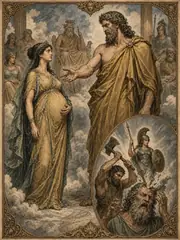 Before thisMetis
Curator’s note
What the sources say, and what later tradition added. The sources for this bay
Hesiod, Theogony 383–403, 775–806; the Achilles dipping is in Statius (Achilleid 1.269) and other late sources, but is implicit in older traditions about his vulnerability. The geographical Styx (a real river in Arcadia, with waters of unusual mineral composition and an ancient reputation for ill-omen) was identified with the mythological river by Pausanias (8.17.6–18.6); the identification is plausible. The legend that Alexander the Great was poisoned with Styx-water, recorded by some Roman authors, has been examined in modern toxicology with suggestive results, though the case is contested.
Kin in the sources
Each tie is quoted from the entry that states it.
 Child ofOceanus
Styx was a daughter of Oceanus and Tethys, the eldest of the three thousand Oceanids
 Child ofTethys
Styx was a daughter of Oceanus and Tethys, the eldest of the three thousand Oceanids
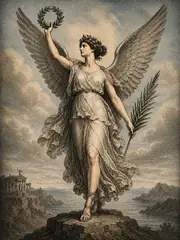 Parent ofNike
with her four children Zelus, Nike, Cratos, and Bia (Zeal, Victory, Strength, Might)
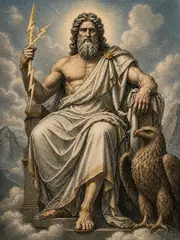 Companion ofZeus
Styx came first to his support, with her four children
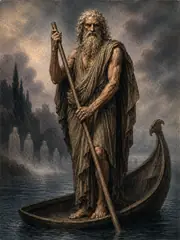 Companion ofCharon
the souls of the dead were ferried across it by Charon
 Consort ofPallas (Titan)
son of Crius and Eurybia, husband of Styx the underworld river
When the sources speak
Dated witnesses for The Titans and Their Children. A date marks when the evidence was written down, not when the belief began. The whole timeline
- c. 1600–1100 BCE
- Mycenaean palace tablets in Linear B record offerings and divine names, but little continuous myth.
- c. 1100–800 BCE
- Post-palatial oral traditions and changing cult landscapes precede the surviving alphabetic epics.
- late 8th–7th centuries BCE
- The Iliad, Odyssey, Hesiodic Theogony and Works and Days give influential but non-exclusive divine orders.
- 7th–6th centuries BCE
- Homeric Hymns, lyric poetry, colonization, and local sanctuary traditions multiply regional narratives.
- 6th–5th centuries BCE
- Orphic, Pythagorean, and mystery materials develop alternative cosmogonies and afterlife doctrines.
- 5th century BCE
- Athenian tragedy and comedy recast heroic houses and divine justice for civic audiences.
- 4th century BCE
- Philosophers, antiquarians, and local historians interpret or criticize inherited myth.
- 323–31 BCE
- Hellenistic poets and scholars systematize variants across an enlarged Greek world.