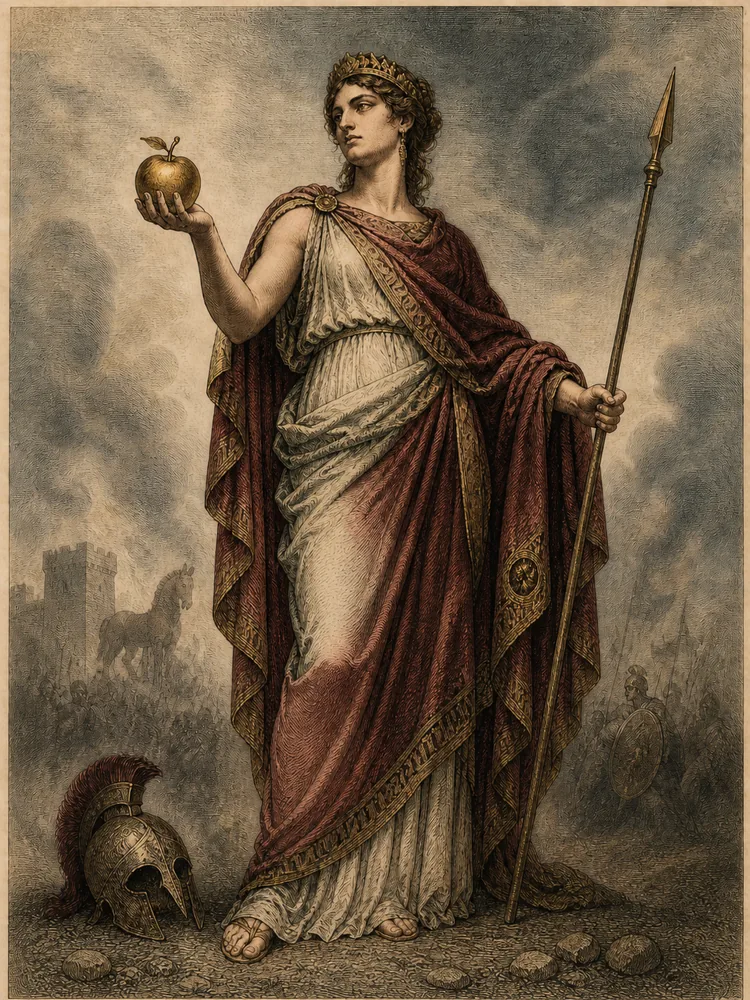
Eris was Strife — the daimon of contention and discord, sister of Ares, daughter of Nyx (in Hesiod) or of Zeus and Hera (in Homer). She had a particular role in the chain of events that led to the Trojan War. When the gods were assembled at the wedding of Peleus and Thetis (the parents-to-be of Achilles), Eris alone was not invited — she being a divinity who could be relied upon to spoil any festivity. Resentful of the slight, she came uninvited and threw among the feasting goddesses a golden apple inscribed with the words "To the most beautiful." Hera, Athena, and Aphrodite all claimed the apple; Zeus, refusing to judge among his wife and daughters, deputed the Trojan prince Paris to make the choice. Each goddess offered him a bribe: Hera offered kingship over Asia, Athena offered wisdom and victory in war, Aphrodite offered the most beautiful woman in the world. Paris chose Aphrodite; the most beautiful woman was Helen, wife of Menelaus of Sparta; Aphrodite directed Paris to her; Helen went with him to Troy; and the Trojan War followed. The Judgment of Paris, set in motion by Eris's golden apple, was among the most consequential acts in Greek mythology, and the apple itself — the "apple of discord" — has passed into Western proverb.
 Before thisThanatos
 Next on the wallEnyo
Curator’s note
What the sources say, and what later tradition added. The sources for this bay
Hesiod, Theogony 225–232 and Works and Days 11–26 (where Hesiod distinguishes a good Eris of healthy competition from a bad Eris of destructive strife); the apple of discord is principally in Hyginus, Fabulae 92, and in scholiastic traditions on the Iliad; the Judgment of Paris is implicit throughout the Iliad and was treated in the lost Cypria (a poem of the Trojan Cycle, surviving in summary).
Kin in the sources
Each tie is quoted from the entry that states it.
 Sibling ofAres
sister of Ares, daughter of Nyx (in Hesiod)
 Child ofNyx
sister of Ares, daughter of Nyx (in Hesiod) or of Zeus and Hera (in Homer)
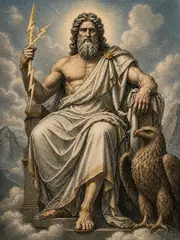 Child ofZeus
sister of Ares, daughter of Nyx (in Hesiod) or of Zeus and Hera (in Homer)
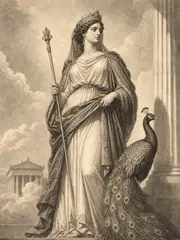 Child ofHera
sister of Ares, daughter of Nyx (in Hesiod) or of Zeus and Hera (in Homer)
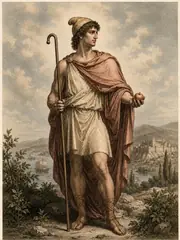 Rival ofParis
deputed the Trojan prince Paris to make the choice
 Sibling ofApate
Apate was Deceit personified, daughter of Nyx, sister of Strife and the other dark powers of Night's brood
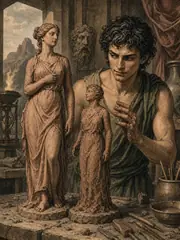 Parent ofDolos
appearing chiefly in mythographic catalogues of the children of Night or of Eris
When the sources speak
Dated witnesses for The Mysteries. A date marks when the evidence was written down, not when the belief began. The whole timeline
- c. 1600–1100 BCE
- Mycenaean palace tablets in Linear B record offerings and divine names, but little continuous myth.
- c. 1100–800 BCE
- Post-palatial oral traditions and changing cult landscapes precede the surviving alphabetic epics.
- late 8th–7th centuries BCE
- The Iliad, Odyssey, Hesiodic Theogony and Works and Days give influential but non-exclusive divine orders.
- 7th–6th centuries BCE
- Homeric Hymns, lyric poetry, colonization, and local sanctuary traditions multiply regional narratives.
- 6th–5th centuries BCE
- Orphic, Pythagorean, and mystery materials develop alternative cosmogonies and afterlife doctrines.
- 5th century BCE
- Athenian tragedy and comedy recast heroic houses and divine justice for civic audiences.
- 4th century BCE
- Philosophers, antiquarians, and local historians interpret or criticize inherited myth.
- 323–31 BCE
- Hellenistic poets and scholars systematize variants across an enlarged Greek world.