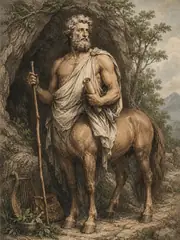
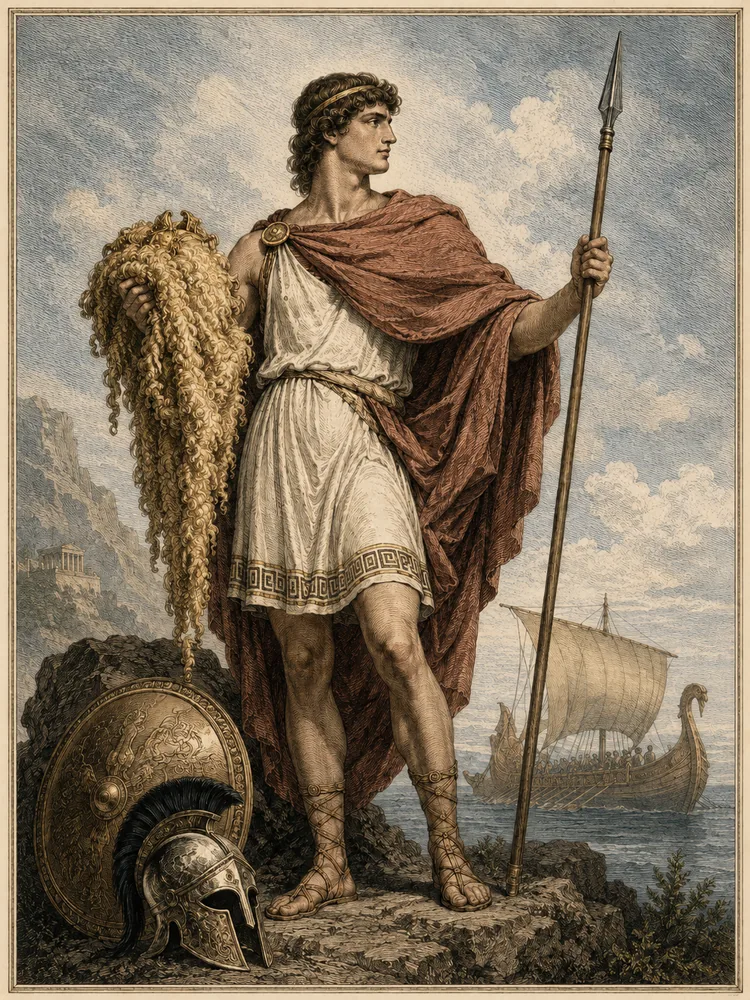
Jason was the leader of the Argonauts and the winner of the Golden Fleece, son of Aeson, the rightful king of Iolcus in Thessaly. His uncle Pelias had usurped the throne; Aeson hid the infant Jason with the wise centaur Chiron, who raised him on Mount Pelion. When Jason came of age and went to Iolcus to demand his throne, an oracle had warned Pelias to beware of a man with one sandal; Jason had lost a sandal in the river; Pelias accordingly contrived to be rid of him by sending him on the apparently impossible quest of fetching the Golden Fleece from Colchis at the eastern end of the Black Sea, where it hung from a tree in the grove of Ares, guarded by a sleepless dragon.
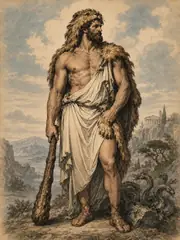
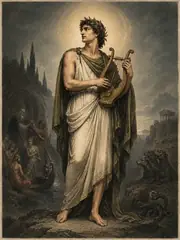
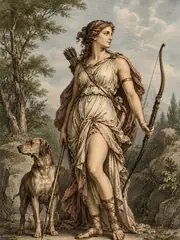
Jason had the great ship Argo built (named for its builder Argus, with timber from Mount Pelion and a piece of the prophetic oak of Dodona set in its prow); he gathered to his crew the great heroes of Greece — Heracles, the Dioscuri Castor and Polydeuces, Orpheus the singer, Peleus, Telamon, Atalanta the only woman among them, Calais and Zetes the winged sons of Boreas, the seer Mopsus, and many others. Their voyage to Colchis was a great geographical adventure, taking them through the Hellespont (where they passed the harpies and freed Phineus, the blind seer, from their persecution), through the Symplegades (the clashing rocks at the entrance of the Black Sea, which they escaped by the device of releasing a dove and rowing through behind it as the rocks rebounded), past various peoples and perils, to Aeëtes king of Colchis.
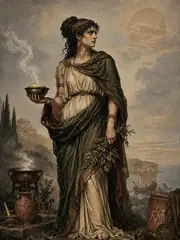
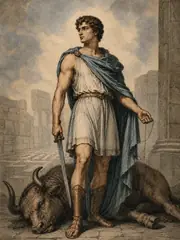
Aeëtes, unwilling to surrender the Fleece, set Jason a series of impossible tasks: to yoke two fire-breathing bulls, to plow a field with them, to sow it with dragon's teeth, and to defeat the warriors who would spring up from the teeth. Jason was saved by Aeëtes's daughter Medea, the great witch and priestess of Hecate, who fell in love with him; she gave him a salve that protected him from the bulls' fire, advised him to throw a stone into the dragon-warriors' midst (so that they fought one another), and at last drugged the dragon that guarded the Fleece. Jason took the Fleece; he took Medea; the Argonauts fled. Pursued by Aeëtes, they were saved by Medea's expedient of killing her own brother Apsyrtus and scattering his pieces in the sea, that her father might be delayed in collecting them.
The return-voyage was equally adventurous (taking them, in different traditions, through the Adriatic, the Po, the Rhone, around Italy, past Scylla and Charybdis, past the Sirens, to Crete where Talos the bronze giant guarded the coast and was destroyed by Medea's enchantment, to home at Iolcus). Their return to Iolcus did not bring Jason his throne. Pelias had not given up power. Medea contrived his death, persuading his daughters that they could rejuvenate him by chopping him up and boiling him with herbs; she gave them a demonstration with an old ram (which she rejuvenated by the trick); they chopped up their father; he did not return.
Jason and Medea were exiled from Iolcus and went to Corinth, where their further history was tragic. Jason, ambitious, sought to marry Glauce the daughter of King Creon of Corinth; Medea, in vengeance, sent Glauce a poisoned robe that burned her to death (and Creon with her, when he tried to embrace her), and then killed her own two sons by Jason rather than leave them to be slaves of his new queen. She fled in a chariot drawn by dragons, given her by her grandfather Helios. The matter is the substance of Euripides's Medea, one of the supreme works of Greek tragedy. Jason himself died ignominiously: he came to rest beneath the rotting Argo (preserved as a memorial), and a piece of the prow fell upon his head and killed him.