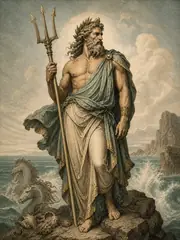
Theseus was the great Athenian hero, son of King Aegeus of Athens (or, in some traditions, of Poseidon — like several Greek heroes, he was given a divine paternity that supplemented the mortal one without strictly contradicting it). His mother Aethra had lain with both Aegeus and Poseidon on the same night, and the doubled paternity was acknowledged. Aegeus, returning to Athens before the boy was born, hid a sword and a pair of sandals beneath a great rock, telling Aethra that when their son was old enough to lift the rock he should bring sword and sandals to Athens to claim his father. Theseus did so at the age of sixteen; rather than sailing the safe route, he chose to walk the dangerous land road from Troezen to Athens, ridding the road of various villains as he went (Periphetes the club-bearer, Sinis the pine-bender who tied victims to bent pine trees and let them be torn apart, Sciron who threw victims into the sea to a giant turtle, Cercyon the wrestler, Procrustes who fitted victims to his bed by stretching or amputating).
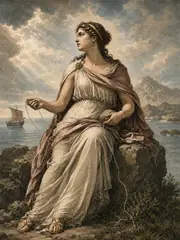
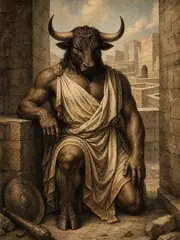
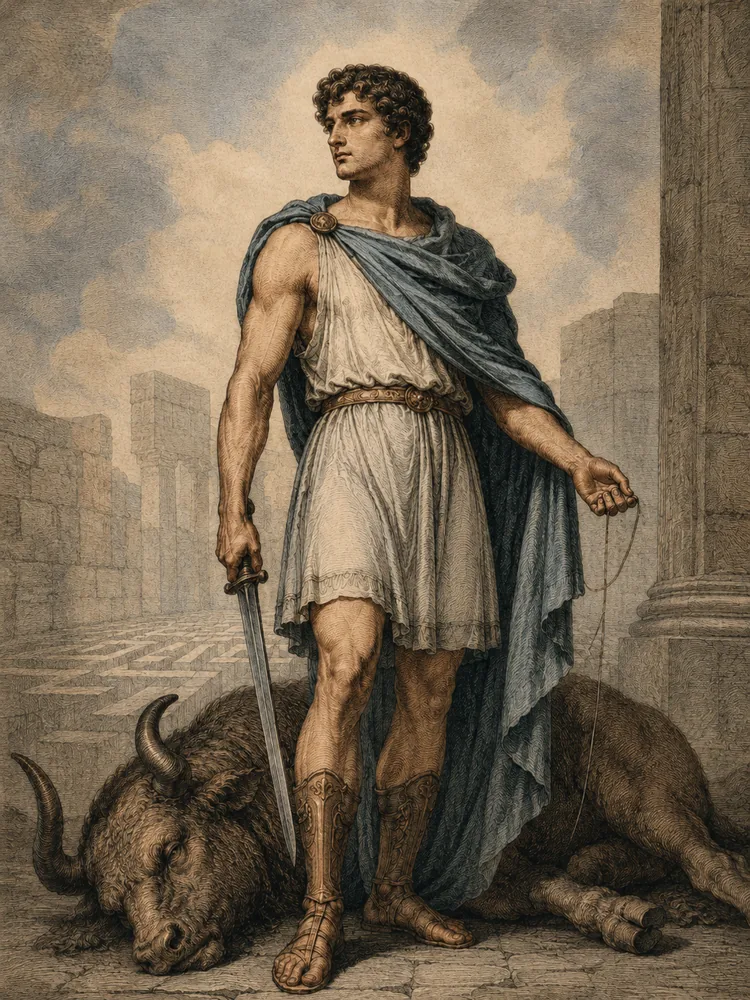
Arriving in Athens, he was nearly poisoned by Medea (who had taken refuge there and was now Aegeus's wife and was determined to protect her own son); Aegeus recognized the sword at the last moment and dashed the cup. Theseus thereafter took up the burden of the Athenian tribute to Crete: every nine years (or every year, in some versions), seven youths and seven maidens were sent to Crete as food for the Minotaur; Theseus volunteered as one of the youths, and on Crete won the love of Minos's daughter Ariadne, who gave him the ball of thread by which he found his way through the Labyrinth, slew the Minotaur (treated in Book VII), and led the tributary youths and maidens out alive. Sailing away with Ariadne, he stopped at the island of Naxos and abandoned her there (whether by treachery or by Dionysus's command, the tradition variously explained). Approaching Athens, he forgot to change his ship's black sail to white as he had promised his father he would do if successful; Aegeus, watching from the cliff, saw the black sail, assumed his son dead, and threw himself into the sea (whence the Aegean takes its name).
Theseus thereafter ruled Athens, where he was credited with the great political achievement of unifying the small communities of Attica into the single political entity of Athens (the synoecism), an act which the Athenians of historical times celebrated annually with the festival of the Synoikia. He led an expedition against the Amazons, taking captive their queen Antiope (or, in some versions, Hippolyta), and provoked an Amazon counter-invasion of Attica which he repelled. He was a friend of Pirithous king of the Lapiths and joined him in his war against the Centaurs at the wedding-feast where the Centaurs, drunk, had attempted upon the bride. With Pirithous, in old age, he made the disastrous descent to the underworld to abduct Persephone, where both were trapped in the chairs of forgetfulness; Heracles eventually freed Theseus, but Pirithous was left behind. Theseus's later rule was troubled — by the loss of his Amazon-born son Hippolytus (who was destroyed by the false accusation of his stepmother Phaedra, the matter of Euripides's tragedy) and by political reverses at Athens — and he died, in some accounts, in exile on Scyros, thrown over a cliff by King Lycomedes. The Athenians of the fifth century BCE recovered what they took to be his bones and gave him a great heroic shrine, the Theseion, whose visible remains may or may not be the same building as the Hephaesteion.