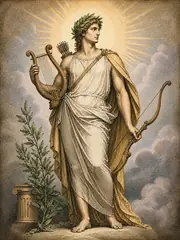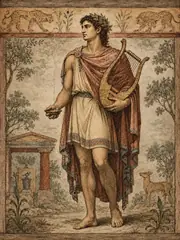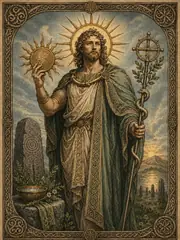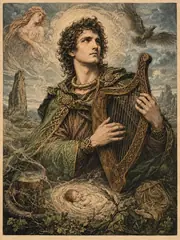
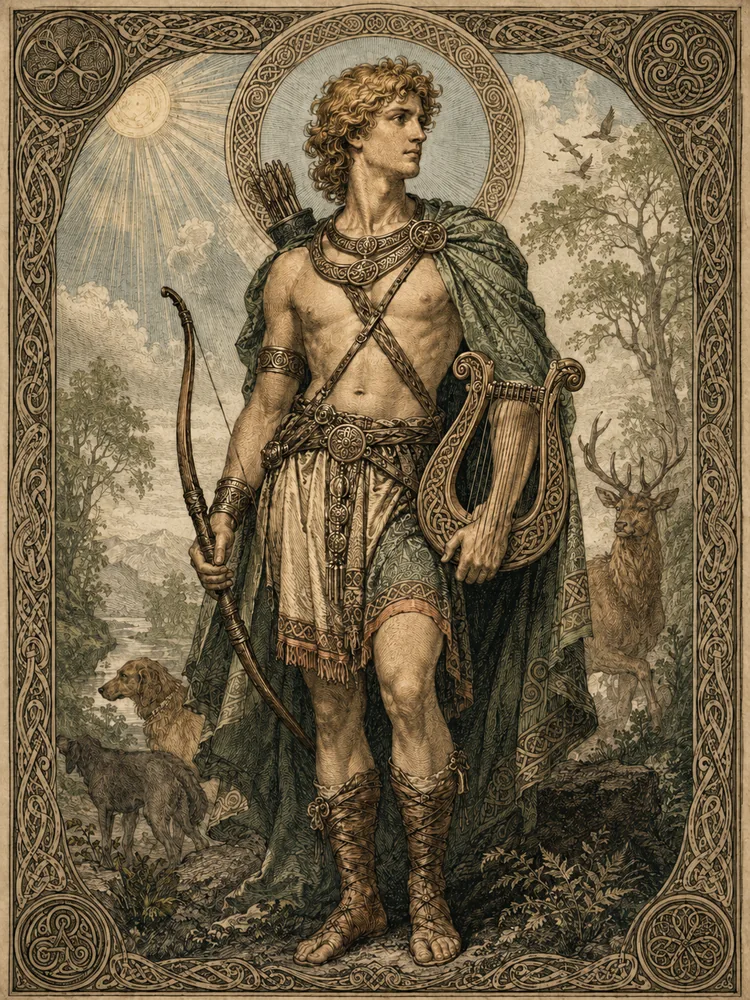
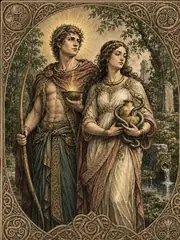
Maponos was the divine youth of the British Celts — his name means simply "the Great Son" or "the Divine Youth" — and he was a god of hunting, music, and youthful vigor. The Romans equated him with Apollo, and inscriptions to Apollo Maponus survive from the northern parts of Roman Britain, particularly along Hadrian's Wall and at the Maponus shrine at Lochmaben in Annandale, southwest Scotland ("Lochmaben" being from Locus Maponi, "the Place of Maponos").
His worship was particularly developed in the lands of the Brigantes and the Selgovae, and the great inscription RIB 583 from Ribchester records a dedication to Apollo Maponus by the Sarmatian cavalry stationed there in the second century. The dossier of Maponos inscriptions is small but distinctive, with the deity invoked particularly by men of warrior status and by hunters — a young, vigorous, athletic god, unmarried, free of family entanglements.
Maponos passed into Welsh legend as Mabon ap Modron — "the Son, son of the Mother" — a figure who appears in the great early Welsh tale Culhwch and Olwen, where he is sought for and rescued from a magical prison in which he has been confined since the third night after his birth. His mother Modron is herself a divine figure, the British Matrona, the Mother. Mabon-Maponos's prison is called Caer Loyw (Gloucester), and his rescue by Arthur and his men is one of the great anoethau (impossible tasks) that Culhwch must accomplish. The figure was thus continuous from the Roman-Celtic Apollo Maponus to the Arthurian Mabon, with much of the same youthful, bound-and-released character preserved across the centuries.