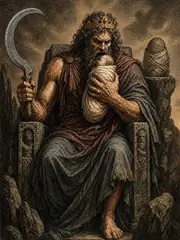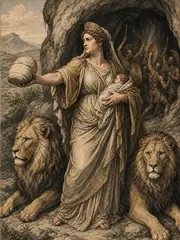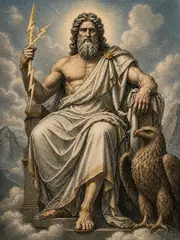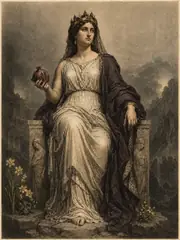
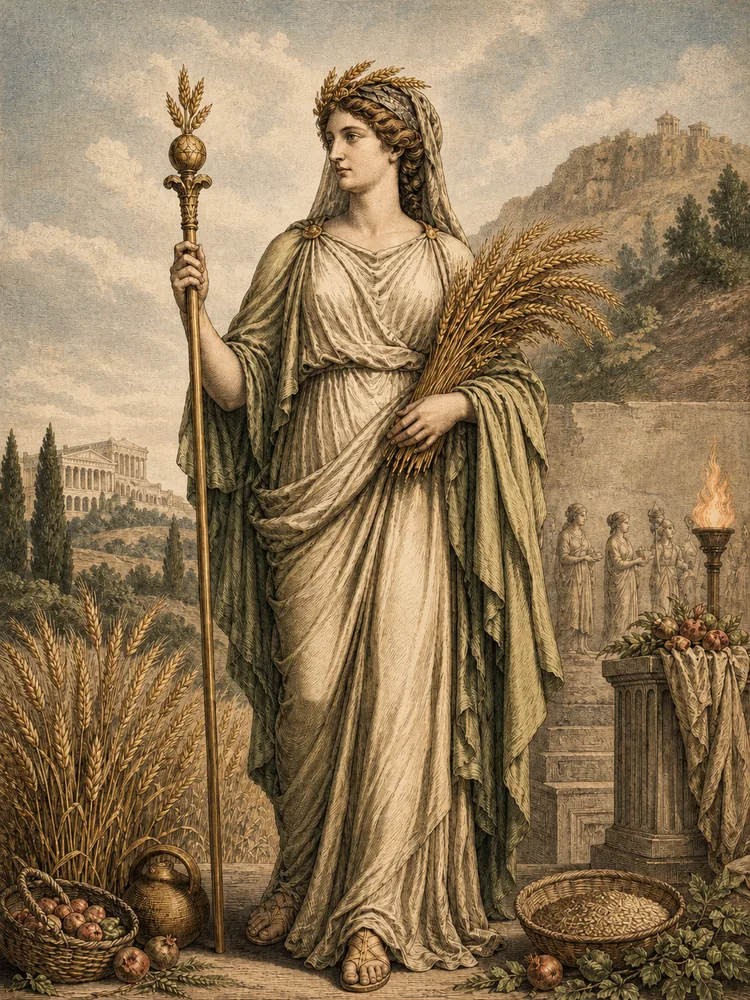
Demeter was the goddess of grain, of agriculture, of the cultivated earth as opposed to the wild earth (which was Gaia's province). She was a daughter of Cronus and Rhea, sister of Zeus, and by her brother Zeus mother of Persephone, the maiden whose abduction by Hades and partial restoration to the upper world generated the central myth of Demeter's cult and of the Eleusinian Mysteries.
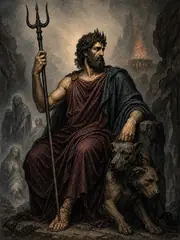
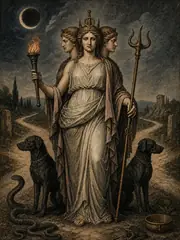
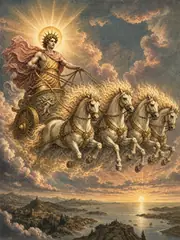
The narrative is given most fully in the Homeric Hymn to Demeter (probably late seventh or sixth century BCE), and runs as follows. Persephone was gathering flowers in a meadow when the earth opened and Hades, having been given Zeus's permission to take the maiden as his bride, rose up in his black chariot and carried her down to the underworld. Demeter, hearing her daughter's cry, searched for her for nine days and nights with torches in her hands, learning nothing; on the tenth, Hecate and Helios told her what had happened. In her grief and rage, she withdrew from Olympus and wandered the earth in disguise, an old woman; she came to Eleusis in Attica, was received by King Celeus and his wife Metanira, and undertook to nurse their son Demophon, whom (intending to make immortal) she placed each night in the fire to burn away his mortality. Discovered by Metanira and prevented from completing the rite, the goddess revealed herself, demanded that a temple be built for her at Eleusis, and there sat in mourning, refusing to make the grain grow until her daughter was returned.
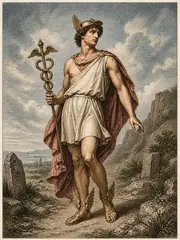
The earth withered; the gods grew anxious as the offerings ceased; Zeus at last sent Hermes to fetch Persephone back. But Hades, before releasing her, contrived to give her a few pomegranate seeds to eat — and whoever has eaten in the underworld must remain there. A compromise was made: Persephone would spend a third of the year (or in some versions half) below with her husband, and the rest with her mother above. When she descended each autumn, Demeter mourned and the grain did not grow; when she rose each spring, Demeter rejoiced and the grain returned. So the Greek seasons were born; and so the Eleusinian Mysteries — the great mystery-cult of Demeter, celebrated at Eleusis west of Athens for some two thousand years from at least the seventh century BCE to its closing by the Christian emperor Theodosius about 392 of our era — preserved the rite of grief and reunion at the heart of agricultural existence.
What was actually shown and said in the inner mysteries is largely unknown; initiates were sworn to secrecy, and the secrecy held remarkably well. Various accounts hint that the climactic moment was the silent display of an ear of wheat; that Persephone was shown in some form returning to her mother; that the initiate was promised some kind of better afterlife than the unenlightened dead enjoyed. Cicero, who was an initiate, said the mysteries had taught him to live with greater hope and to die with better courage; the testimonies of others were similar. The mysteries' precise content remained one of antiquity's best-kept secrets.