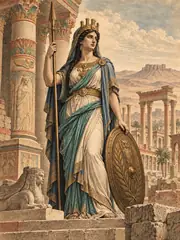
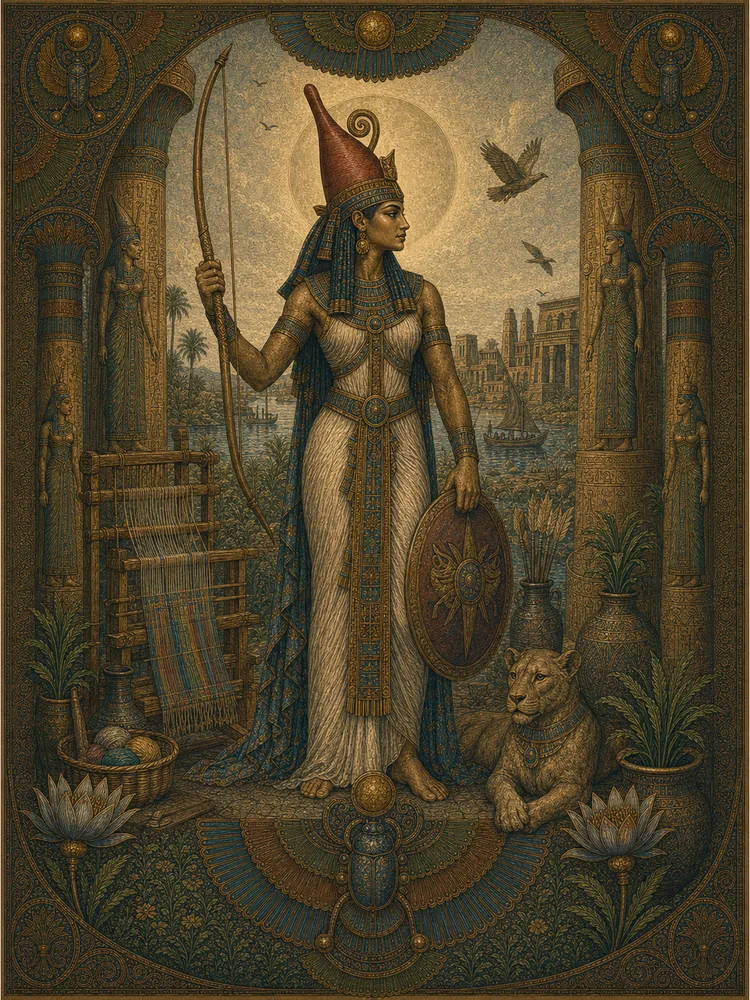
Neith was an ancient and complex goddess of the western Delta, whose city was Sais (modern Sa el-Hagar). Her cult was very old — already attested in the First Dynasty, when several queens bore her name — and her offices were various: she was a goddess of war, with the bow and the crossed arrows as her chief emblem; a goddess of weaving, with the shuttle prominent in her name and her iconography; a creator-goddess, who in the Saite cosmogony emerged from the waters of Nun before all the gods and brought forth Ra from the depths of the primal waters by her words; and a funerary goddess, who guarded the dead in the canopic system (her canopic jar protected the stomach). Her temple at Sais became, in the Twenty-Sixth Dynasty (664–525 BCE) — when the Saite kings ruled all Egypt — the principal religious establishment of the country, and Saite-period priests of Neith preserved many ancient theological traditions that would otherwise have been lost.
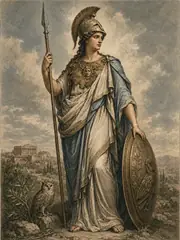
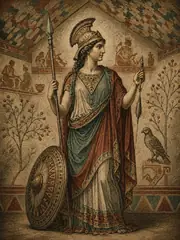
The Greek visitors to Sais in the Late Period identified Neith with Athena — both being warrior-virgin-goddesses with weaving associations — and the famous report of Plato in the Timaeus, in which the Athenian visitor Solon is told by a priest of Sais of the lost civilization of Atlantis, locates the conversation in the temple of Neith, where (the priest says) the records of Greek history are kept more accurately than the Greeks remember them themselves. The Atlantis tale is Plato's invention, but the setting reflects the genuine Saite-period reputation of Neith's temple as a great archive of ancient learning.