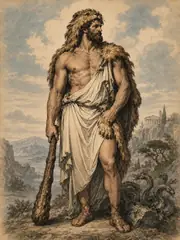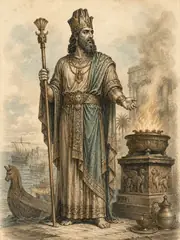
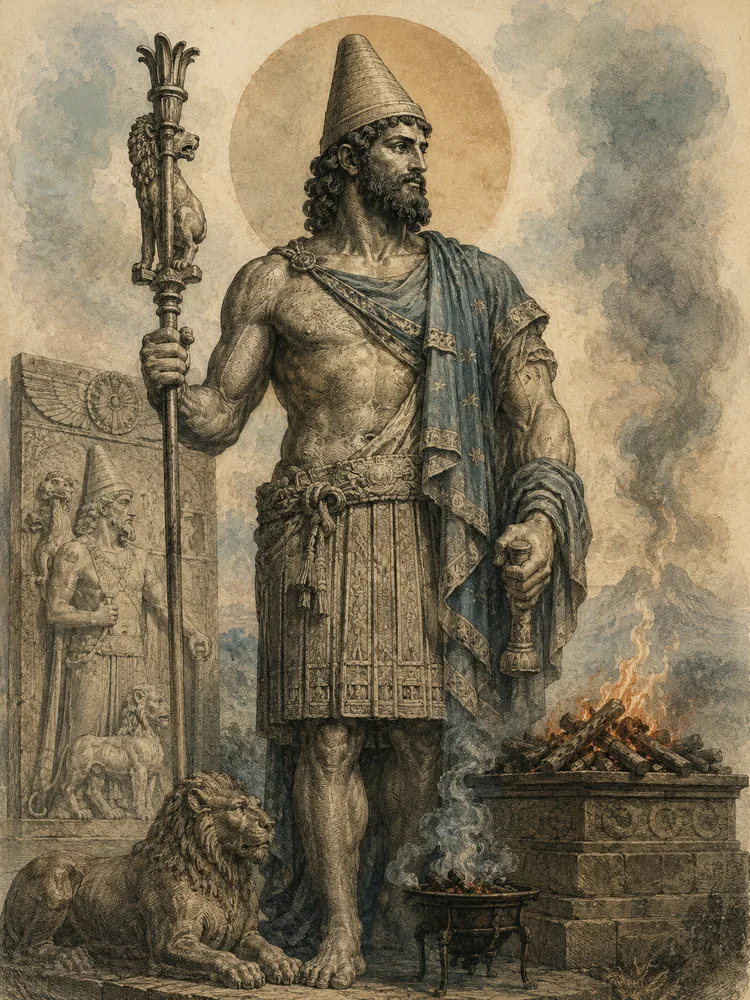
At Tarsus in Cilicia, in the foothills where the Taurus Mountains drop to the Mediterranean coastal plain, was kept one of the more spectacular cult-rituals of the ancient world. Annually, the people of Tarsus built a great pyre — heaped with all the seasonable woods, scented with cedar — and upon it placed the effigy of their patron god, whom the Greeks called Sandon and whom they identified with their Heracles. The pyre was kindled; the god's image was consumed; the city celebrated his death and, the following year, the renewed pyre was understood to celebrate his return.
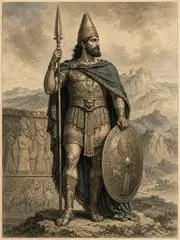
Behind this Hellenized cult lay the older Anatolian war-god Santas of the Luwians, and behind him perhaps even older Bronze Age figures whose names are lost. The Tarsians showed his image upon their coinage from the Hellenistic into the Roman period: a horned figure standing upon a great horned lion, weapons in hand, the ascending pyre beneath him. The cult was famous enough that it appeared on the standard coinage of the city; it was famous enough also that, when Saint Paul (himself a son of Tarsus) wrote of "a god which is in heaven, who knows our sufferings," he was writing in a city where the dying-and-rising god of the pyre was very much in his fellow-townsmen's minds.
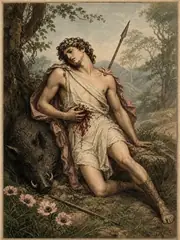
The cult was numbered among the great mystery-cults of the Roman East. Its annual rhythm — the death by fire, the year of absence, the return — placed it within the broad family of dying-and-rising gods which the eastern Mediterranean produced in such abundance: Adonis, Attis, Osiris, Melqart, Dumuzi-Tammuz.