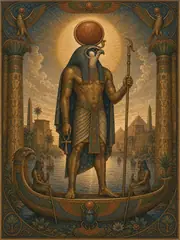
A Compendium of the Ancient Gods
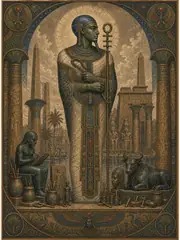
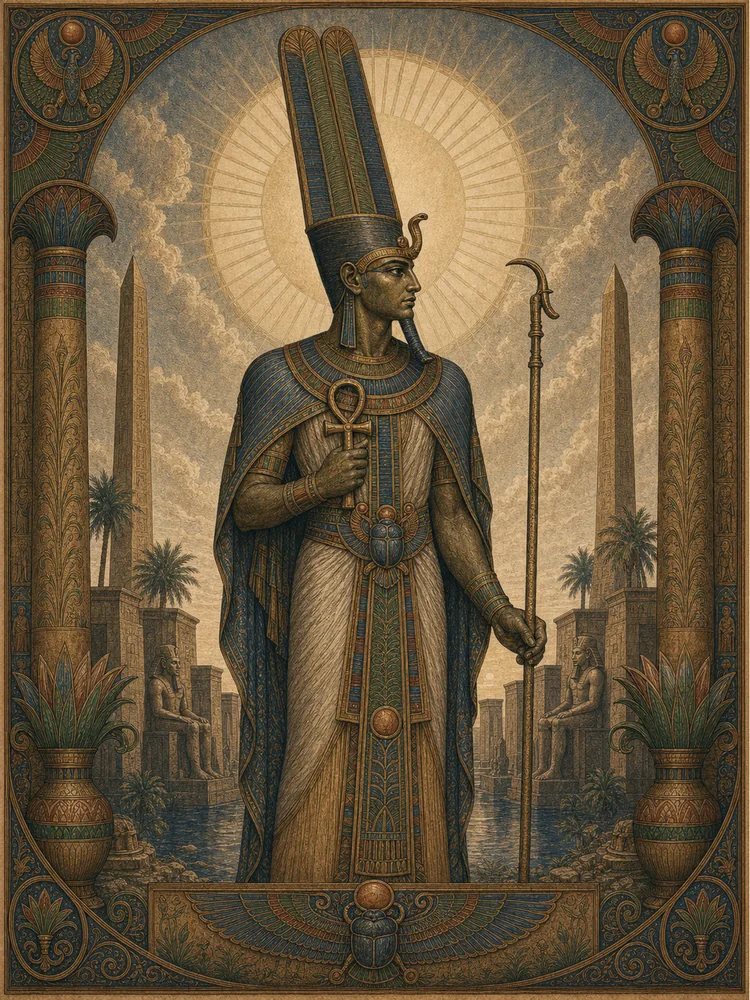
Amun, plate

Amun's name signified "the Hidden," and his nature was, by his own theological description, beyond knowing. "His name is hidden from his children," runs the great Cairo hymn; "he hides his form even from the gods." He was originally a local god of Thebes, in Upper Egypt, and as Thebes rose in the Middle Kingdom (c. 2000 BCE) and again in the Eighteenth Dynasty (c. 1550 BCE) to become the imperial capital of Egypt, Amun rose with it. By the New Kingdom he was the chief god of the Egyptian state; his great temple at Karnak — successively expanded by every pharaoh of significance, until it had grown to the largest religious complex in the ancient world — was the wealthiest landholder in the kingdom. Amun was identified in this period with the older Heliopolitan sun-god Ra, producing the great composite Amun-Ra, who held simultaneously the hiddenness of Amun and the brilliance of Ra: present everywhere and visible nowhere.

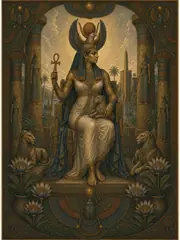
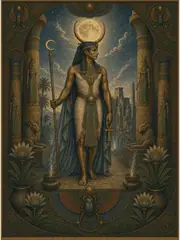
His consort was Mut the great mother; their son was Khonsu the moon; the three formed the Theban triad, whose temples stood across the Nile from Thebes proper, on the western bank, and who were each year, at the festival of Opet, carried in solemn barque-processions from Karnak south to Luxor and back, receiving the offerings of the city and renewing the kingship of the pharaoh. Amun's emblem was the ram with curling horns, and rams were sacred to him; an avenue of ram-headed sphinxes still leads up to the great temple at Karnak.

The hymns of the Amun priesthood elaborated his hiddenness into something approaching philosophical monotheism: "All gods are three: Amun, Ra, and Ptah, whom none equals. He whose name is hidden as Amun, he is Ra in face, his body is Ptah." The doctrine that the great gods are three names of one god, without their distinction being merely nominal, was articulated by the Theban theologians of the Ramesside period in language strikingly close to that of much later trinitarian formulations. But the priesthood did not push it to the rigorous monotheism of later traditions; the lesser gods continued to receive their cult.
Curator’s note

What the sources say, and what later tradition added. The sources for this bay

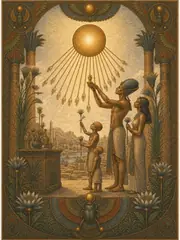
Amun's elevation from local Theban god to imperial supreme god is one of the great theological developments in Egyptian history. The principal sources are the hymns to Amun in the Boulaq Papyrus (Cairo, 18th Dynasty), the Leiden Hymn (Papyrus Leiden I 350, late 19th Dynasty), and the inscriptions on the walls of Karnak itself. The doctrine of the Theban triad and the philosophical formulations of the Leiden Hymn are among the most theologically sophisticated documents of Egyptian religion. The brief Amarna interlude under Akhenaten (c. 1353–1336 BCE), in which the worship of Amun was suppressed in favor of the sole god Aten, was followed by a vigorous restoration of Amun's cult under Tutankhamun and his successors; the priesthood of Amun thereafter held political power so substantial that under the Twenty-First Dynasty (c. 1069 BCE) the High Priest of Amun at Thebes ruled Upper Egypt as a virtual king. The Macedonian Alexander, on his entry into Egypt, made the long pilgrimage to the Oracle of Amun at the Siwa Oasis, where the priest hailed him as son of Amun; the title was thereafter used in his official propaganda.

Kin in the sources

Each tie is quoted from the entry that states it.

The same god in other rooms

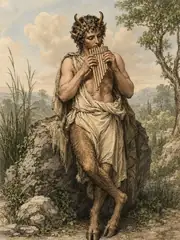
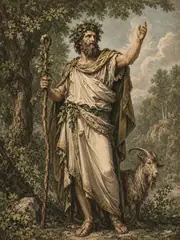
The ancient sources themselves name these as one god under different names. See Amun, Min, Pan and Faunus hung together

When the sources speak

Dated witnesses for The Cosmogonies. A date marks when the evidence was written down, not when the belief began. The whole timeline

c. 4000–3100 BCE
Predynastic regional symbols, burials, standards, and animal cults provide the deep background to later divine iconography.
c. 3100–2686 BCE
Early Dynastic kingship joins royal ideology to local cult centers and establishes many durable divine emblems.
c. 2686–2181 BCE
Old Kingdom pyramid complexes and the Pyramid Texts preserve the earliest large religious corpus.
c. 2181–1650 BCE
First Intermediate and Middle Kingdom traditions broaden mortuary access; Coffin Texts develop older royal materials.
c. 1550–1070 BCE
New Kingdom temple wealth, royal hymns, underworld books, and the Book of Going Forth by Day greatly expand the record.
c. 1353–1336 BCE
Akhenaten’s Aten program reorganizes royal cult but does not permanently erase the older divine plurality.
c. 1070–664 BCE
Third Intermediate Period priestly and regional powers reshape cult administration and divine kingship.
664–332 BCE
Late Period archaism, animal cults, and temple scholarship preserve and reinterpret older forms.

Floor plan

The rooms follow one another in the order their peoples first appear in the written record.

  1. The Cradle of Citiesc. 3400 BCE to 395 CE. 115 works
  2. The Gift of the Nilec. 4000 BCE to 395 CE. 73 works
  3. The Olympian Orderc. 1600 BCE to 750 CE. 152 works
  4. The Persian Worldc. 2000 BCE to 1010 CE. 30 works
  5. The Levantine Borderlandsc. 1200 BCE to 500 CE. 20 works
  6. The Edges of Empirec. 2000 BCE to 1500 CE. 33 works
  7. The Etruscan Worldc. 900 BCE to 750 CE. 22 works
  8. The Roman Inheritancec. 1200 BCE to 500 CE. 58 works
  9. The Northern Inheritancec. 2000 BCE to 1600 CE. 131 works